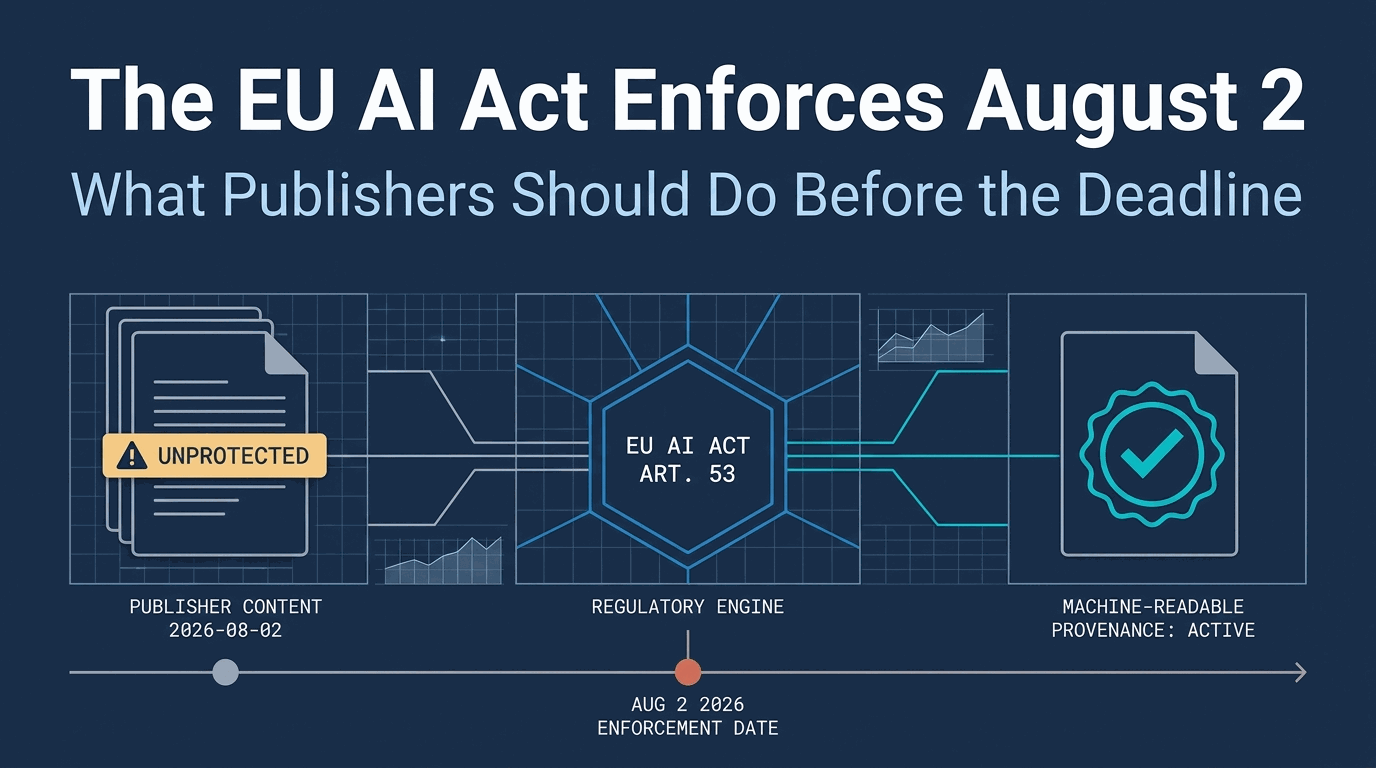
The EU AI Act Enforces August 2. Here's What Publishers Should Do Now.
Most publishers assume the EU AI Act is someone else's problem. That assumption is wrong. The August 2 enforcement date creates obligations for anyone who publishes content online or deploys AI tools.
On August 2, the EU AI Act's transparency requirements take effect. 󠇟󠇠󠇡󠇢󠅙󠆺󠆺󠆽󠅦󠅅󠄮󠅽󠆢󠅁󠅞󠅄󠆴󠇮󠇗󠆁󠇋󠆏󠄐󠆅󠇗󠆏󠄁󠄝󠄊󠅂󠇚󠅈󠅟󠇮󠆓󠅅󠄍󠄱󠆲󠇟󠄍󠆑󠇆󠆂If you publish content online, this applies to you.
󠇟󠇠󠇡󠇢󠆝󠄅󠄐󠇐󠇥󠆛󠇀󠆊󠅖󠄌󠄶︆󠇂󠅨󠆵󠄅󠇗󠆷󠅵󠄵󠇬󠇝︋󠄊󠆎󠅃󠅀󠄦󠄹󠄪󠆨󠆦󠇡︍󠅑󠇋󠇞󠅡󠇟󠄜Most publishers I talk to assume the EU AI Act is someone else's problem. 󠇟󠇠󠇡󠇢󠄰󠅲󠄩󠆗󠇥󠄀︁󠇝󠄁︉󠆩󠅻󠇛󠇘︆󠅠󠇯󠆒󠇠󠄑󠅢󠄻󠆂󠆕󠆾󠄴󠅌󠇑󠆼󠇬󠆲󠆔󠄁󠆊󠆧󠇔󠆧󠅓󠅑󠅴An obligation for OpenAI, Google, Anthropic. 󠇟󠇠󠇡󠇢󠆁󠇍󠆦󠇏󠄍󠆩󠇤󠅭󠆠󠆫󠆀󠅳󠇉󠆍󠅿󠆛󠆤󠅀󠆳󠇪󠆵󠄇󠆵󠆮󠅂󠆩󠅖󠇊󠄂󠄩󠇢︉󠄢󠄫󠅬󠅏󠆷󠄛󠆘󠇝Something the AI companies need to figure out.
󠇟󠇠󠇡󠇢󠆃󠇍󠄬󠆊󠇏󠅣󠆎󠄽󠄼󠆜󠆱󠅖󠇦󠆝󠆱󠆪󠄡󠄑󠇚󠄿󠇬󠅵󠄫󠄁󠆉󠄆󠇕󠄫󠇚󠆐󠅴󠅒️󠄣󠇉󠅾󠅏︈󠆺󠄍That assumption is wrong, and it's worth understanding why before the deadline arrives.
󠇟󠇠󠇡󠇢󠅛󠄮󠅒󠄻󠄩󠆒󠄃󠄻󠄐󠄢󠇊󠆛󠅦󠄃󠆼󠄜󠅔󠇧󠄔󠆫󠇓󠄬󠅲󠄕󠆅󠅨󠇬󠅘󠆇󠆚󠆙󠅚︂󠄗󠇭󠅹󠇇󠆼󠅂󠆢The Act Creates Obligations in Both Directions
The EU AI Act does two things publishers need to understand.
󠇟󠇠󠇡󠇢󠇩󠅾󠆚󠇀󠅇󠆈󠄒󠆝󠄄󠇣󠅄󠇕󠆫󠇐󠆓󠆋󠄅󠄋󠇃󠄃󠄍󠅣󠅰󠅯󠄫󠅦󠆚󠅃󠄞󠄓󠇇󠇪︆󠆖︊󠅶︋󠅟󠆾󠄥First, AI companies that generate text, images, audio, or video must mark their outputs as AI-generated. 󠇟󠇠󠇡󠇢󠇘󠅔󠄉︆󠄜󠅢󠇫󠄳󠇊︄󠄿󠆲󠅊󠄗󠄉︇󠅀󠄒󠄃󠅏󠇖󠄌󠆊󠅗︌󠄩󠄙︅󠄫󠆢󠅵︀󠆛󠆙󠅼󠆽󠇠󠄪󠇖︆The draft Code of Practice specifies a "multilayered approach," combining machine-readable metadata with imperceptible watermarking. 󠇟󠇠󠇡󠇢󠄖󠄯󠄷󠄴󠅉󠇠󠄝󠅶︊󠄅󠅲󠅫󠆈︁󠄿︋󠅋󠆉󠇀󠆭󠅾󠅜󠄻󠄥󠅀󠄙󠆹󠆦󠄚󠆄󠇖󠇨󠅷󠆲󠅛󠄍󠆷󠆸󠆎󠄄C2PA, the open standard for content provenance co-authored by Google, Adobe, Microsoft, BBC, and OpenAI, is the framework regulators are referencing.
󠇟󠇠󠇡󠇢󠆋󠇉󠆿󠄐󠅼︈󠅬󠄺󠇊󠄦󠄸󠆭󠆿󠄼󠆌󠅎󠄁󠆳󠆉󠄠󠅞󠄯󠅙󠇙󠆽︍󠄂󠆉󠆊︁󠄔󠄩󠄋󠇊󠇡󠅜󠆙󠄕󠇭︍Second, any organization that deploys AI tools faces its own disclosure obligations. 󠇟󠇠󠇡󠇢︎󠄇󠅞󠅹󠇭󠆂󠄲󠆲󠅰󠄶󠇩󠆥󠄉︋󠄀󠆽󠄡󠅣󠅥󠆺󠅯󠇎󠄰󠄱󠄺󠇢󠅤󠇭︂󠅪󠇝󠅼󠇣󠇇󠅉󠆏󠆵󠄥󠅂󠅑If your newsroom uses AI for headline optimization, article summarization, translation, image generation, or content recommendations, you are a "deployer" under the Act. 󠇟󠇠󠇡󠇢󠆱󠅹󠅑️󠅔󠇩󠄔󠅢󠄦󠄫󠅑󠇇󠇖󠄙︊󠇈󠇤󠅑󠆝󠅳︉󠆦󠄁󠅐󠆱󠆟󠅖󠄍󠆬󠅗󠄪󠄇󠇀󠄙󠆫󠇖󠆪󠅊󠆃︊Not a bystander. 󠇟󠇠󠇡󠇢󠇁󠆈󠅱󠄢󠆝󠇣󠆚󠄜󠅸󠆕󠆤󠇪󠆳󠄙󠆽󠇍󠄌󠆋󠅻󠄊󠄢󠅴󠄦󠆂󠅀󠅿󠅼󠄥󠆅󠄁󠄹󠆗󠆬︊󠄝󠇙󠅦󠇓󠄺󠄎A regulated entity.
󠇟󠇠󠇡󠇢󠆕󠆨󠅤󠄴󠆼󠇭󠆿󠅡󠇘󠅧󠄱󠄦󠅠󠇠󠅻󠆖󠅄󠆜󠅸󠄷󠆌󠄕󠄕󠆳󠆥󠆁󠇗󠄬󠅆󠇦󠆂󠄿󠅀󠅃󠄜󠅩󠆢󠅾󠇠󠆇The Act does not distinguish between a company that builds a large language model and a company that uses one to draft social copy. 󠇟󠇠󠇡󠇢󠆿󠄲󠅽󠄚󠆎󠆈󠅦󠅌󠄴󠄽󠅆󠄞󠅛󠆠󠅙󠆔󠄺󠄬󠅫︎󠄭󠅛󠆘󠄷︀󠄾󠆍󠇄︄󠆰󠄺󠄽󠄓󠆮󠄏󠇂󠇟󠅛󠅓󠆘Both carry transparency obligations.
󠇟󠇠󠇡󠇢󠅒󠄆󠆊󠇔󠅐󠇋󠆨󠇗󠄬󠄶󠇤󠄚󠄍󠆪󠅬󠅙󠄩󠆉󠇞󠇢󠄿󠇠︄󠅣󠄾󠅦︀󠇇󠆇󠇆󠅭󠆿󠅄󠄧󠄰󠇞︁󠅅󠅳󠅺󠇟󠇠󠇡󠇢󠅐󠅾󠇂󠇧󠄝󠄩󠇋󠄾󠅝󠅾󠄗󠄻󠇠︄󠅿󠇞󠅗󠆪󠅓󠅣󠄢󠄬󠅍󠆆󠆮󠆃󠅴󠆋󠅴󠆆󠄡󠇞󠇫󠆪󠆳󠅶󠅗󠄘󠄷󠆛What This Means for Your Content
The regulatory shift runs deeper than compliance checkboxes.
󠇟󠇠󠇡󠇢󠇒️󠆻︌󠄸󠄙󠆈︄󠇉󠅆󠆧󠆸󠆃󠅑󠆑󠆱󠆃󠇯󠇤󠄵󠇠󠇖󠆽󠅏󠆴︂󠅐󠄁󠇍󠅳󠅖󠅱󠇡󠄬󠄙󠅷󠇝󠅉󠄽󠅨AI companies will be required to implement provenance infrastructure. 󠇟󠇠󠇡󠇢󠇖󠆤󠄱󠄷󠅝󠅝󠇒󠄥󠄽󠅭󠄳󠆽󠆔󠅻󠆑󠄾󠅴󠆝󠅈󠅍󠇯󠇋󠄮󠄊︎󠅫󠆜󠅲󠄇󠆀󠄋󠅜󠅷󠄚󠅍󠇖󠄕󠇏󠄘󠆮Machine-readable marking and watermarking of AI-generated content become legal requirements, not voluntary best practices. 󠇟󠇠󠇡󠇢󠆾󠇫︊︈󠇥󠄩󠄙󠄑󠆏󠅁󠅹󠄣︃︎󠄣󠅵󠅥󠆨󠄊󠅄󠇘󠄭󠄉󠅣󠇦󠄵󠆽󠇦󠅕󠅂󠆵󠄌󠅻󠄴󠄋󠅟󠇓󠆷󠇨︁That changes the economics of how AI systems interact with publisher content.
󠇟󠇠󠇡󠇢󠆂󠅔󠅩󠆃󠄓󠄶󠅪󠄧󠄭󠅇󠄎󠄹󠇔󠇩󠇯󠄼󠅡󠆩︅︎󠇔󠅞󠅧󠄕󠇌󠆁󠅠󠄮󠅠󠄞󠇕󠇂󠅎󠄯󠆰󠇟󠅆󠄇󠅝󠆤Content that carries its own provenance, a verifiable, machine-readable proof of origin, is positioned correctly for this environment. 󠇟󠇠󠇡󠇢󠆦󠆫󠅛󠇂󠅁︀󠇢󠇗󠄶︆󠆨󠆐󠆇󠅁󠆀󠄸󠆟󠆆󠆇󠆋󠆒󠆋󠄌󠅐󠆋󠄙󠅷󠆦󠄼󠆜󠅉󠅉󠆨󠄧󠅰󠇈󠄼󠅼󠇀󠅒Content that exists as unmarked text on the open web is not.
󠇟󠇠󠇡󠇢󠄾󠇊󠅻󠄔󠆡󠇭󠇞󠅯󠆂︈󠅁󠅾󠅋󠄹󠆝󠄜󠄞󠆡󠅑︍󠅩󠄺󠄼󠇑󠆣󠇣︈󠆰󠅅️󠇫︆󠄊󠄴󠅺󠆌󠆠󠇆󠅾󠇂When an AI company ingests content that carries C2PA provenance markers, the chain of custody is documented. 󠇟󠇠󠇡󠇢󠅼󠄾󠆏󠇩󠆀󠇯󠄙󠅥󠄄󠇚󠆕󠅝󠇙󠆘󠇪󠆵󠅍󠄧󠇨󠅽󠅅󠆩󠅣󠅖󠅶󠆷󠅚󠅭󠄤󠅸󠄷󠅂󠄻󠇫󠇣󠇐󠄈󠅃󠄊󠄤When it ingests unmarked content, the company's default defense remains: "We didn't know it was yours." 󠇟󠇠󠇡󠇢󠇦󠄱󠇥󠆅󠄘󠄲󠅂󠅠󠅒󠅐󠄟󠄡︃󠅿󠆋󠄲󠆤󠆢󠅾󠇉󠇩󠆥󠆗󠄘󠄕󠆄󠄳️󠅷󠆏󠄲󠄌󠆨󠅔󠇧󠇏󠄦︇󠆫󠅱The EU AI Act makes the first scenario the regulatory expectation.
󠇟󠇠󠇡󠇢︊󠆲󠄫󠄔󠄾󠄨󠇑󠆓󠅨󠇢󠅍󠅴󠅋󠄺󠆝󠇭󠆦󠄲󠆈󠆕󠇃󠆵󠆾󠅡󠄡󠄣󠄚󠅫󠅝󠆻󠆬󠆈󠆶󠅻󠆋󠆮󠆻󠇤󠄾󠅉The Hamburg Ruling Reinforces the Direction
In December 2025, the Hamburg Higher Regional Court ruled that machine-readable opt-outs are the only valid reservation of AI training rights under EU copyright law. 󠇟󠇠󠇡󠇢󠆄︍󠇖󠅑󠅽󠅤󠅝󠄂󠅚󠅂󠄡󠄻󠆎󠇆󠆙󠇩󠄠󠆱󠄜󠅳󠆍󠄾󠄊󠅤󠄋󠄧󠆏󠄣󠅪󠇪󠅠󠇦󠆏󠄈󠅊󠄜󠅬󠅿󠄠󠆅A robots.txt file alone does not constitute a legally sufficient reservation.
󠇟󠇠󠇡󠇢󠆐󠄙󠇘󠆴󠇛󠄘󠄽󠄮︍󠄃󠇒󠆣󠅍󠆈󠅐︀󠆿󠄲󠆫󠆹󠇔󠇉󠄀󠇩󠅔󠆼󠄺︇󠅼󠄾󠆨󠅊󠅬󠄢󠆋󠅚󠆑󠄬󠇯󠆼Publishers need technical infrastructure, not policy statements, to control how their content is used by AI systems. 󠇟󠇠󠇡󠇢󠆏󠄄󠆁󠆮󠄬󠆷󠇦️󠇯󠄇󠇓󠄮󠄖󠆺󠅨󠆬󠅐󠆧󠆊󠅴󠇜󠆉󠄏󠄺󠇕󠄁󠄁󠆦󠅔󠆗󠆲󠄄︉︍󠆲󠅳󠄭󠅳󠄕󠆺That ruling and the August 2 enforcement date land within months of each other.
Three Things to Do Before August 2
1. 󠇟󠇠󠇡󠇢︍󠅹󠅻󠇚󠇌󠄾󠄳󠄉󠇤󠆩󠅋󠅞󠅎󠆾󠅈󠇌󠅭󠅚󠅋󠄝󠄔󠅤󠆨󠇊󠄪󠇯󠆓󠅾󠅓󠆞󠆊󠅄󠇁󠅐󠆨󠆘󠅠󠄠󠄆︎Audit your AI tool usage.󠇟󠇠󠇡󠇢󠇢󠄗󠄑󠇁︂󠇆󠇆󠇥󠆫󠅝︈󠅐󠇆󠄦󠆬󠅆󠆁󠆮󠅗󠆰󠄦󠇛󠅚󠅠󠄛󠄨󠆞︂󠅭󠆗󠄻󠆅󠅔󠆥󠆸󠅨󠄝︍󠅳󠅀
Map every AI-powered tool in your editorial, production, and distribution workflows. 󠇟󠇠󠇡󠇢󠇖󠆊󠇄󠇅󠅒󠄺󠅴󠇓󠆓󠆁󠇢󠇄󠄠󠅇󠇅󠄞󠇫︄󠆽󠇈󠄳󠇏󠇆󠄴󠄮󠄜󠅦󠇢󠆚󠄑󠆎󠄮󠆂󠇪󠆑󠅞︄󠆔󠅃󠆧Each one creates a potential deployer obligation under the Act. 󠇟󠇠󠇡󠇢󠅰󠇥󠄤󠅔󠅏︊󠆟󠅚󠆡󠅚󠇧󠆩󠅰󠄲󠆂󠄯󠇕󠆾󠆏󠅢󠄁󠅷󠅟󠄪󠄕󠅕󠇏󠄳󠅑󠆷󠇃󠆥󠇩󠆃󠇗󠆅󠄒󠄧󠅘󠄣Identify where AI touches your content lifecycle, from creation through publication and distribution. 󠇟󠇠󠇡󠇢󠅈󠅇︌󠄷󠄝󠄜󠅐󠅒󠄡󠆖󠇓󠅞︈󠇟󠆇󠄧󠇋󠅃󠄂󠄗󠅕󠅛󠅇󠇜︇󠇯󠆝󠅮󠄿󠄧︌󠆵󠅳󠅙󠅒󠆾󠅎󠇦󠄱󠄗You cannot comply with requirements you haven't identified.
󠇟󠇠󠇡󠇢󠅥󠅤󠆈󠅑󠄀󠅺︉󠄿󠅄󠅽󠆃󠄓󠆩󠄕󠆲󠅆󠄄️󠆔󠆁󠆎󠄏󠅓󠇣󠆷󠅣󠄚︍󠅓󠅜︋󠆠󠄻󠅦󠆒󠇬󠆠󠇧󠅓󠄊2. Implement content provenance.󠇟󠇠󠇡󠇢󠅳󠅱󠆎󠄘󠆛󠄾︋󠅼󠅓󠅭󠇩󠇐󠄰󠆣󠆀󠄇󠇐󠅆󠄲󠆺󠅏󠄅󠇒󠇓󠄁󠆿󠆃󠆠󠇛󠅃󠇈󠆊󠅠󠇩󠄭󠅚󠄔󠄁󠆘󠆄
The C2PA standard, published January 8, 2026, provides the framework for embedding machine-readable proof of origin into your content. 󠇟󠇠󠇡󠇢︎󠆽︄󠆬︊︌󠇖󠆇︉󠄣󠅺󠆑󠇊󠄸󠄩󠅯󠆾󠆆󠇈󠇆󠆈󠅹󠆖󠅠󠇎󠄯󠇢󠆥󠄬󠅊󠅍󠇝󠆩󠄕󠆴󠆽󠄏󠄠󠆇︅Signing your content with C2PA provenance establishes a verifiable chain of ownership that survives syndication, scraping, and downstream distribution.
󠇟󠇠󠇡󠇢󠅰󠅲󠅀󠆦󠄙󠅛󠇥󠅥󠄉󠄳󠄭󠅆󠄍󠅬︎󠆌󠇂󠅮󠅋󠇆󠇌︇󠄋󠅣󠆻󠄙󠅌󠄧󠄤󠅚󠆅︇󠅆󠄚󠄧󠆖︈󠇠󠆅󠆣At Encypher, we co-chair the C2PA Text Provenance Task Force and built the reference implementation. 󠇟󠇠󠇡󠇢󠄮󠇂󠄁󠆙󠅻󠄋󠅦󠅛󠄞︈󠆣󠆹󠄬︂󠇐󠅱󠅻󠆬󠇧󠇠󠇒󠄞󠇉󠅙󠅪󠅶󠇦󠆢󠇠󠇇󠇢󠄆󠇋󠇟󠆋󠇉󠇚󠆆󠄜󠆻Text signing is free through our WordPress plugin and API. 󠇟󠇠󠇡󠇢󠄧󠄼󠆂󠅖󠅪󠄗󠄥󠇥󠆃󠆮󠆚󠆇󠆡󠇋󠄵󠅁󠇭︌󠇫󠇒󠆰󠅠󠆫󠆦︂󠇩󠇉󠆇󠆔󠇡󠅆️󠅘󠆭󠅸󠅜󠄺󠄒󠄯󠇦Enterprise publishers can sign their full content portfolio, including images, audio, and video, under one provenance infrastructure.
󠇟󠇠󠇡󠇢︁󠄱󠄇󠆇󠄧󠆂󠆾󠆠󠇊️󠅥󠇩󠅼󠇛󠆥󠇯󠄔󠆊󠅻󠄢󠄐󠆉︂︀󠆟󠄜󠇑󠇟󠆯󠆹󠅮󠆠󠇮󠇠󠇌󠅇󠄒󠆝󠆓󠄿3. 󠇟󠇠󠇡󠇢󠅳󠇫󠇑󠆚󠅜󠆡󠅎󠇫󠇤󠆘󠇓󠅟󠆝󠅨︈󠇁︁󠆐󠇙󠅡󠅂󠆼󠆅󠄻󠄝󠅅󠆌󠇄󠅾󠆼󠅁󠅙󠆋󠆀󠄺󠆞󠆑󠇃︃󠄪Establish formal notice to AI companies.󠇟󠇠󠇡󠇢󠄭󠅣󠇆󠅊󠅹󠄍󠄗󠄖󠆖󠆹󠇫󠇝󠄿󠅩󠄺󠄦󠄡󠆖󠅍󠆻󠄫󠆺󠅒󠅧󠅃󠄓󠅋󠆅󠅹󠅂󠄺󠇩︌󠆔︋󠄜󠄠󠄷󠇡󠅎
Once your content carries cryptographic provenance, you can formally notify AI companies that your material is marked and verifiable. 󠇟󠇠󠇡󠇢󠅅󠇝󠄘󠅺󠇆󠆶󠄀󠅖󠅉󠇏󠅹󠇒󠅭󠅡󠅣󠆇󠄻󠆠󠄭󠇛󠆙󠄦󠆿󠅭󠄝󠆸󠆌󠅿󠇨󠇫󠆄󠄶󠇝󠄋󠄿󠇞󠇅󠅷󠆦󠇝After notification, the "we didn't know it was yours" defense breaks down. 󠇟󠇠󠇡󠇢󠅚󠄞󠅶󠆢󠆈󠅙󠄪󠆰󠇣󠅸󠄺󠇣󠅤󠆾󠇍󠄑󠅬󠅁󠅝󠅱󠄽󠆁󠅚󠇁󠆗󠄄󠄲󠅉󠅄󠆔󠇄︇󠄱󠇓󠆈󠄃󠆂󠇁󠄬󠅴Continued unauthorized use of provenance-bearing content, after the publisher has served formal notice, is a fundamentally different legal posture than scraping unmarked text from the open web.
󠇟󠇠󠇡󠇢󠅪󠅣󠄎󠇤󠅐󠆬󠆤󠅟󠅅󠆤󠆟󠅈󠇝󠅼󠇪󠆍󠅖󠆊󠇔󠇕󠅙󠇍󠆩󠄭󠄆󠅊󠆞󠆹󠄺︅󠅪󠅽󠄛󠅺󠇠󠅟󠆹󠄾󠅟󠅬This is where compliance intersects with commercial strategy. 󠇟󠇠󠇡󠇢󠆔︂󠇍󠆉󠆭󠇐󠇦󠄑󠄌󠄑󠄼󠅩󠆨󠆃󠆔󠄌󠅇󠅮󠄶󠅑󠄽󠆙󠄣󠅅︂󠆢󠆩󠆿︍󠆅󠄧︁󠆏󠇩󠆑󠇌󠆂󠄣󠅘󠆵The same infrastructure that satisfies regulatory requirements also creates the evidentiary foundation for licensing conversations.
󠇟󠇠󠇡󠇢󠆊󠅊󠆿󠄙󠅨󠆥󠅮︄󠆆󠅝󠅒󠅊󠄮󠆛󠇌︆󠄨󠅻󠄮󠆢󠆥󠅺󠇌󠆽󠆩󠇗󠄠󠅩󠇧󠄊󠄻󠅼󠇡︉󠄓󠆗󠅺󠅾󠅈󠄁󠇟󠇠󠇡󠇢󠇧󠄫󠆱󠆼󠄎󠇚󠇢󠄊󠆭󠇩󠄶󠆱󠅗󠅸󠅼󠆍󠇨󠅌󠅛󠇣󠆧󠇑󠄍󠅘󠅌󠅙󠅢󠅘󠄑󠆿󠅺󠇄󠄷󠆾󠅢󠅔󠄇󠅶󠄆󠅨This Is Not a One-Regulation Event
The EU AI Act is the first binding regulation requiring AI systems to implement content provenance. 󠇟󠇠󠇡󠇢󠇡󠆃󠅧︍︂󠆀󠅀󠄋󠆴󠆬󠇥󠆌󠄠󠅥󠆏︇︅󠆆󠅖󠆈󠆭󠄚󠅳󠅎󠇙󠅕󠄴󠆕󠇡󠆅󠇥󠄰󠅤󠆺󠇂󠇇󠆂󠄛󠆈︌It will not be the last. 󠇟󠇠󠇡󠇢󠆝󠄚󠅢󠄾󠇫󠄇󠅷󠄡󠆁󠄥󠆄󠄁󠇢󠇀󠄞󠇭︇󠄙󠇕󠄗󠄿󠆷󠆧󠄇󠅑󠅆󠆌󠆂󠆅󠇉󠆌󠆁󠅋󠅗󠄀󠄀󠅥󠅓󠅧󠇀California's content transparency requirements take effect the same day, mandating platform display of C2PA provenance indicators. 󠇟󠇠󠇡󠇢󠄲󠄇󠅠󠄜︊󠄋︀󠆻󠄉󠅨󠅐󠇅󠆹︈󠆊󠆲󠄨󠇤󠄯󠇘󠅣󠄝󠇕󠇈󠆒󠄇󠅨󠆣󠆝󠅴󠅫󠆫󠄄󠇅󠄝󠄨󠄴󠄓󠇋󠄉Legislation is moving through additional jurisdictions.
󠇟󠇠󠇡󠇢󠆧󠄶󠆕󠅦󠆒󠄒󠇉︉󠅹󠄽󠄌󠆿󠄧󠄳󠅅󠅚󠄲󠆻󠅜󠅔󠆾󠄏󠇪󠆭󠅑󠆍󠅹󠄑󠇥󠄈󠅒󠅬︎󠄮󠇆󠆖󠄇󠅮󠇢󠄵The regulatory environment is converging on a clear expectation: machine-readable proof of origin for digital content. 󠇟󠇠󠇡󠇢󠅁󠅦󠆜󠄡󠇔󠇝󠄗󠇮󠅂󠄔󠄼󠆐󠄆󠄋󠅳󠄕󠄋󠄞󠄤󠆥󠆨󠆘󠄜󠄩󠅴󠇊󠅍󠆡󠇅󠅞󠇜󠆠󠅭󠄴󠅔󠄔󠄶󠅮󠇞󠄀Publishers who build that infrastructure now are not preparing for a single deadline. 󠇟󠇠󠇡󠇢󠇑󠆭󠅝󠄉󠇣󠅞󠆤󠄬󠆴󠅁󠅴︁󠅷️󠆟󠇏︉︂︈󠇝󠆟󠄅︄󠆺󠅖󠇋󠄂󠇉󠅊󠆣󠆝󠇅󠆇󠇐󠄟󠇀󠄒󠆄󠅸󠄎They are building a foundation that serves them across every jurisdiction that follows.
󠇟󠇠󠇡󠇢︈󠄜︃󠆾󠆷󠄻󠄥󠄃󠅔󠇄󠅺󠇪󠅵󠄴󠆤󠇧󠅰󠅮󠆐󠅃󠅔󠄾󠇖󠄓󠆧󠆮󠇂󠄌󠅰󠆣󠆴󠄖󠆯󠅴︇󠆑󠄦󠅀󠅼󠅲The Practical Reality
The C2PA standard published January 8, 2026. 󠇟󠇠󠇡󠇢󠅎󠄗󠆀󠆦󠆫󠅡󠄯󠅹󠄇󠇄󠆐󠅥󠇨󠆬󠆤󠅳︀󠅳󠄁󠅍󠄈󠆤󠄳󠄢󠄛󠆲󠄌󠇧︌󠅏󠅟󠆷󠇦󠆬󠅮󠅾󠅜󠇪󠅥󠇤The EU AI Act enforces August 2, 2026. 󠇟󠇠󠇡󠇢󠆿󠅿󠇖󠅎󠇦󠅚󠄄󠆹󠄿󠇞󠅩󠆠󠅺󠅘󠆒󠄭󠇒󠇆󠄤󠇨󠄈󠇮︈󠅊󠄋󠆕󠅐󠄲󠅯󠆖󠄯󠆪󠄺󠅰︎󠄝󠅫󠄾󠄕󠇉The tools to implement provenance exist today, and for text, they are free.
󠇟󠇠󠇡󠇢︆︍󠄅󠇛󠅵󠅅󠆋︇󠇜󠆟󠇩󠆑󠆯󠄵󠆌󠄩󠅛󠇂󠅄󠅁󠄘󠅦󠄴︆󠄆︄󠄫󠄼󠅶󠅺󠆇󠆵󠆴󠇖󠇢󠅮󠇒󠅉󠄘󠅋The question for publishers is not whether content provenance becomes a requirement. 󠇟󠇠󠇡󠇢󠆵󠄮󠄊󠇎󠇐󠇞󠅕󠅂󠇝󠆫︄󠄮󠄽󠇦󠄸󠇍︄󠇭󠅋󠆓︊󠄟󠆥󠄯󠇈󠄏󠅁󠄒󠄁︅󠄷󠇦󠇣󠇜󠆡󠆂󠇪󠄊󠆒󠅵The regulatory trajectory answers that. 󠇟󠇠󠇡󠇢󠇕︊󠅊󠇑󠄾󠇢󠄰󠅅󠆫󠅛󠄏󠄿󠆗󠆜󠇮󠅁󠅝󠆇󠆀󠇑󠆗󠇂️󠆒󠄆󠅚󠆬󠅟󠆥󠇦󠄟󠅆󠆚󠅄󠇠󠆧󠄯󠇜󠄉󠅜The question is whether you implement it on your own timeline or on a regulator's. 󠇟󠇠󠇡󠇢󠆓󠆲󠇌󠄾󠆀󠅠󠅒󠅄󠆖󠆥󠄄󠅈󠅾󠅽󠆰︆󠅤󠇫󠄱󠅵󠅿󠅘󠇩󠇓︆︅󠇊󠅠󠅾󠆺󠆷󠄍󠄟󠆟󠆇󠅑󠄌󠆱󠄪󠆟
Get the weekly Encypher briefing
Analysis of AI copyright, content provenance, and publisher rights - written from inside the C2PA standard-setting process. No filler.