

Audio and video content provenance
A signed C2PA manifestC2PA manifest: The signed label itself: a small package inside a file that records who signed it, what they declared and how to check it. sits inside WAV, MP3, MP4, MOV and other audio and video files, in a part players skip. It shows who published the file and whether a frame or a sound changed since.
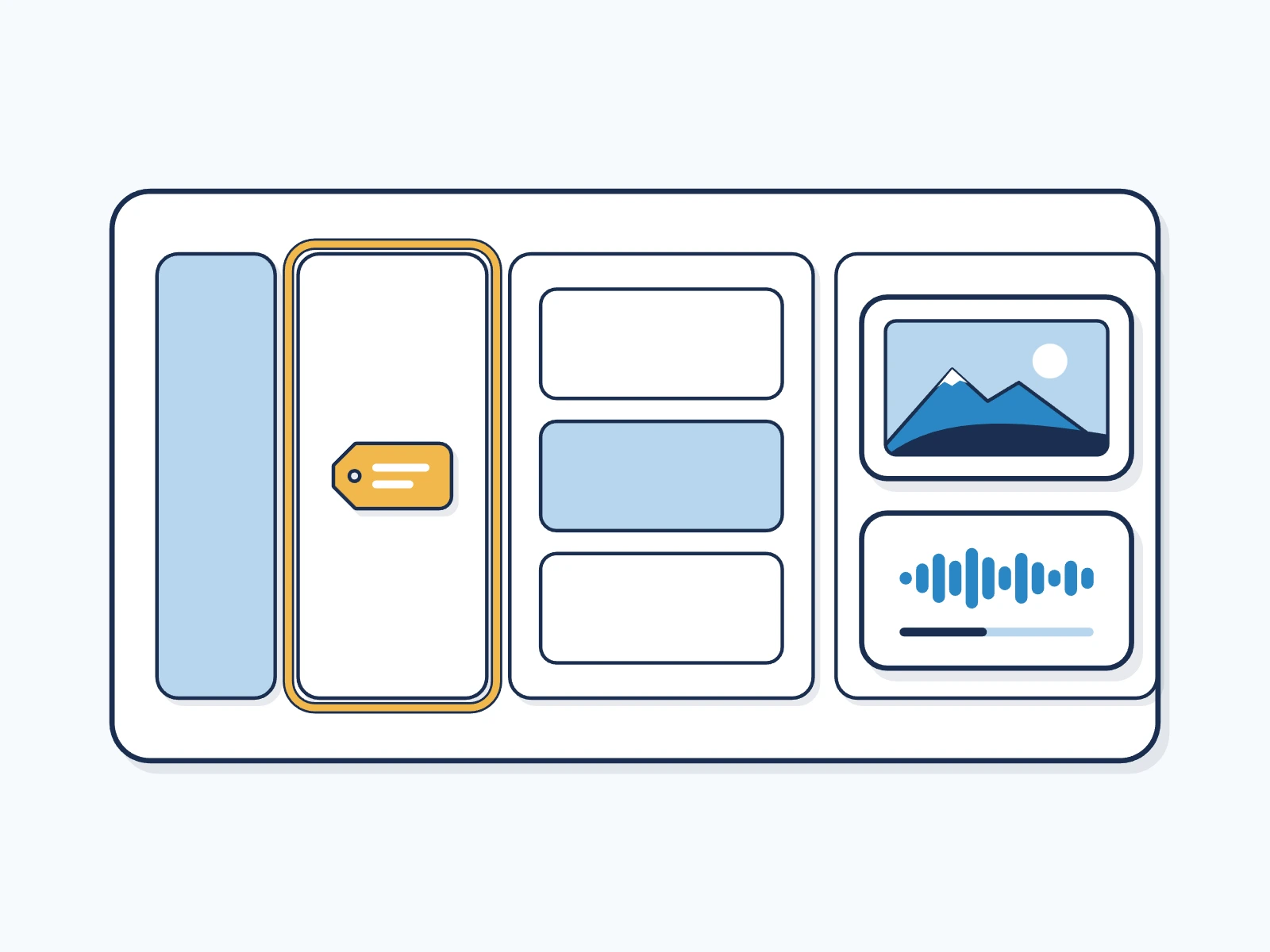
- Formats
- 7 audio and 9 video formats.
- Where it sits
- In its own part of the file. Players skip it.
- AI voice and video
- The label can say the media was made with AI.
- Live streams
- Signed piece by piece as they air.
Where the label sits in each audio and video format
Each format is built from parts, and the label gets one of its own. That is a chunk in WAV and AVI, a tag frame in MP3, and a box in ISO BMFFBMFF: ISO Base Media File Format: the box structure behind MP4, MOV, HEIF and similar files. files like MP4.
Prove the real footage instead of guessing at fakes
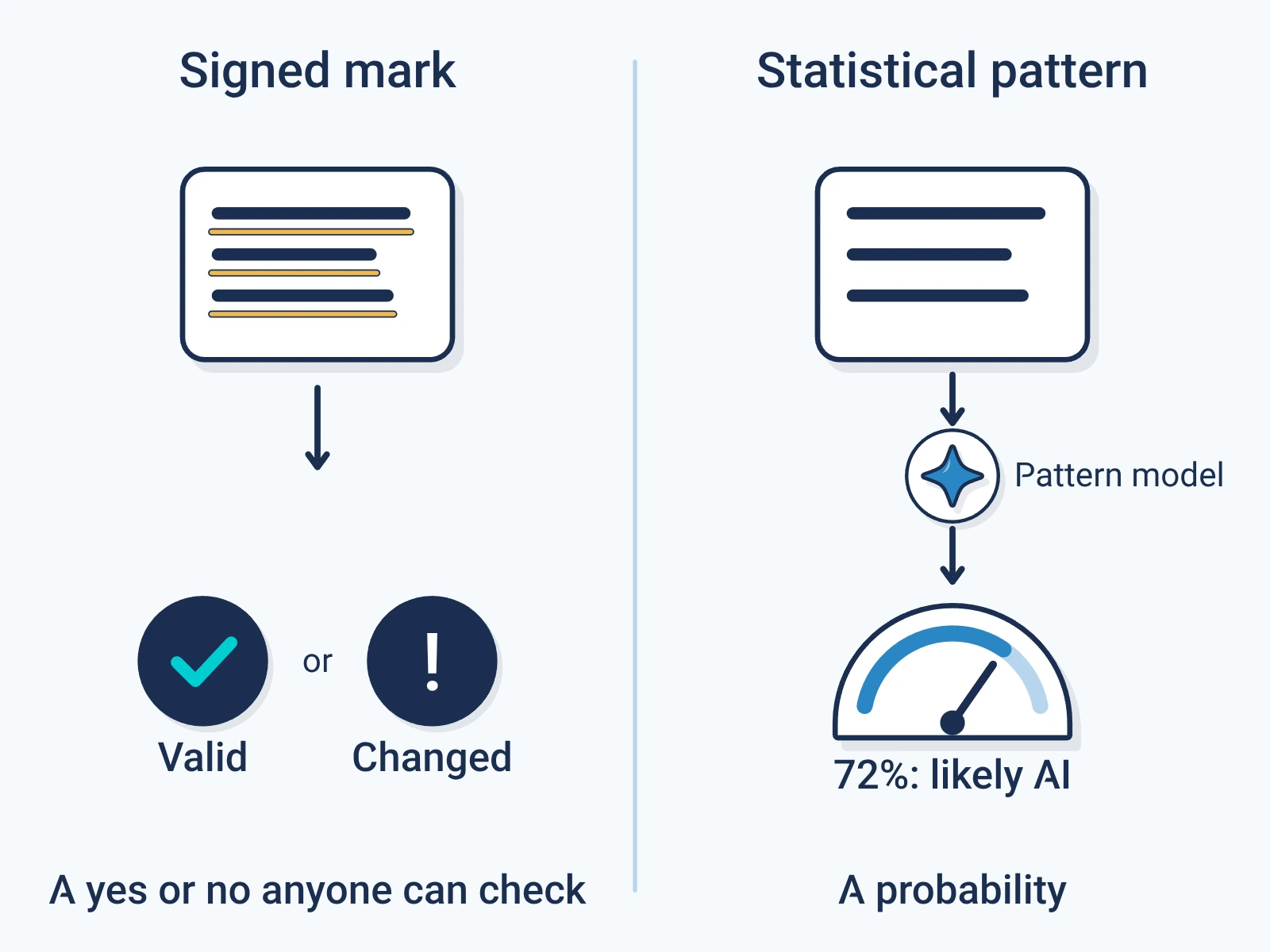
A deepfakeDeepfake: Image, audio or video made or changed by AI so it looks real and could fool people. detector guesses from patterns. ProvenanceContent provenance: The record of where a piece of content came from and how it changed, carried with the content itself. answers a different question: did this footage come from this newsroom, and is it unchanged? If one frame changed, the check says so.
Live streams, signed as they air
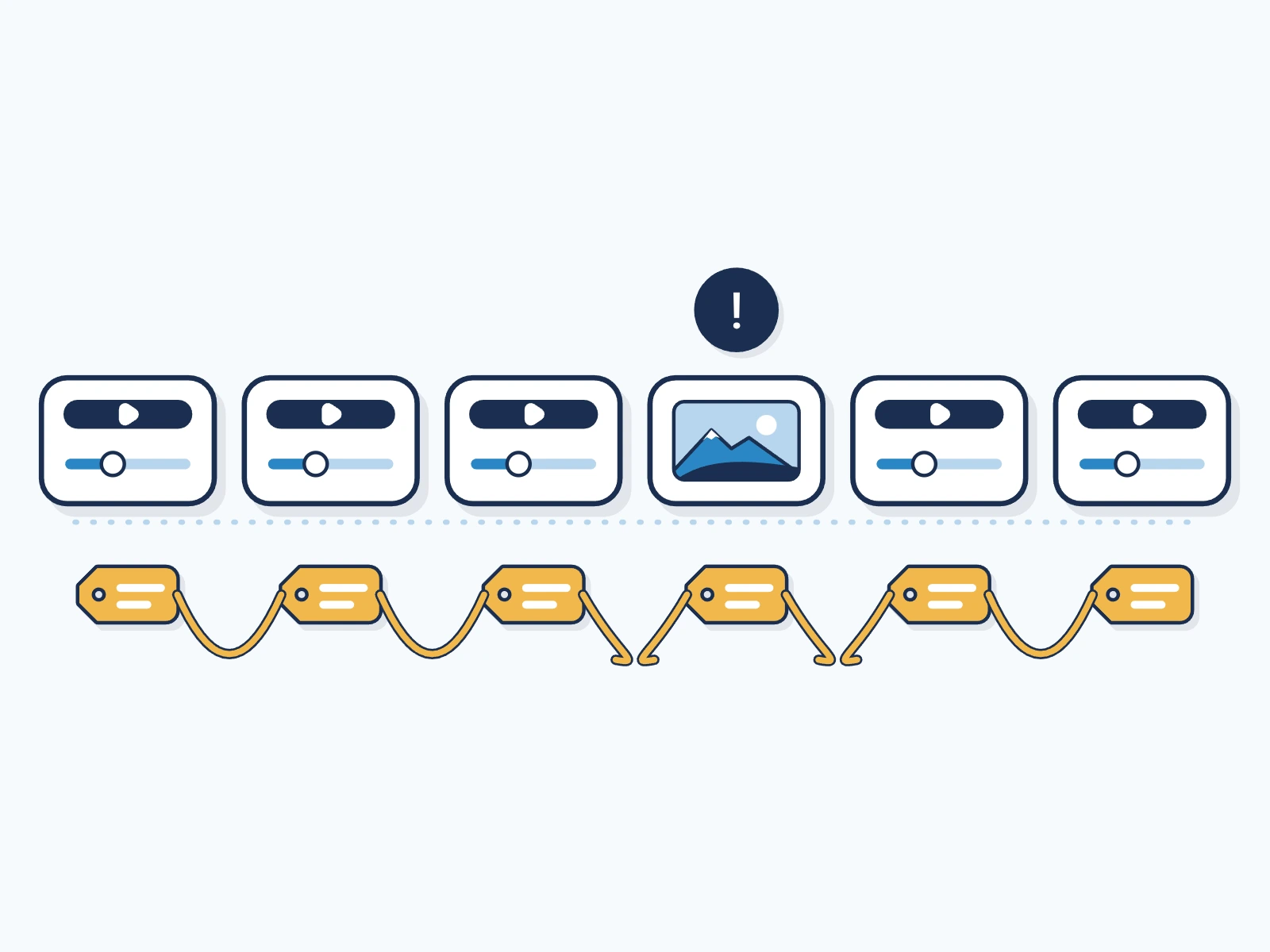
A live stream is cut into short pieces. Each piece gets its own label, linked to the one before, so an edit shows where the chain breaks.
For engineers
Show the technical detail
Embedding per container
- RIFF (WAV, AVI)
- JUMBF manifest store in a C2PA chunk.
- ID3 (MP3)
- JUMBF manifest store in an ID3v2 GEOB frame tagged with the C2PA media type.
- ISO BMFF (MP4, MOV, M4V, M4A, AAC)
- JUMBF manifest store in a C2PA uuid box. Tools that do not know the box skip it.
- FLAC
- JUMBF manifest store in a leading ID3v2 GEOB frame, as in MP3. Legacy FLAC APPLICATION blocks are still read.
| Format | MIME type | Embedding |
|---|---|---|
| WAV | audio/wav | JUMBF manifest store in a C2PA chunk of the RIFF container |
| MP3 | audio/mpeg | JUMBF manifest store in an ID3v2 GEOB (general encapsulated object) frame |
| M4A | audio/mp4 | JUMBF manifest store in a C2PA uuid box in the ISO BMFF structure |
| AAC | audio/aac | JUMBF manifest store in a C2PA uuid box in the ISO BMFF structure (AAC audio carried in an MP4 container) |
| FLAC | audio/flac | JUMBF manifest store in a leading ID3v2 GEOB frame (MIME application/c2pa); legacy FLAC APPLICATION blocks (app id c2pa) remain readable |
| MPA | audio/mpa | Read as MPEG audio (audio/mpa is an accepted alias of audio/mpeg): JUMBF manifest store in an ID3v2 GEOB frame |
| MP4 | video/mp4 | JUMBF manifest store in a C2PA uuid box in the ISO BMFF structure |
| MOV | video/quicktime | JUMBF manifest store in a C2PA uuid box in the ISO BMFF structure (QuickTime uuid atom) |
| M4V | video/x-m4v | JUMBF manifest store in a C2PA uuid box in the ISO BMFF structure |
| AVI | video/x-msvideo | JUMBF manifest store in a C2PA chunk of the RIFF container |
POST /api/v1/sign/media also takes optional spread-spectrum audio and video watermarks (Enterprise), which carry an identifier that can lead back to the record if the manifest is stripped.
Create. Mark. Endure.
Sign your first audio or video file free. Checking stays free for everyone.