

Text content provenance
Encypher hides a signed label in the text itself, in characters readers never see. Copy a paragraph and the label goes with it. Anyone can check who published it and whether a word changed.
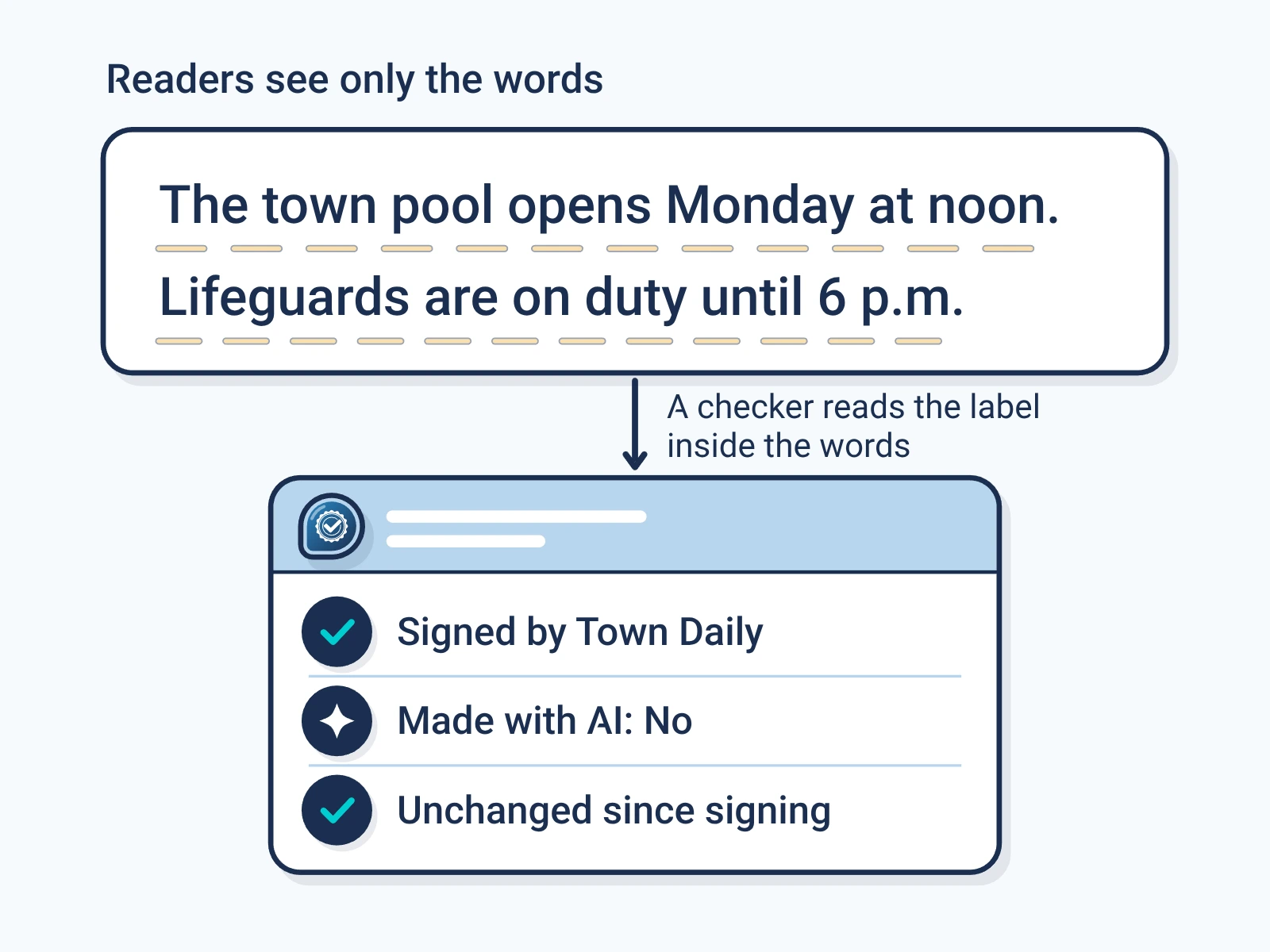
- The standard
- The C2PA standard for unstructured textC2PA text-provenance standard: The part of the C2PA standard that puts a signed label inside plain text, using invisible Unicode characters., first published in C2PA 2.3C2PA 2.3: The version of the C2PA specification, published January 8, 2026, that added the standard for unstructured text.. Encypher wrote it.
- Copy and paste
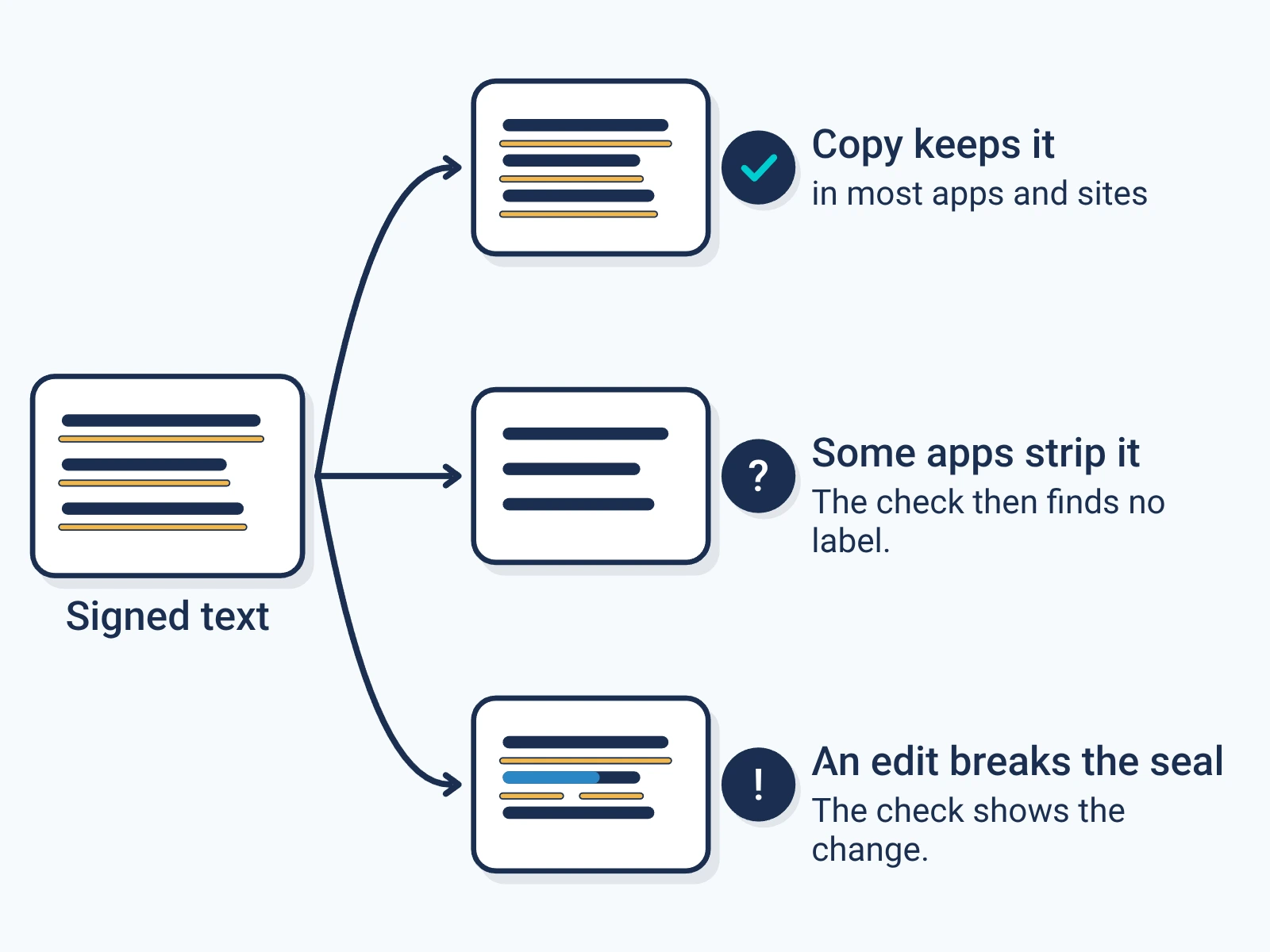
- The label copies with the words.
- Per sentence
- Encypher can also sign each sentence, so one quote can be checked.
- Limits
- Retyping, scanning and translating drop the label.
Try it on your own words
Sign a sample, check it, then change one word and check again.
Edit it or paste your own.
What the label will say
- Signed by
- Encypher demo identity
- AI use
- No declaration added
- Visible change
- None. Every word stays.
Signing and the check take a few seconds.
The label copies with the words
The label is made of hidden markersProvenance markers: Encypher's general name for invisible characters that carry a signed label inside text.: characters that screens do not show. Readers and search engines see normal text. When someone copies a paragraph, the markers come along.
Check one sentence, not just the article
Standard C2PAC2PA: The Coalition for Content Provenance and Authenticity: the group that publishes the open standard for content labels. signs a whole document. Encypher adds sentence-level attributionSentence-level attribution: Checking that one sentence came from a specific signed source unchanged, even when it is quoted on its own., its own layer on top. Each sentence can then be checked alone.
| C2PA, whole document | Encypher, each sentence | |
|---|---|---|
| Who published it | Yes, for the whole text | Yes, for each sentence |
| Was it changed | Any change fails the whole text | Names which sentences still match |
| A quote on its own | No, the check needs the whole text | Yes, traced to the article it came from |
Guides by kind of text file
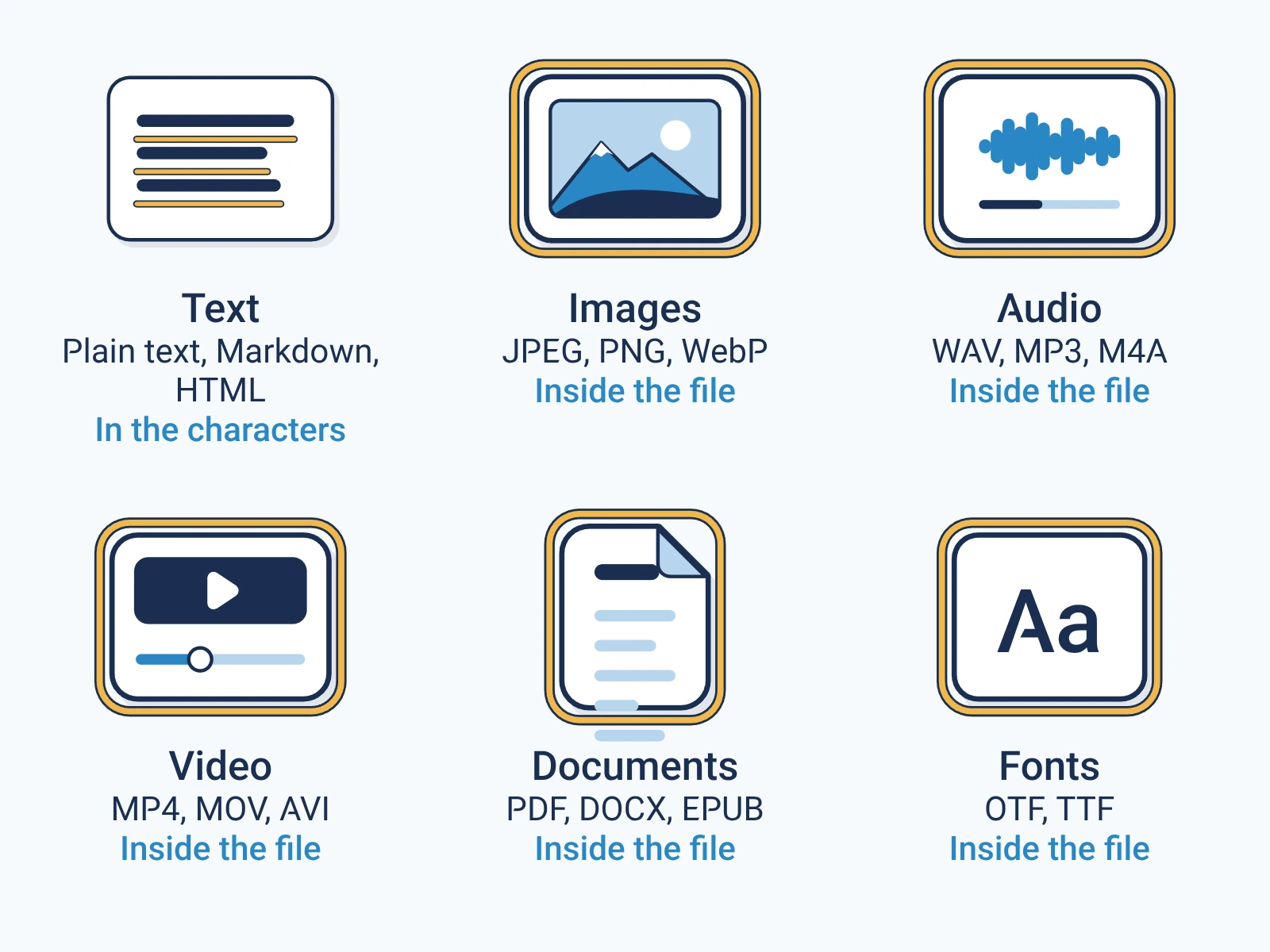
Any text file can carry the label in its characters. Markup and code files can also hold it in one comment block, as the C2PA standard allows.
What drops the label
The label is tied to the exact characters. Anything that makes new characters makes new text.
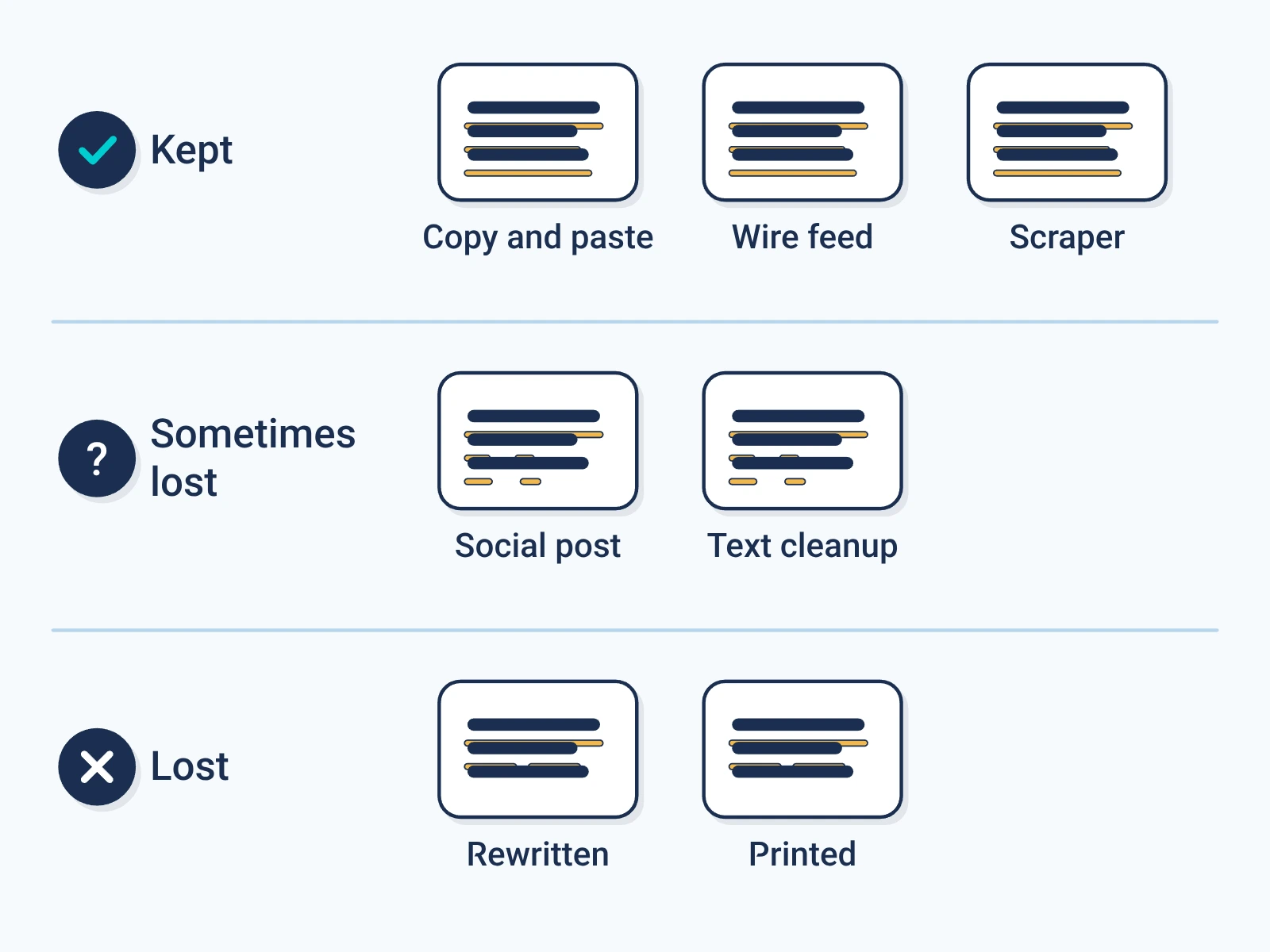
- Retyping or rewording the text.
- Scanning a printout with OCROCR: Optical character recognition: software that turns a picture of text back into characters..
- Translating it into another language.
Questions
What is the C2PA standard for unstructured text?
Does the label survive copy and paste?
What does sentence level mean?
Why are there two ways to hide the label?
For engineers
Show the technical detail
How the label is carried
The C2PA standard for unstructured text (Section A.7 in C2PA 2.3, published January 8, 2026; Section A.8 in C2PA 2.4) encodes the manifest bytes as invisible Unicode characters placed in the text. The hard binding hashes the text with the markers excluded, after Unicode normalization. Read the specification.
- Default mark
- For web, email and most apps.
- Word-safe mark
- For documents edited in Microsoft Word. The verifier detects both.
- Sentence level
- Encypher can sign each sentence. A quote check returns the sentence and its position in the signed article.
- Resolver
- Sub-document attribution resolves through Encypher's record. The C2PA manifest itself stays document-level.
Create. Mark. Endure.
Sign your first article free. Checking stays free for everyone.