

Cryptographic watermarking for text
Encypher hides a signed mark inside the words you publish. Readers see the same text. When someone copies it, the mark goes along, and anyone can check where it came from.
The sentence The pool opens Monday appears on a card with a gold stitch under it, labeled Signed text. One copy drops into an app window and keeps its stitch; a check mark appears: This app keeps it. A second copy drops into another app and its stitch fades away; a question mark appears: This app strips it.
- Invisible
- The mark is a run of hidden charactersProvenance markers: Encypher's general name for invisible characters that carry a signed label inside text.. The words on screen do not change.
- Copied along
- Copy and paste keeps it in browsers, editors and most CMS tools.
- Per sentence
- Each sentence can be checked on its own.
- Free to check
- Paste any text into the public checker. No account needed.
Readers see nothing new
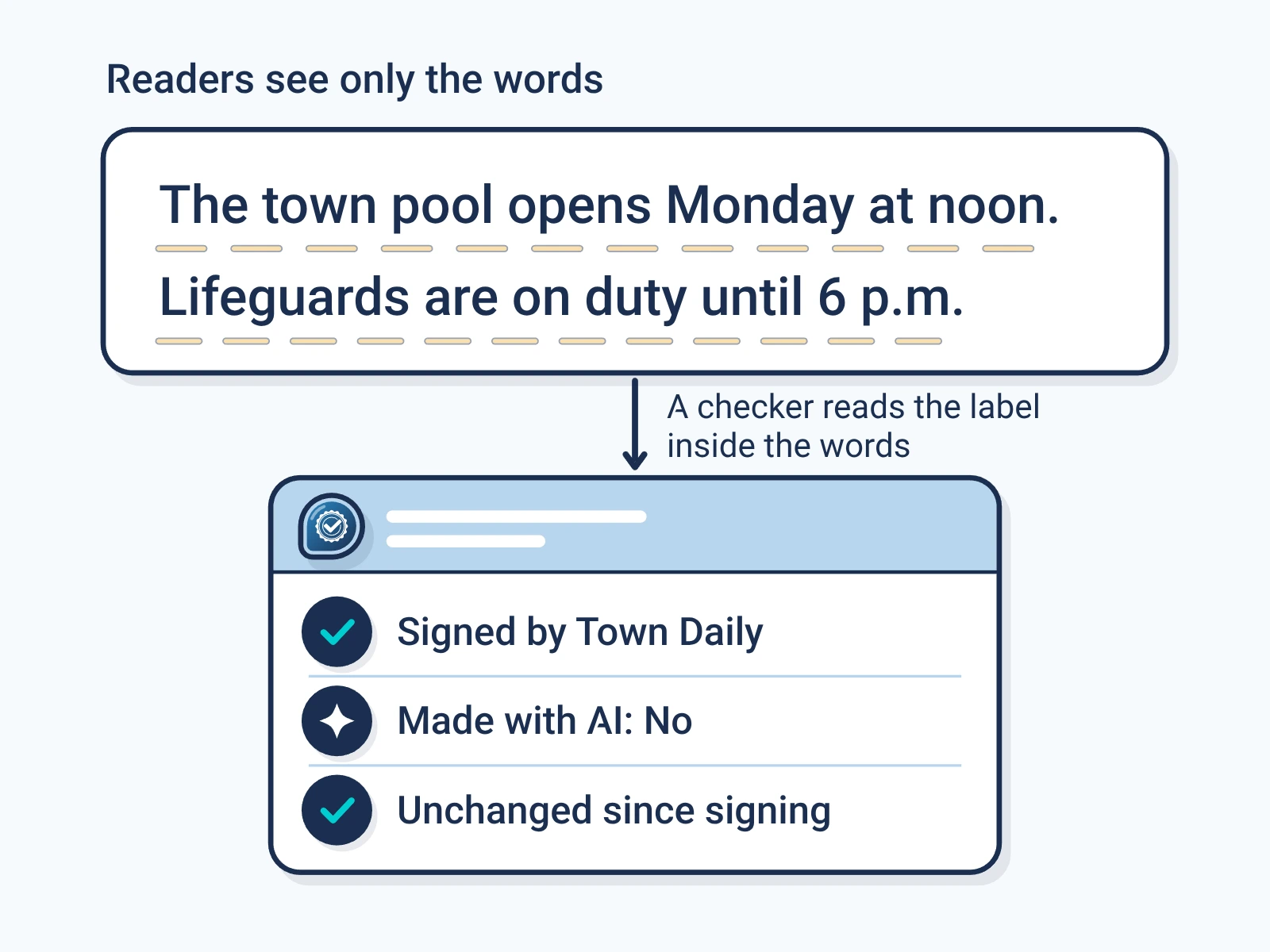
The mark is made of UnicodeUnicode: The standard that gives every character in every writing system a number, so text looks the same on every device. characters that draw nothing on screen. The words, layout and links stay as they were.
Copy and paste, search indexing and page speed depend on your CMS. Test a few pages on your own site first.
Where the mark goes with your text
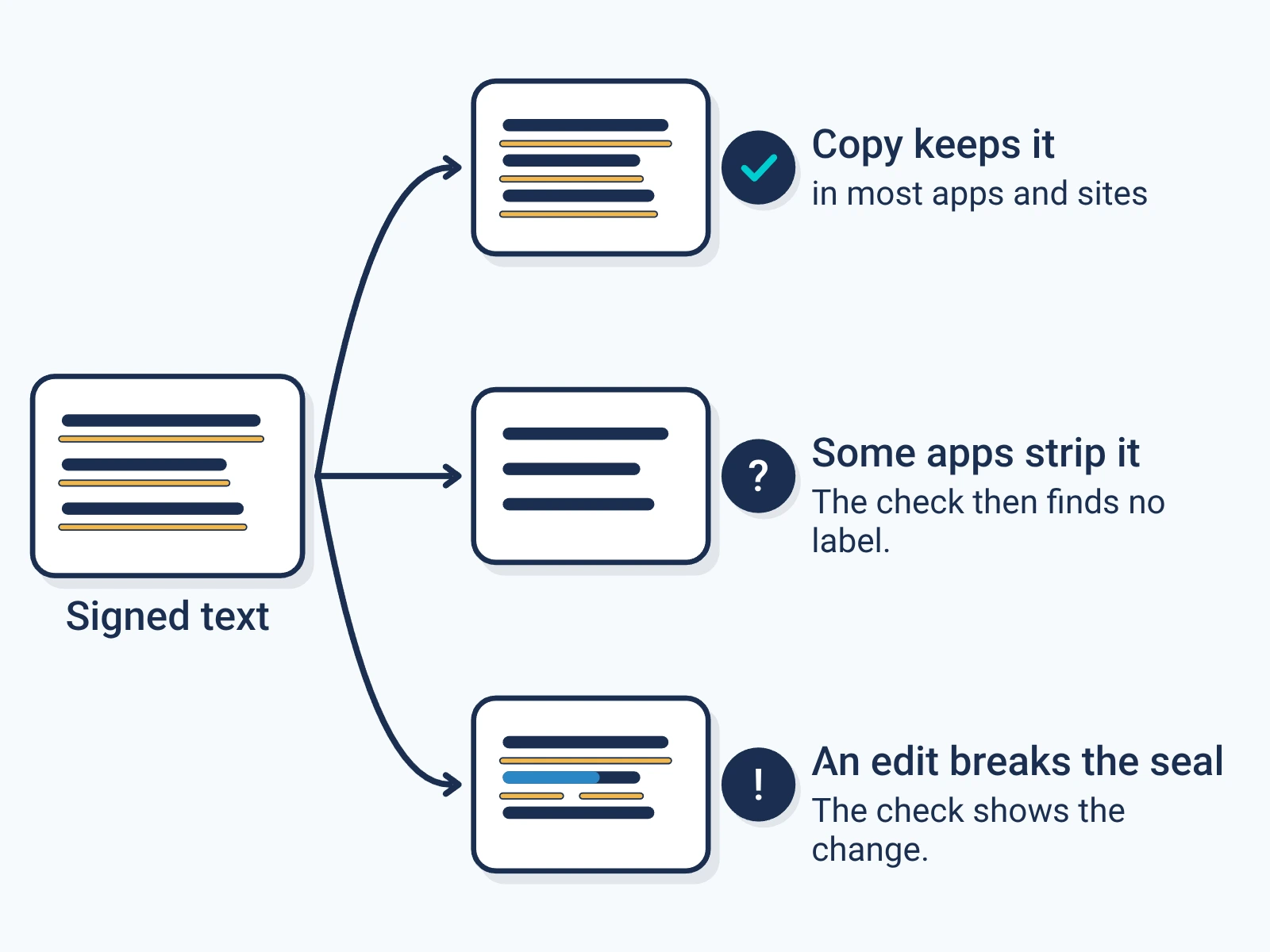
- Web and CMS
- Articles, posts and pages. Browsers copy the hidden characters with the words.
- Wire feeds and scrapers
- Feeds and HTML parsers pass the characters through unless they are set to remove them.
- Word documents
- Use the Word-safe mark. Word shows the default one as boxes.
- PDFs
- PDFs with text marks can keep the mark when text is copied out, in tested font and extractor paths.
- AI output
- Mark signs AI text as it is produced, so each reply carries its label.
Quotes and excerpts
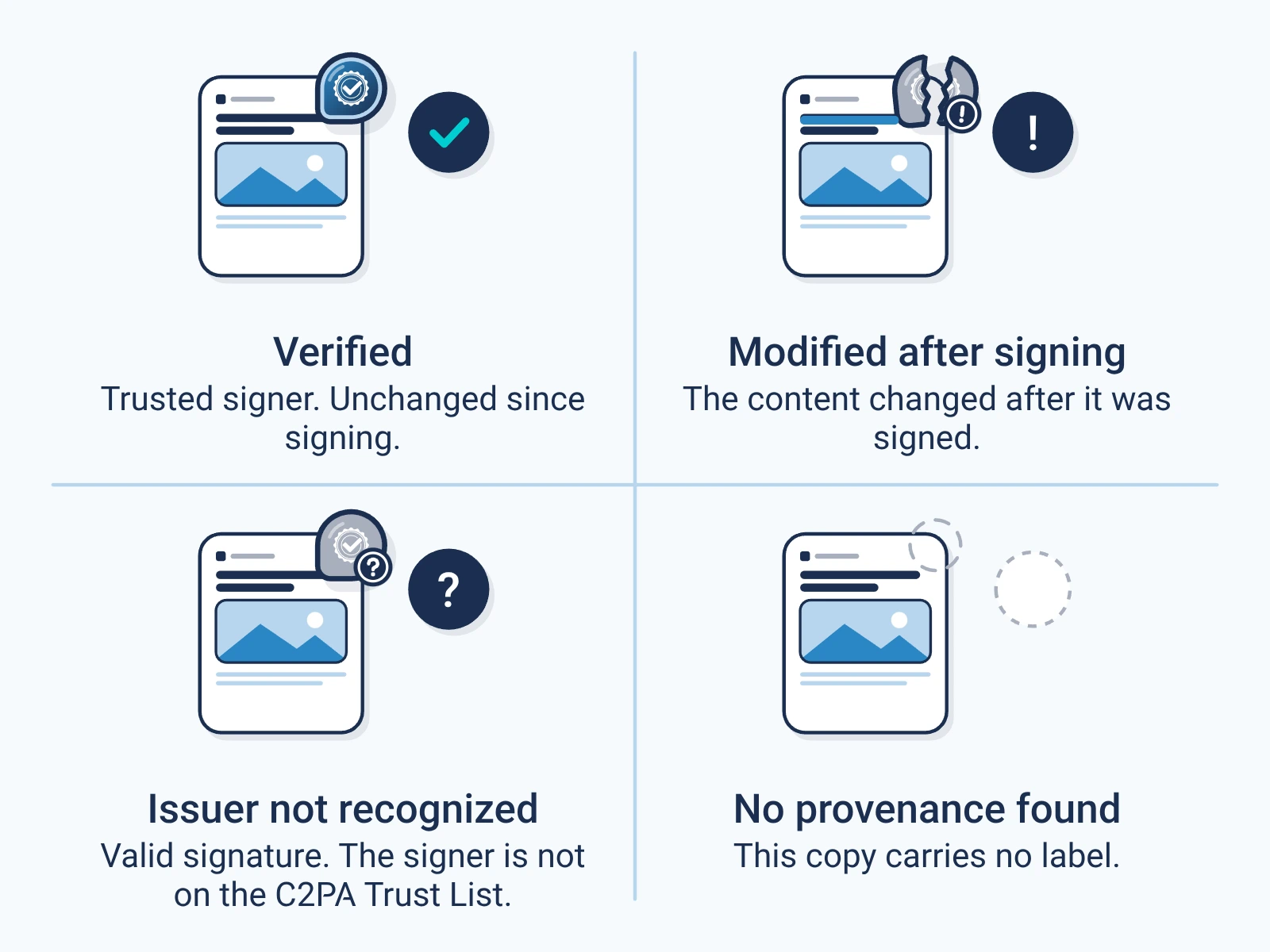
Each sentence carries its own mark. A sentence-levelSentence-level attribution: Checking that one sentence came from a specific signed source unchanged, even when it is quoted on its own. check can show that a quote matches the original word for word. It can also trace a few copied sentences back to the article they came from.
Where the mark stops
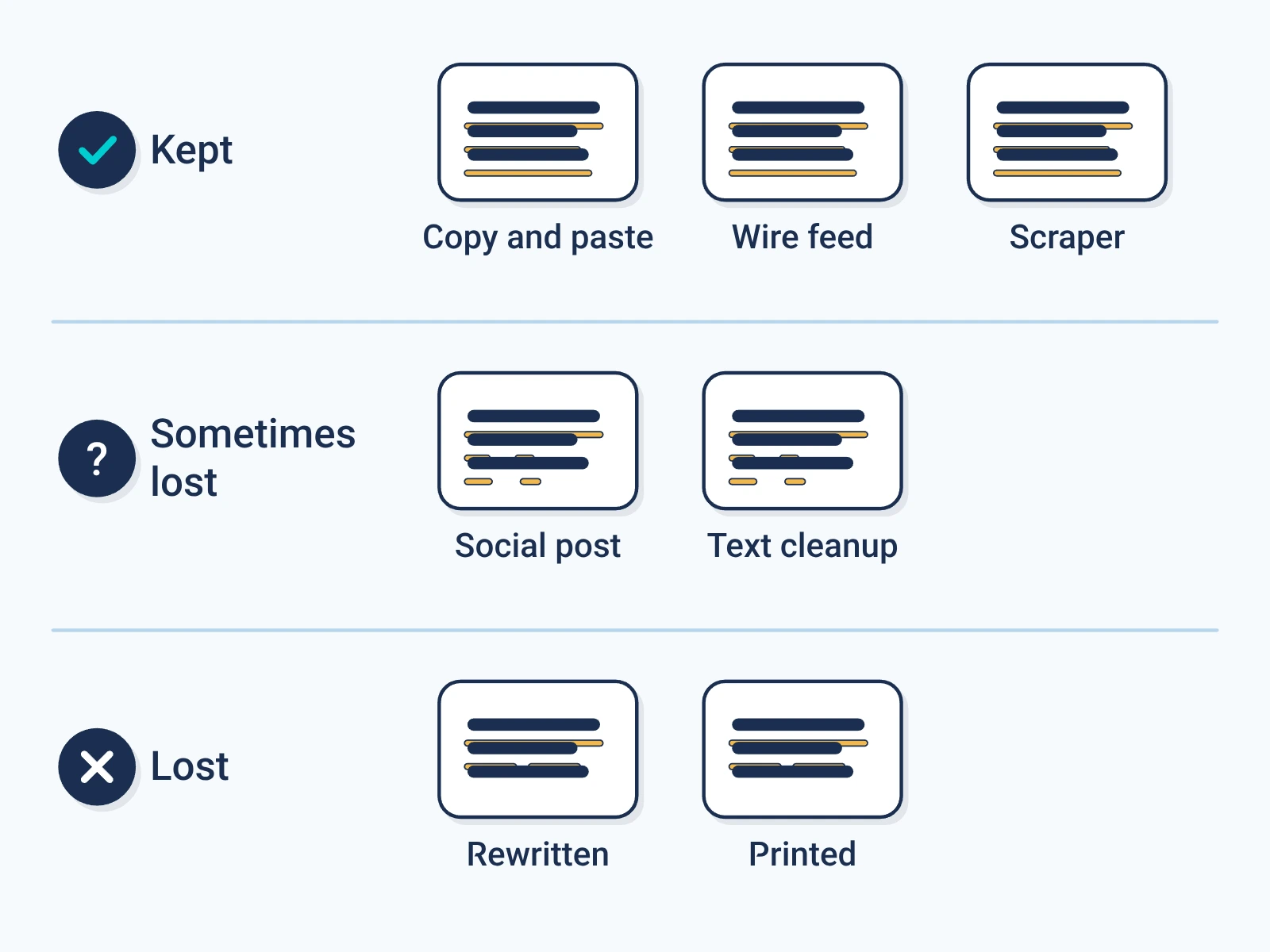
The mark rides on the exact characters. Retyped, rewritten or translated text is new text with no mark. So is a screenshot. Some email, chat and social tools strip hidden characters, and the copy then checks as unsigned.
Start in three steps
Connect
Add the WordPress or Ghost plugin, or call the APIAPI: Application programming interface: a way for one program to ask another to do a job, such as sign a file..
Publish
Each article is signed as it goes live.
Check
Paste any copy into the public checker.
Open the checker
For engineers
Show the technical detail
In tests, both mark types survive Unicode normalizationUnicode normalization: Text cleanup that rewrites characters into a standard form. Some forms remove invisible marks. to NFC, and the checker looks for both. Error correction repairs a few lost characters. It cannot recover a mark whose characters are all gone.
Signing options and API callsCreate. Mark. Endure.
Sign an article free and paste a quote from it into the checker.