

Content provenance for legal teams
Sign contracts, filings, and exhibits so anyone can check who signed them, when, and if they changed. An edit to signed content shows up in the check.
Technical records, not legal advice. Counsel decides how to use them.
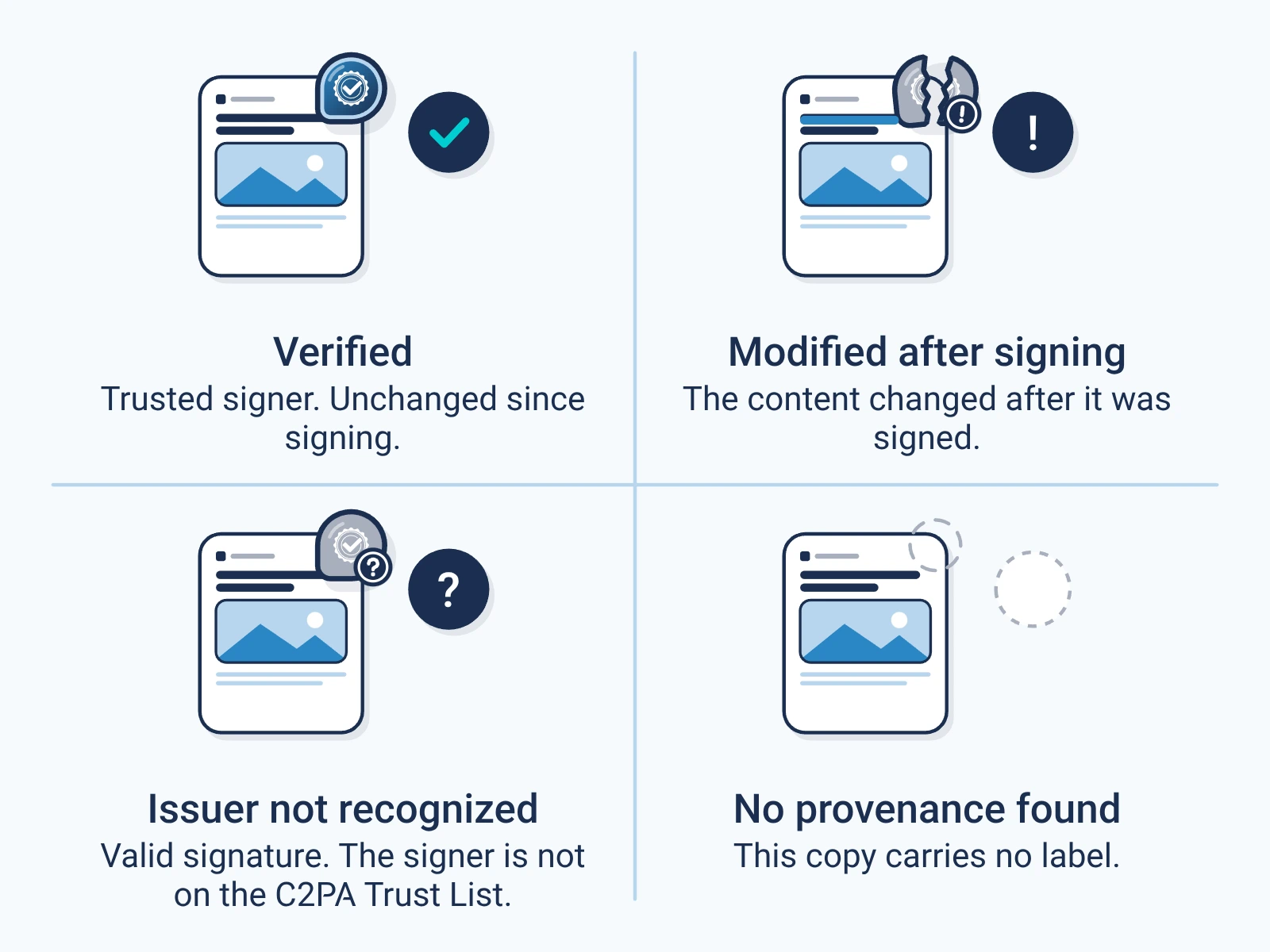
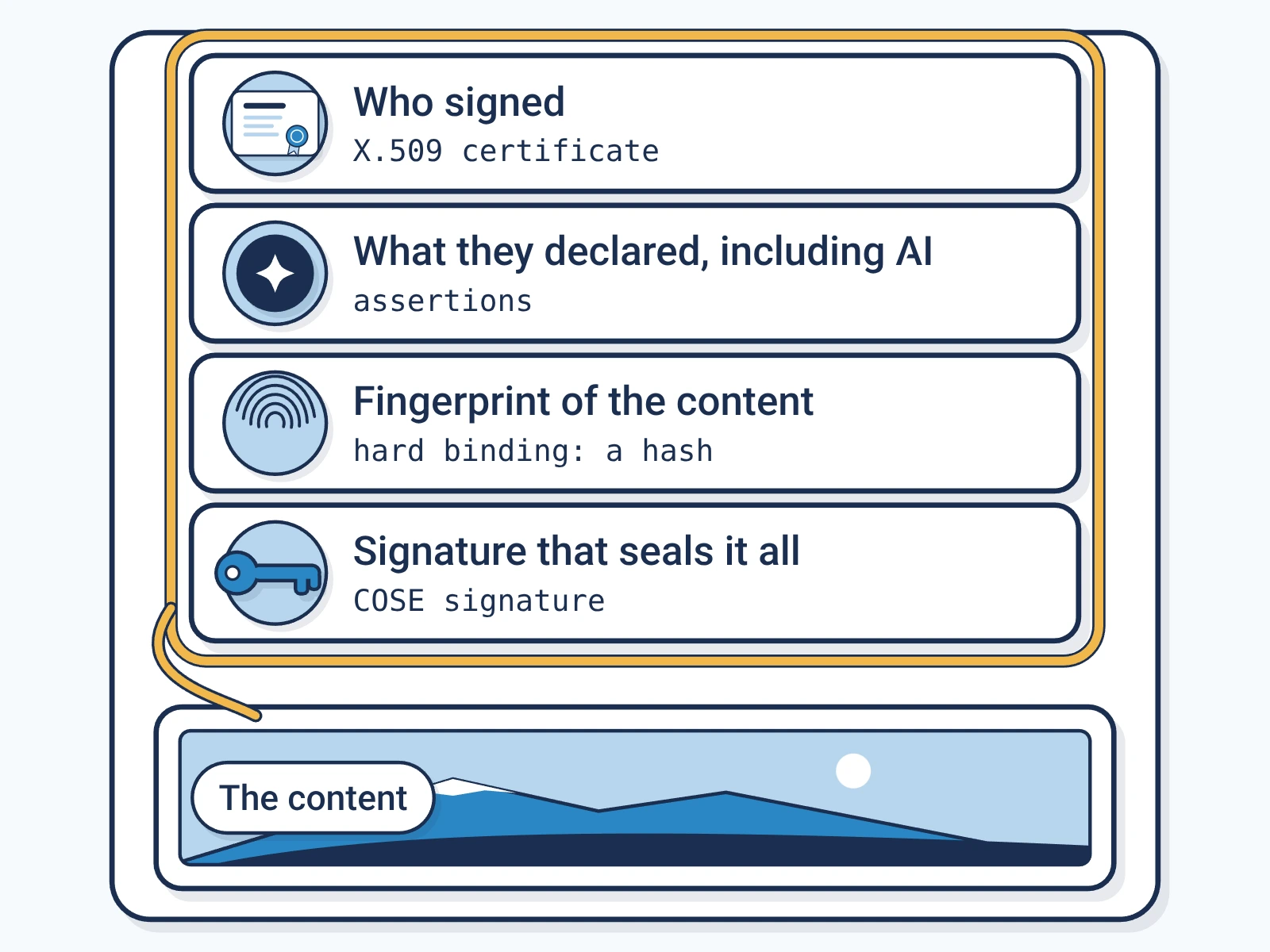
- Tamper-evident manifestsC2PA manifest: The signed label itself: a small package inside a file that records who signed it, what they declared and how to check it.
- A change to the signed content shows up as modified when checked, so a dispute starts from facts anyone can check.
- Independent timestampsTimestamp authority: An outside service that signs the time a record existed, so a signature stays checkable after its certificate expires.
- An RFC 3161 Time Stamp Authority states when a document existed in its signed form. That helps with priority, notice, and chain of custodyProvenance chain: The full signed history of a piece of content, from first creation through each signed edit..
- X.509 signing certificatesX.509 certificate: A digital ID card for a signing key: it names the holder and is itself signed by a certificate authority.
- The signature names the signing organization through a standard certificate chain, the same kind of chain used for secure websites.
How it works
Create a free account.
No card needed. Trials sign as Encypher; your firm name needs a paid plan.
Sign the final version.
The signer's name and a trusted time go into the file.
Send it as usual.
Anyone who gets it can check it free, with no account.
Open the checker
Why legal teams need a label
Contracts, filings, and exhibits move through email, where any copy can be changed without a trace. Proving which version is real, and when it existed, costs discovery hours and expert fees. AI fakes make these disputes more common.
Lock in evidence when you collect it
Web pages and posts change or vanish. Sign a copy the moment you collect it. The trusted timestamp shows the file existed in that exact form at that time. Any later change breaks the seal.
Notice that travels with the work
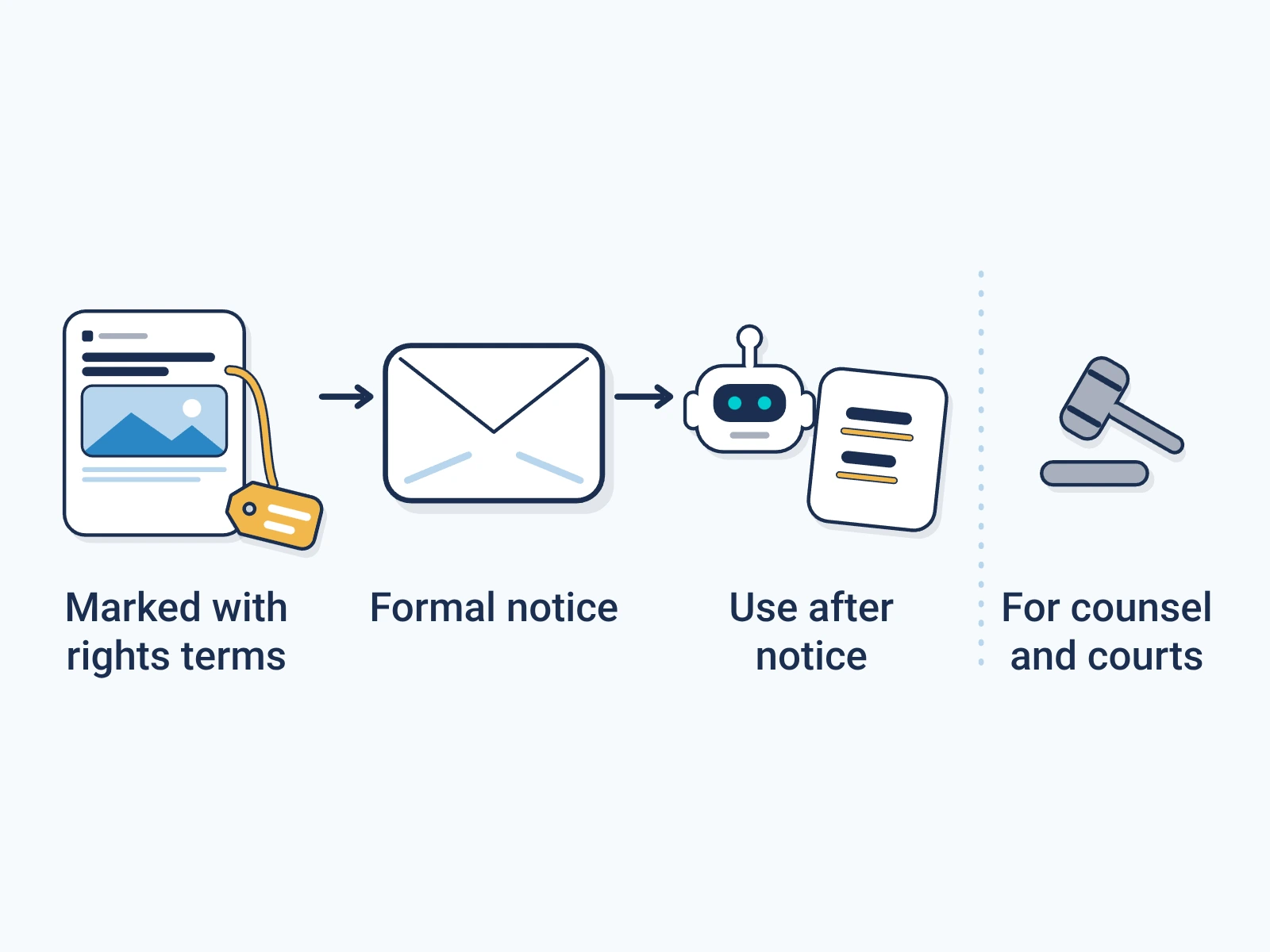
AI training cases turn on what the other side knew. A signed label carries the signer's rights statement inside the file, wherever it goes. That can support evidence of formal noticeFormal notice: Documentation that tells a user a work is protected and which terms apply, which matters for willfulness.. Counsel decides if a separate notice is needed and if it holds. Content signed before a training run can count for more than content signed after.
That record can support a claim of willful infringementWillful infringement: Copyright infringement done knowingly. US law allows up to $150,000 in statutory damages per work.. In the US, statutory damagesStatutory damages: Damages set by law per infringed work, under 17 U.S.C. 504(c), with no need to prove actual loss. then reach up to $150,000 per work (17 U.S.C. 504(c)(2)). Counsel decides how to use it.
Declared AI use, on the record
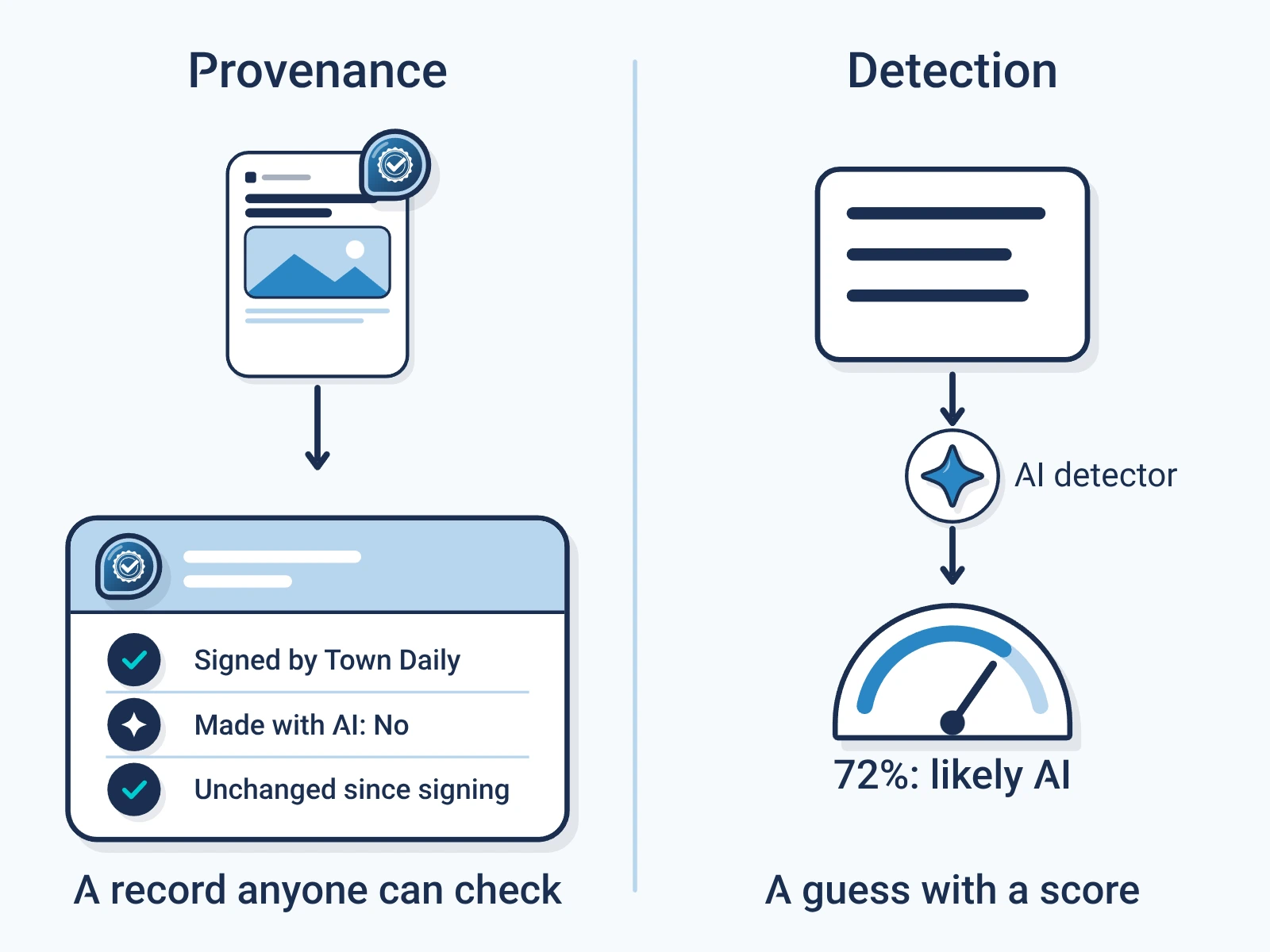
Some courts and bars now ask lawyers to disclose AI help. An AI detectorAI detector: A model that guesses whether content was made by AI and returns a probability, not proof. only guesses, and it flags human writing too. Content provenanceContent provenance: The record of where a piece of content came from and how it changed, carried with the content itself. records what the signer declared instead: human-written, AI-assisted, or AI-made, in the standard digital source typeDigital source type: A field in the label that says how content was made: captured by a camera, made by AI, or a mix. field. It records the claim. It does not test the text.
Good questions.
Will a court accept a signed document?
Does the label prove a document is true?
Does the label expose privileged details?
Is this an electronic signature?
For engineers
Show the technical detail
What a signed document carries
- A SHA-256 hashHash: A short fingerprint of exact bytes. Any change, even one character, gives a completely different hash. bound to the document bytes.
- A COSECOSE: CBOR Object Signing and Encryption: the signature format C2PA uses to sign the claim inside a label. signature over every claim in the C2PAC2PA: The Coalition for Content Provenance and Authenticity: the group that publishes the open standard for content labels. manifest.
- An X.509 certificate chainCertificate chain: The links from a signer's certificate up to a root authority a checker already trusts. naming the signing organization.
- An RFC 3161 timestamp from a Time Stamp Authority.
- Integrity: a change to the hash-covered content is reported as modified. That is a separate check from the claim signature.
Authentication questions counsel will ask
US federal courts often look at authentication under FRE 901(b)(9): whether the process that made the record is accurate and reliable. State and foreign courts differ. Review the signing chain, the timestamp authority, and how the check is run for each matter.