Content Provenance for Government Agencies

Public records authentication, official document integrity, and agency communication verification using C2PA cryptographic signing integrated with government PKI.

Authenticating Public Records

Government agencies publish documents that form the basis of public trust in institutional decisions. Regulations, guidance documents, meeting minutes, official statistics, and policy announcements circulate widely online. They are cited in news coverage, legal filings, and academic research. Their authenticity is assumed.

That assumption is increasingly exploited. Manipulated government documents circulate as genuine. Altered screenshots of agency websites spread on social media. AI-generated content is published under official agency branding. Distinguishing authentic government documents from fabrications is harder than it should be.

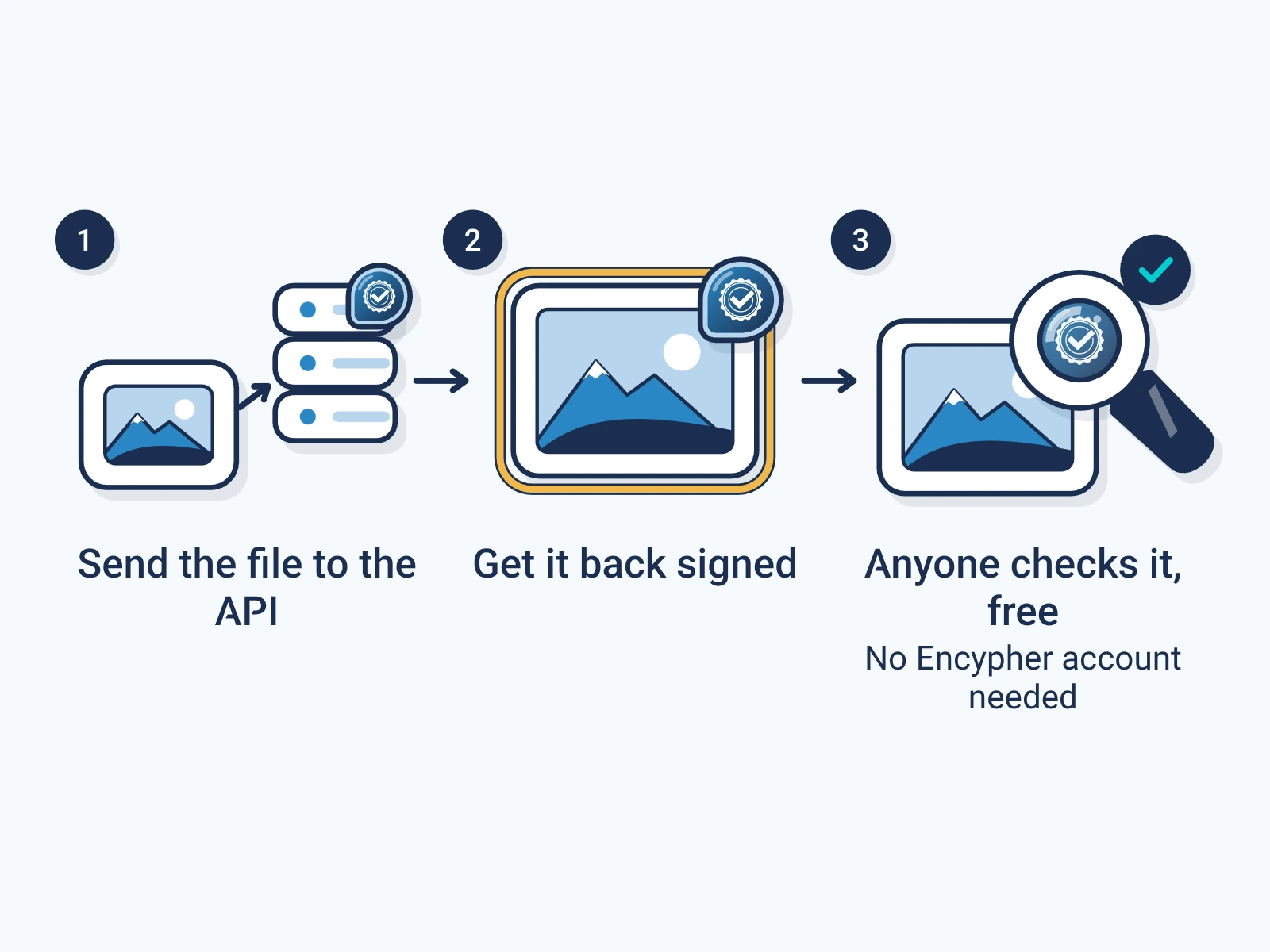
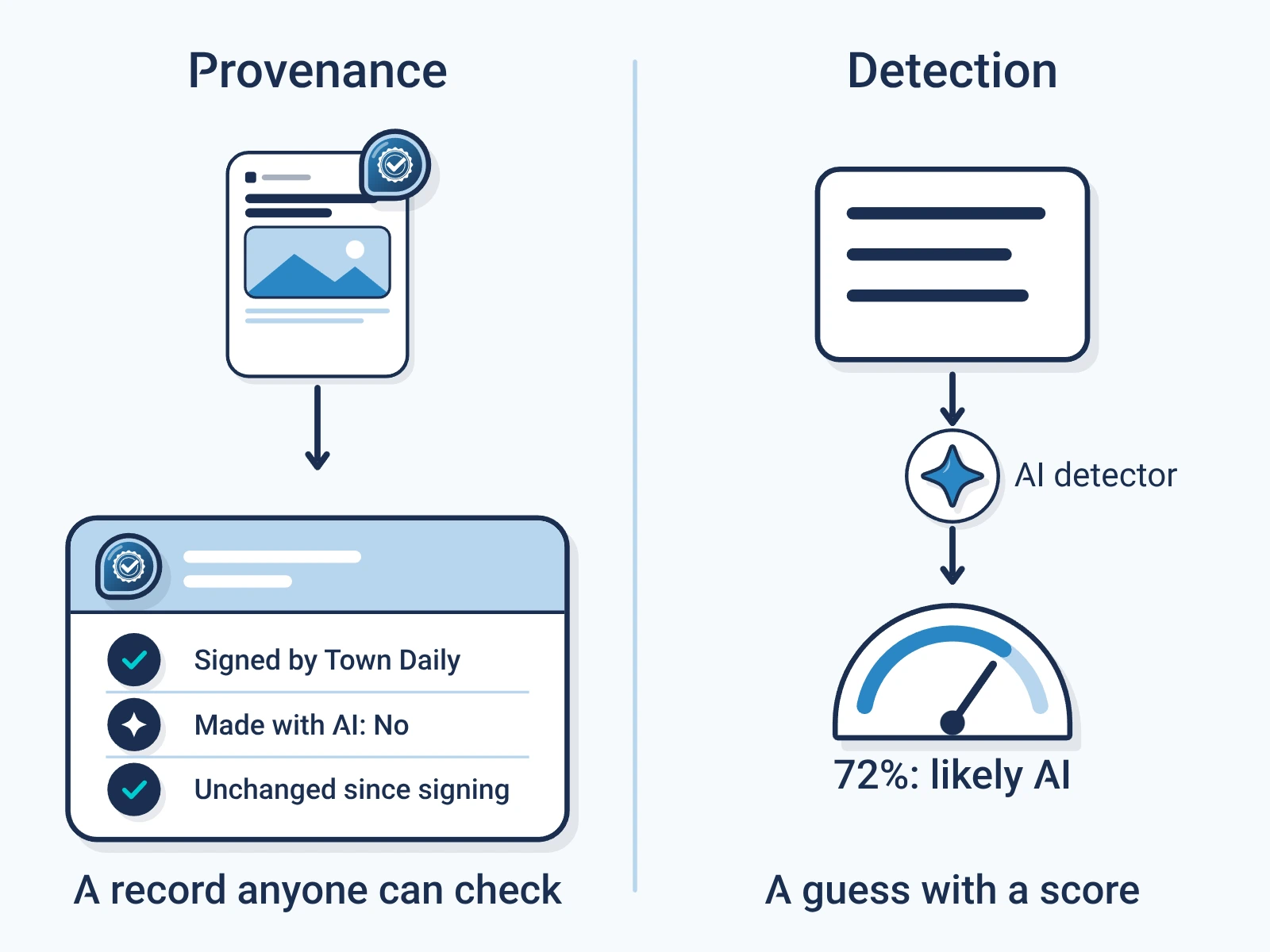
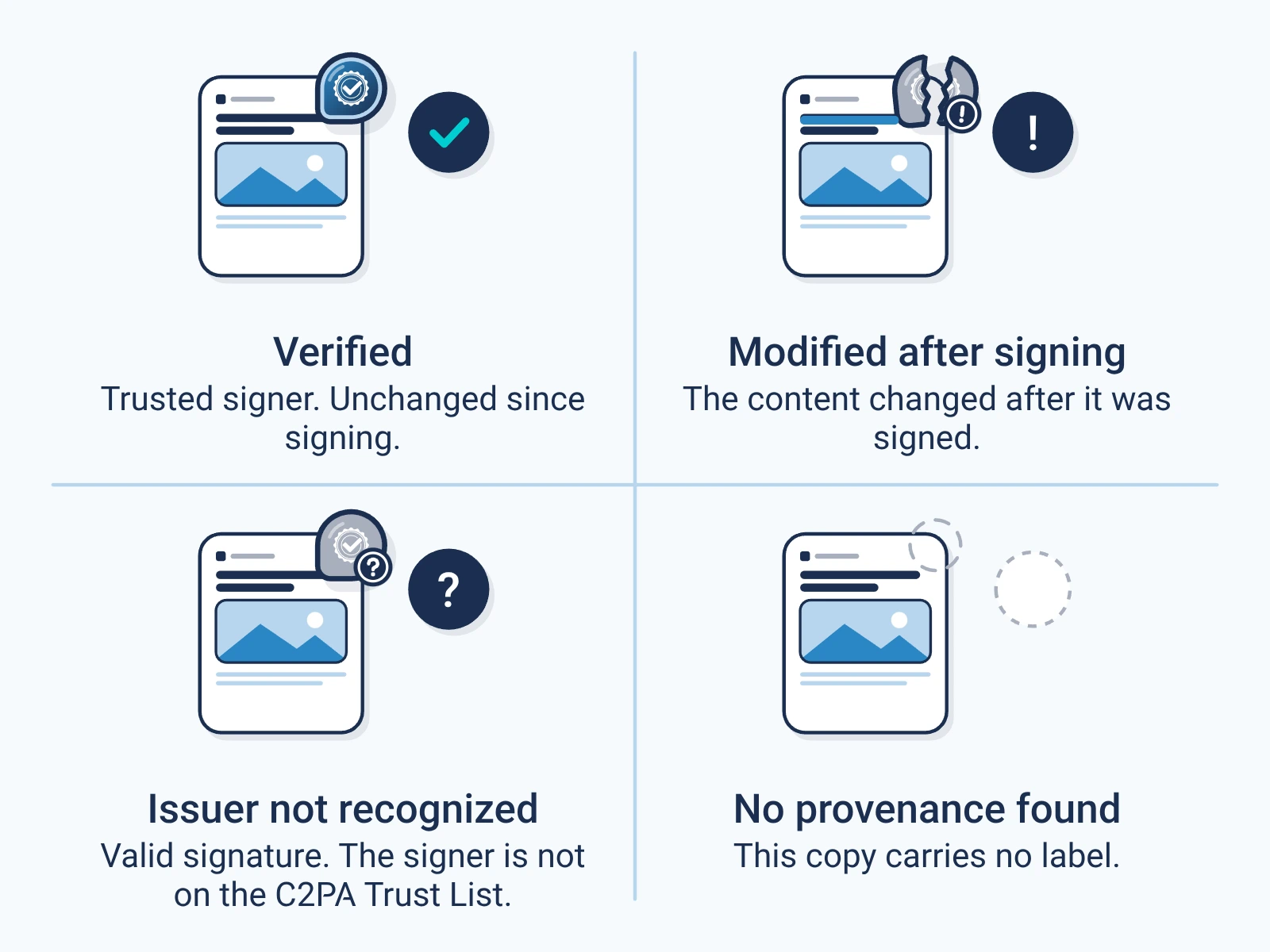
Content provenance makes authenticity machine-verifiable. An official document signed with a C2PA manifest at publication carries cryptographic proof of its origin. Any party can verify the document against the agency's published certificate, without contacting the agency and without specialized software. If the document has been altered, the signature fails. If it carries a valid signature from the issuing agency, the authenticity claim is verified.

For citizens, journalists, and oversight bodies, this changes the verification question from "is this document from that agency?" (which currently requires judgment) to "does this document have a valid signature from that agency?" (which is a cryptographic check with a binary answer).

FOIA Compliance and Document Integrity

FOIA responses are routinely challenged. Requestors dispute whether they received complete records. Agencies dispute whether produced documents were altered in transit. Redaction decisions are challenged on the grounds that the redacted version does not accurately represent the original. These disputes are expensive and time-consuming to resolve without a reliable authenticity record.

Provenance addresses this by creating a chain of custody for FOIA-responsive documents. When an agency produces documents in response to a FOIA request, it can sign each document at the time of production. The manifest records the production timestamp, the agency identity, and whether any redactions were applied. The requestor receives documents with cryptographic proof of their state at production.

FOIA provenance chain

  • - Original document signed at creation (agency signing key)
  • - Redacted version signed at FOIA production (references original as ingredient)
  • - Redaction recorded as a provenance action with timestamp
  • - Requestor receives document with full provenance chain
  • - Chain is verifiable without further agency involvement

This is not just a compliance feature. It is a dispute-prevention feature. When the provenance chain is clear and verifiable, the factual disputes that consume FOIA litigation resources are resolved before they become disputes.

Official Communications and Deepfake Defense

Deepfake technology can produce realistic video and audio of government officials saying things they did not say. The threat is not hypothetical - manipulated videos of officials have circulated during elections and crises. The current defense relies on human judgment and post-hoc investigation, which is slow and often ineffective.

Official video and audio statements signed at recording or publication carry C2PA manifests that bind the agency identity to the specific content. Any alteration breaks the signature. Journalists and citizens can verify an official statement by checking its manifest. The verification is fast (seconds), requires no specialized knowledge, and gives a reliable answer.

Agencies that sign their official communications create a positive authentication baseline. Authentic communications are verifiable. Manipulated content, which lacks a valid agency signature, is distinguishable from the authentic record. This does not eliminate all deepfake risk - unsigned video can still circulate - but it gives the public a reliable mechanism to verify the official record.

See the verification documentation for how the public verification endpoint works. Verification requires no authentication and is available to any party.

Regulatory Filing Provenance

Regulated entities submit filings to government agencies: financial disclosures, environmental reports, safety certifications, license applications. The authenticity and integrity of these filings matters for the regulatory process. Agencies need to know that the filing they received is the filing the entity submitted, unaltered.

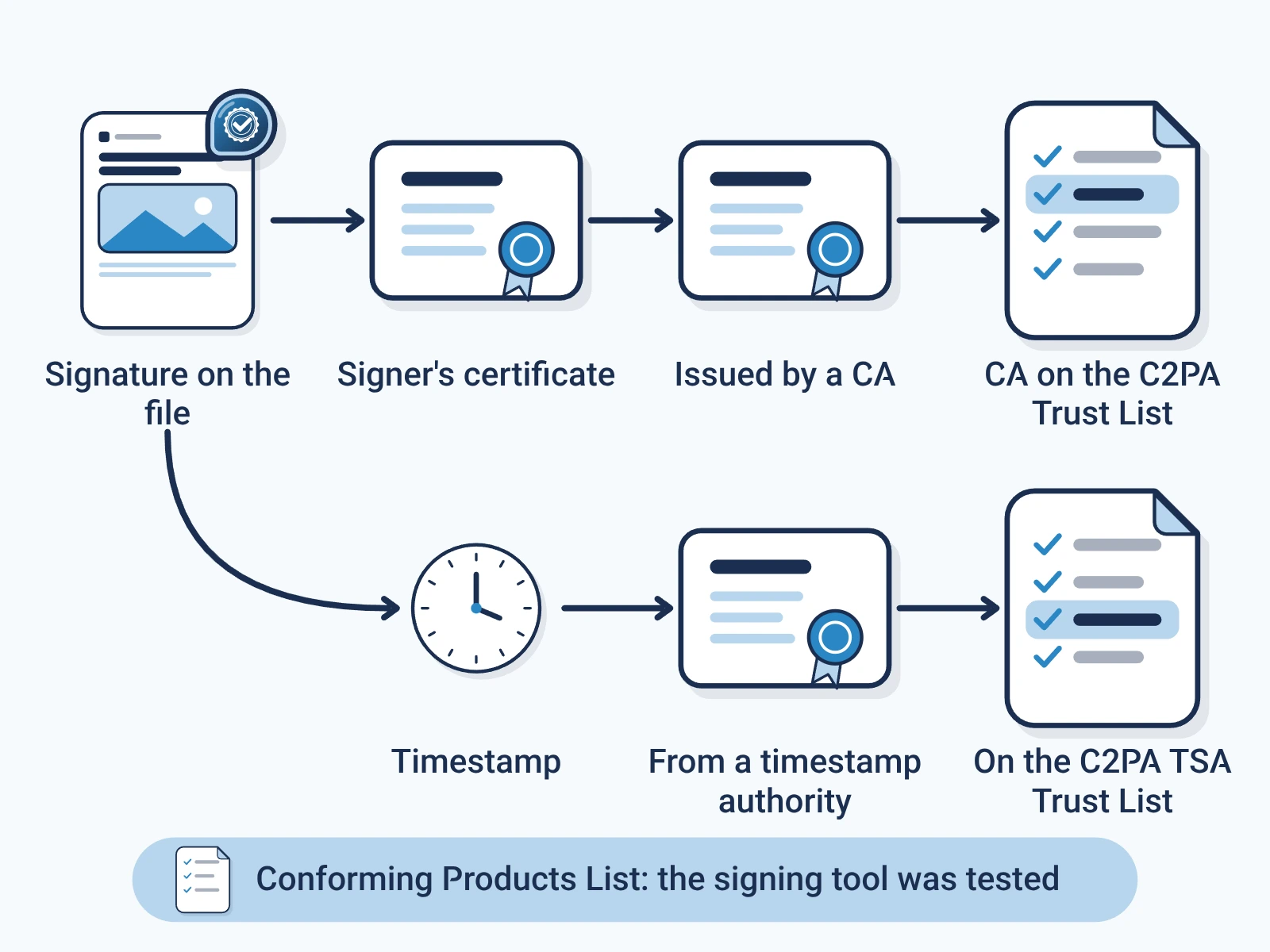
When regulated entities sign their filings before submission using Encypher, the agency receives a document with a cryptographic hash bound to its content. Any alteration in transit is detectable. The signing timestamp from an RFC 3161 trusted timestamping authority proves when the document was created, which matters for compliance deadlines.

For agencies implementing e-filing systems, Encypher's API supports integration at the submission layer. Filings can be validated against their manifests at receipt, with broken signatures flagged for follow-up. This provides a systematic integrity check that does not depend on manual review.

Integration with Government PKI

Government agencies operate within established PKI frameworks: PIV cards for individual identity, CAC cards for military personnel, the Federal PKI Bridge for cross-agency trust. Content provenance built on top of these existing certificate infrastructures inherits their trust properties.

Encypher supports custom certificate authority integration. Agencies can sign content using certificates issued by their own certificate authority, which is itself trusted through the Federal PKI bridge. The C2PA manifest carries the full certificate chain, so any party that trusts the government PKI can verify the signature without trusting Encypher's infrastructure independently.

Government PKI integration options

  • - Bring your own certificate authority (BYOCA)
  • - PIV/CAC card signing for individual official statements
  • - Federal PKI bridge integration for cross-agency trust
  • - Agency root CA integration for departmental signing
  • - HSM-based signing for high-assurance environments

For technical integration requirements and FedRAMP authorization status, contact us directly. See the C2PA standard overview for the certificate and signing requirements at the specification level.

Frequently Asked Questions

Is Encypher FedRAMP authorized?

FedRAMP authorization status varies by deployment tier and data classification requirements. Contact us directly for current authorization status and available deployment options for government environments, including air-gapped and on-premises configurations.

Can state and local governments use the same infrastructure as federal agencies?

Yes. State and local governments can use Encypher with their own certificate authorities or with Encypher-issued certificates. The verification infrastructure is public and does not require federal PKI integration. State governments with their own PKI can integrate their certificate authorities for agency-branded signing.

How does this interact with existing e-signature requirements for government documents?

C2PA content provenance is distinct from electronic signatures under ESIGN, UETA, or eIDAS. It is not a legal signature on a document but a provenance record attached to the document. For documents requiring legally binding electronic signatures, those requirements still apply. Provenance and legal signatures can coexist in the same document: the legal signature satisfies the legal requirement, and the C2PA manifest provides integrity documentation.

Implement Government Document Provenance

Authentic government records need provenance before the documents are challenged. Sign at publication, not in response to a dispute.

Related