

Content provenance for academic publishing
Sign each version of a paper so readers can tell the version of record from an altered copy, and trace it back to the preprint.
- Ingredient chainsIngredient chain: The links from a finished piece of content back through every signed source file used to make it.
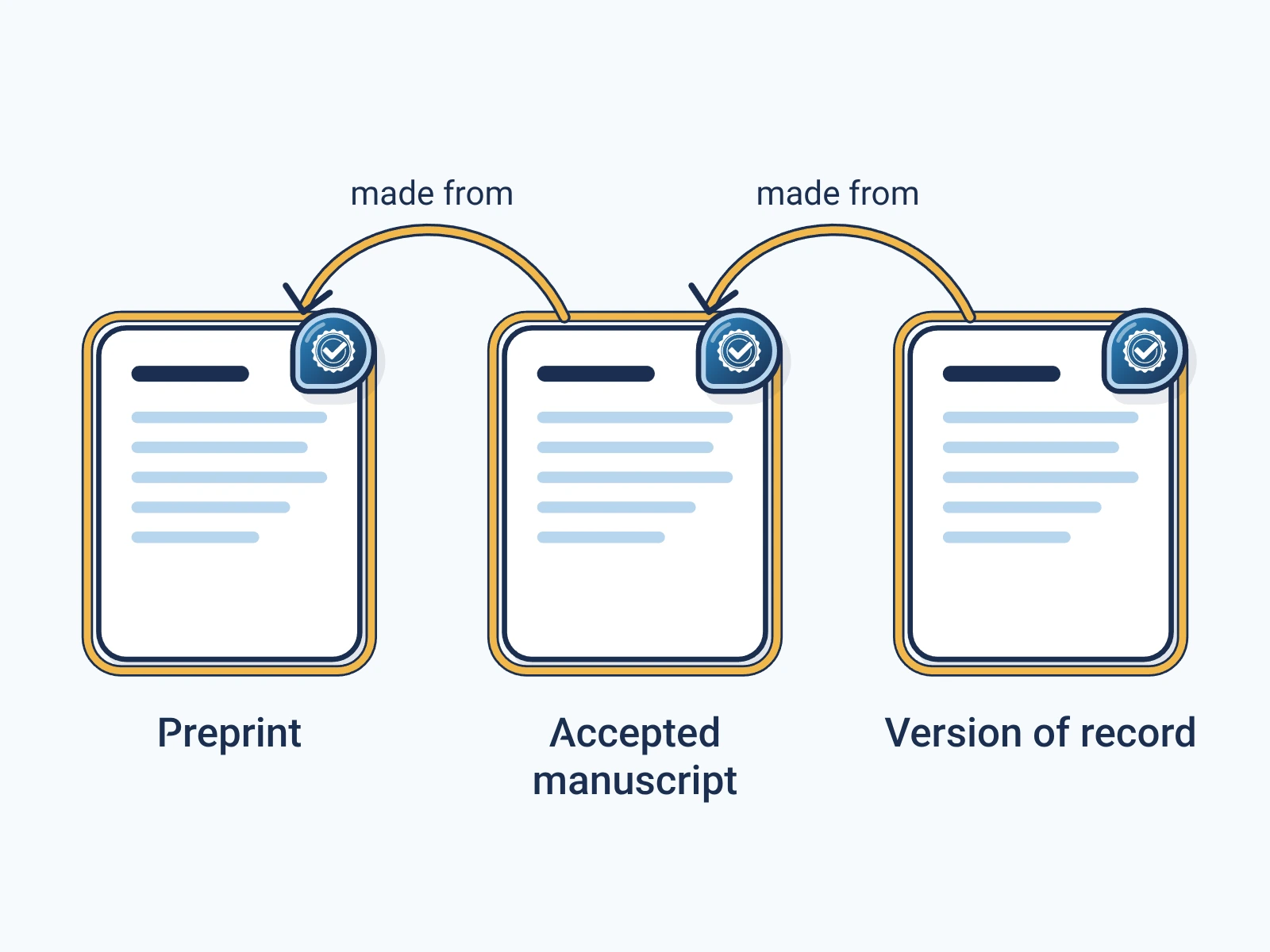
- Preprint, accepted manuscript, and version of record link to each other, so a reader can check which version they hold and where it came from.
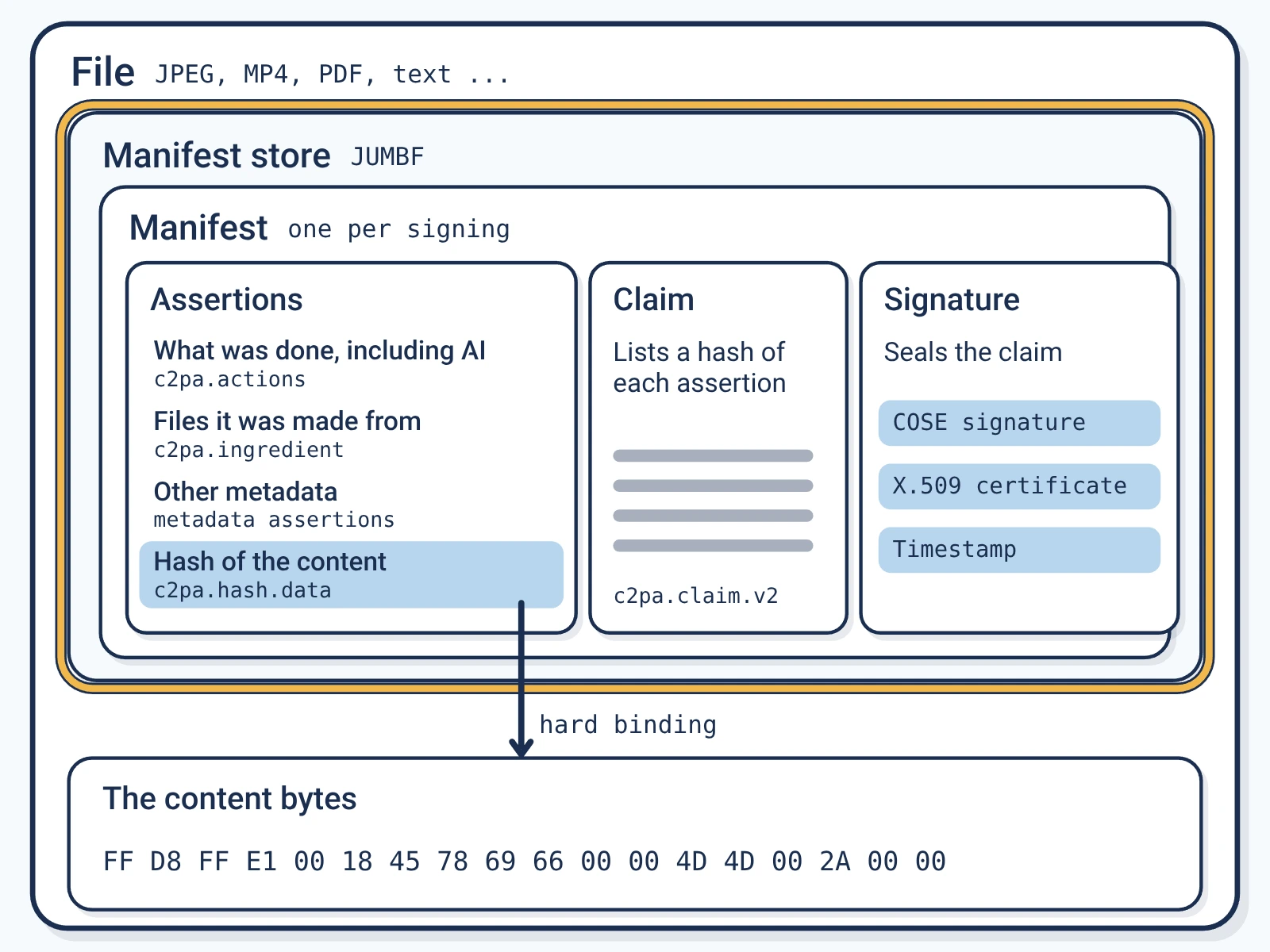
- C2PA text manifestsC2PA manifest: The signed label itself: a small package inside a file that records who signed it, what they declared and how to check it.
- Text can carry its own hidden label, apart from the PDF's. It stays when text is pulled out only if your tools keep the hidden characters. Test your pipeline.
- Digital source typeDigital source type: A field in the label that says how content was made: captured by a camera, made by AI, or a mix.
- A standard field records whether the author declared the work human-made, AI-assisted, or AI-generated. Editors can read the declaration; it is not a test of the text.
How it works
Create a free account.
No card needed.
Sign each version you publish.
Preprint, accepted manuscript, and version of record.
Readers check it free.
They see who signed it, when, and if it changed.
Open the checker
Why journals need a label
Paper mills, edited figures, and undeclared AI text are eroding trust in the record. Once a PDF leaves your site, nothing marks the version of record from an altered copy. Retractions rarely reach the copies people cite.
One chain from preprint to version of record
Each version you publish gets its own label. Each label names the version before it as an ingredientIngredient: A source file used to make new content, recorded in the new content's label with a link to its own label.. A reader with any copy can see which version it is and trace it to the first. Priority rests on a signed time, not on metadataMetadata: Data stored beside the content in a file, such as author, camera or date. Many tools strip it when they copy or upload a file. anyone can edit.
AI use, declared in the file
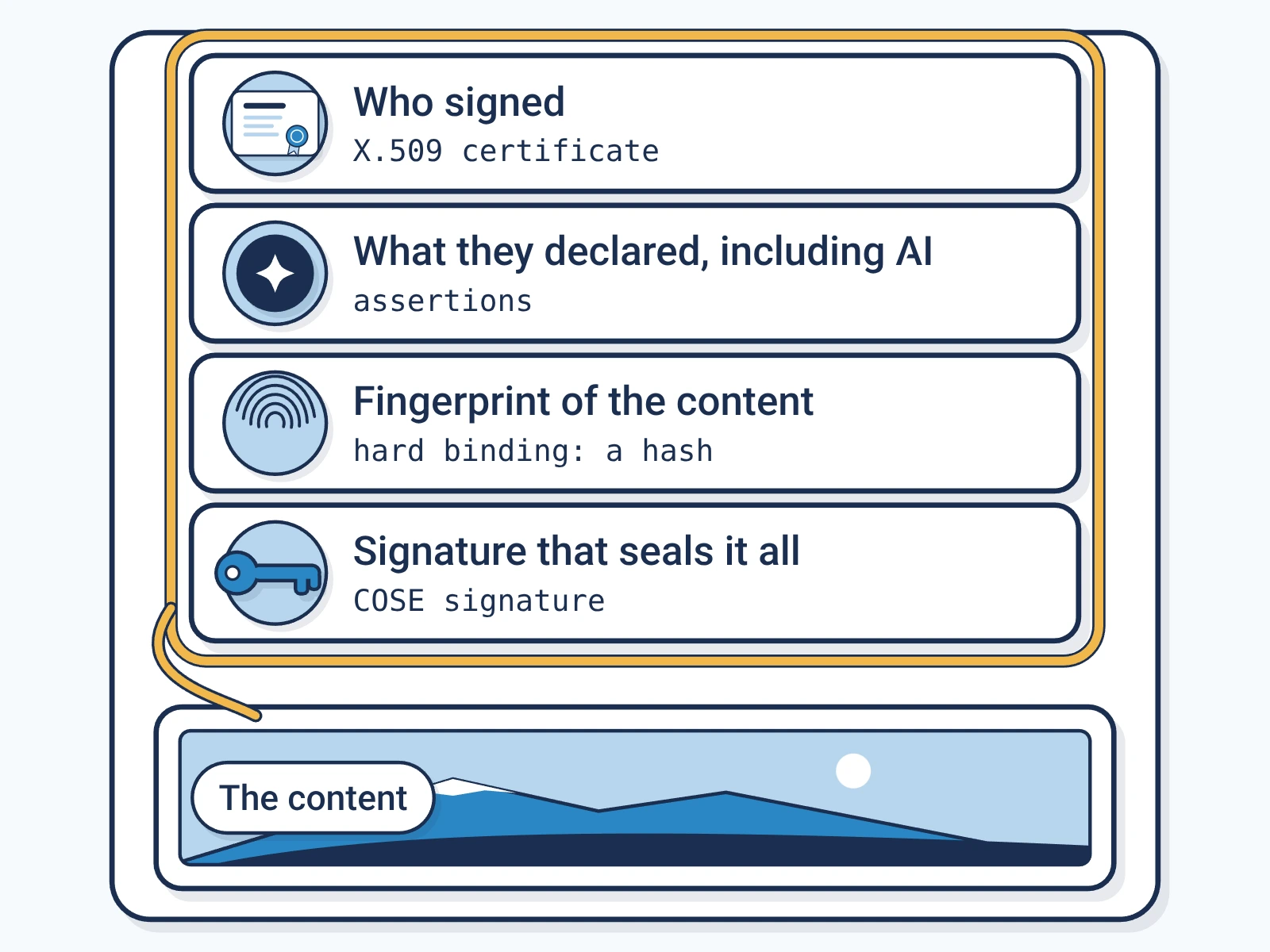
Most journals ask authors to disclose AI help. A label can carry that statement with the manuscript through review and publication. Editors read it from the file, not a separate form. It records what the author declared. It does not test the text.
Your terms travel with the label
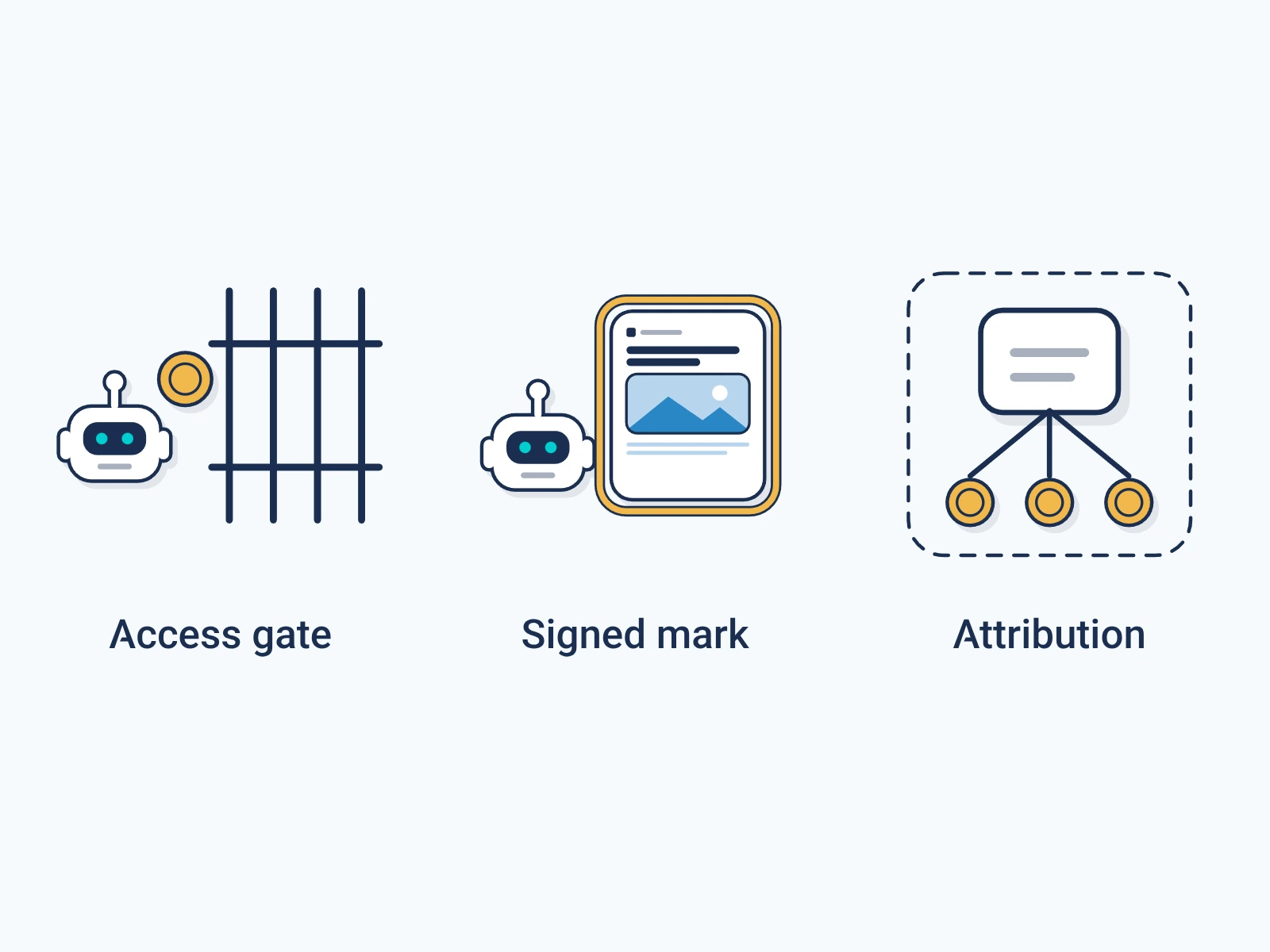
Journal archives are prime AI training data. A signed label names the publisher and carries machine-readable termsMachine-readable rights: Usage terms written so software can read them, such as whether content may be used for AI training. in each signed file. Copies that keep the label keep the terms. If the archive is copied, the record shows the terms were there when it was taken.
Good questions.
Can a label spot an AI-written paper?
Do we have to sign our whole archive?
Does it reveal who reviewed a paper?
Can readers check a paper without an account?
For engineers
Show the technical detail
How versions link
Each version carries its own C2PAC2PA: The Coalition for Content Provenance and Authenticity: the group that publishes the open standard for content labels. manifest. The accepted manuscript names the preprint as an ingredient, and the version of record names the accepted manuscript. Revisions are recorded with the actions assertionActions assertion: The part of a label that records what was done to the content, such as created, edited or redacted, and by what.. Text pulled from the PDF can carry its own label through the C2PA standard for unstructured textC2PA text-provenance standard: The part of the C2PA standard that puts a signed label inside plain text, using invisible Unicode characters..
Open-access terms, such as a Creative Commons license, can be stated in the label. A reuse that signs its own label can name the original as an ingredient.