

Content provenance for music
Sign masters and stems so platforms and partners can check who released a track, what it was made from, and whether it changed.
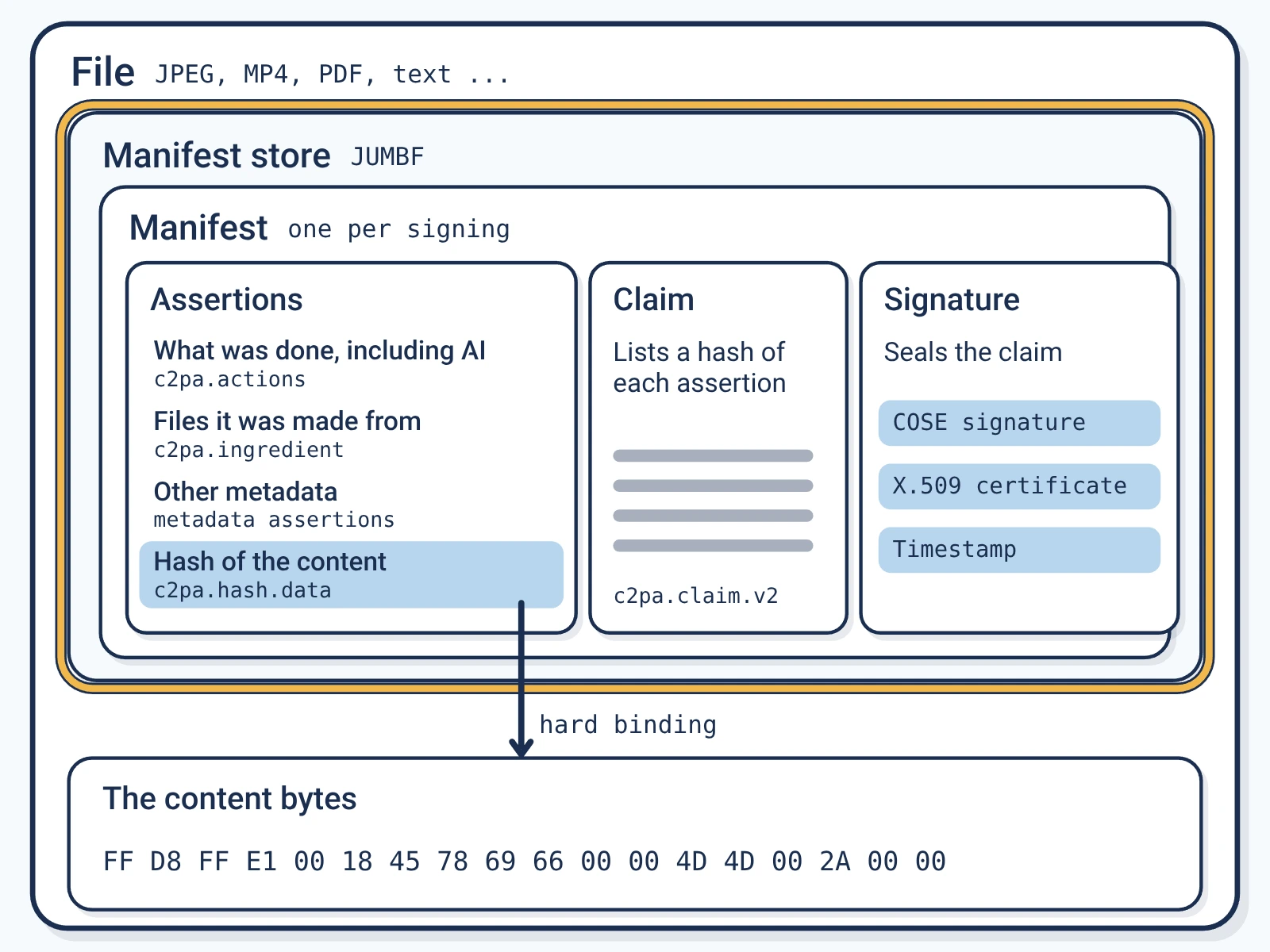
- Audio manifests in WAV, MP3, FLAC, and M4AC2PA manifest: The signed label itself: a small package inside a file that records who signed it, what they declared and how to check it.
- Masters and stems are signed when they are made, so release details travel inside the file, not in a separate sheet.
- Ingredient chains for samples and remixesIngredient chain: The links from a finished piece of content back through every signed source file used to make it.
- A remix points to the recordings it uses, so clearance lives in a signed record instead of an email thread.
- Digital source typeDigital source type: A field in the label that says how content was made: captured by a camera, made by AI, or a mix.
- The label states whether the release was declared human-performed or AI-generated, a field platforms can read at scale.
How it works
Create a free account.
No card needed.
Sign the final delivery file.
After mastering and any format change.
Deliver it as usual.
Distributors and platforms can check it free.
Open the checker
Why music needs a label
AI tracks that sound like real artists reach streaming services every day. Ownership tags get lost as files move between distributors and tools. In a dispute, the side with checkable records settles it faster.
Your name stays in the file
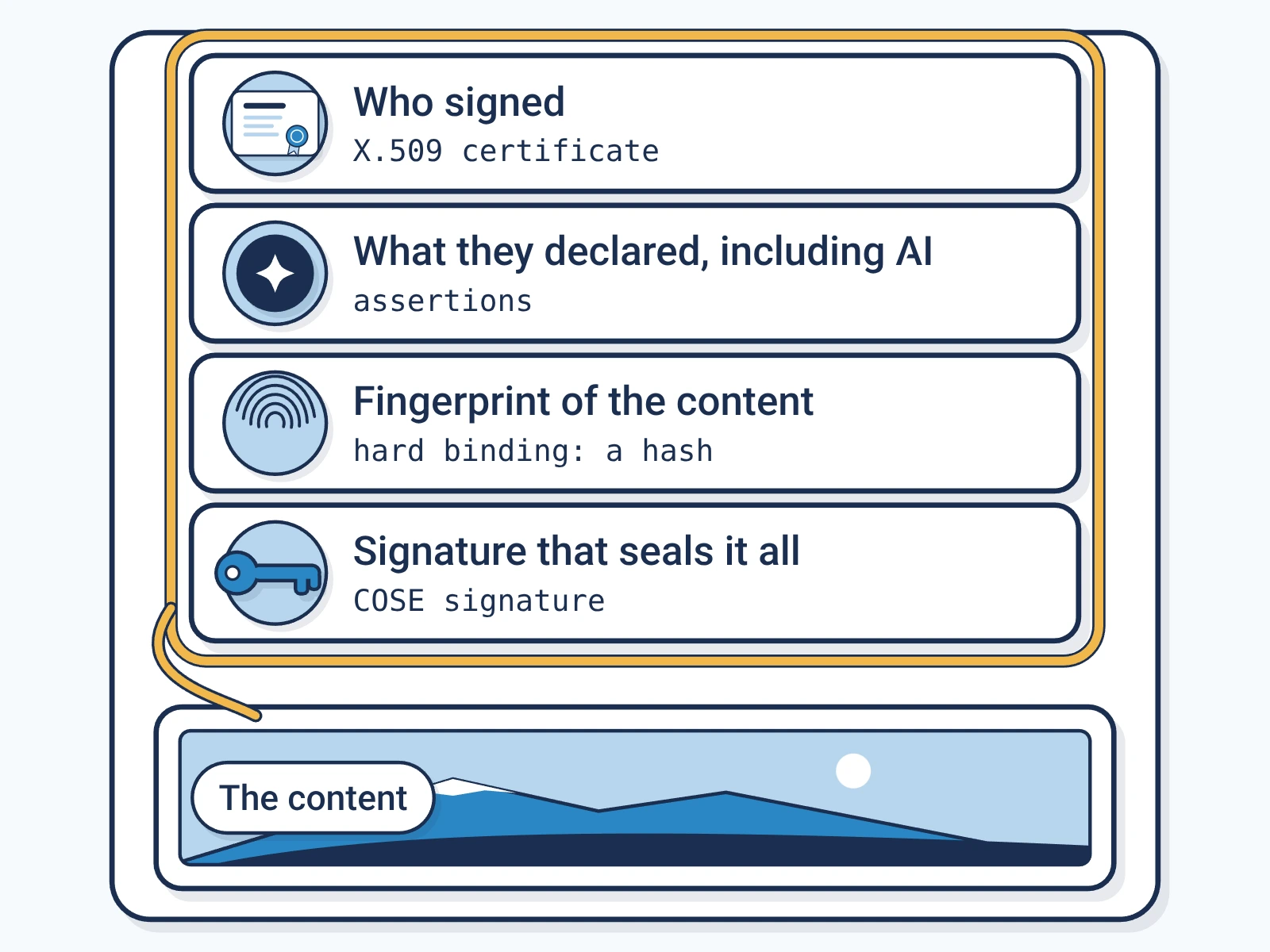
ID3 tags and ISRC codes help find a track, but anyone can edit them. A signed label puts your name and terms in the file. Each fact in it is a signed assertionAssertion: One statement inside a C2PA label, such as what was done to the content, whether AI was used, or the content's hash., bound to the sound by a hashHash: A short fingerprint of exact bytes. Any change, even one character, gives a completely different hash.. Edit the audio and the check fails. Strip the label and the proof is visibly gone.
A remix names each recording it uses as an ingredientIngredient: A source file used to make new content, recorded in the new content's label with a link to its own label., so clearance has a signed record.
A check for every upload
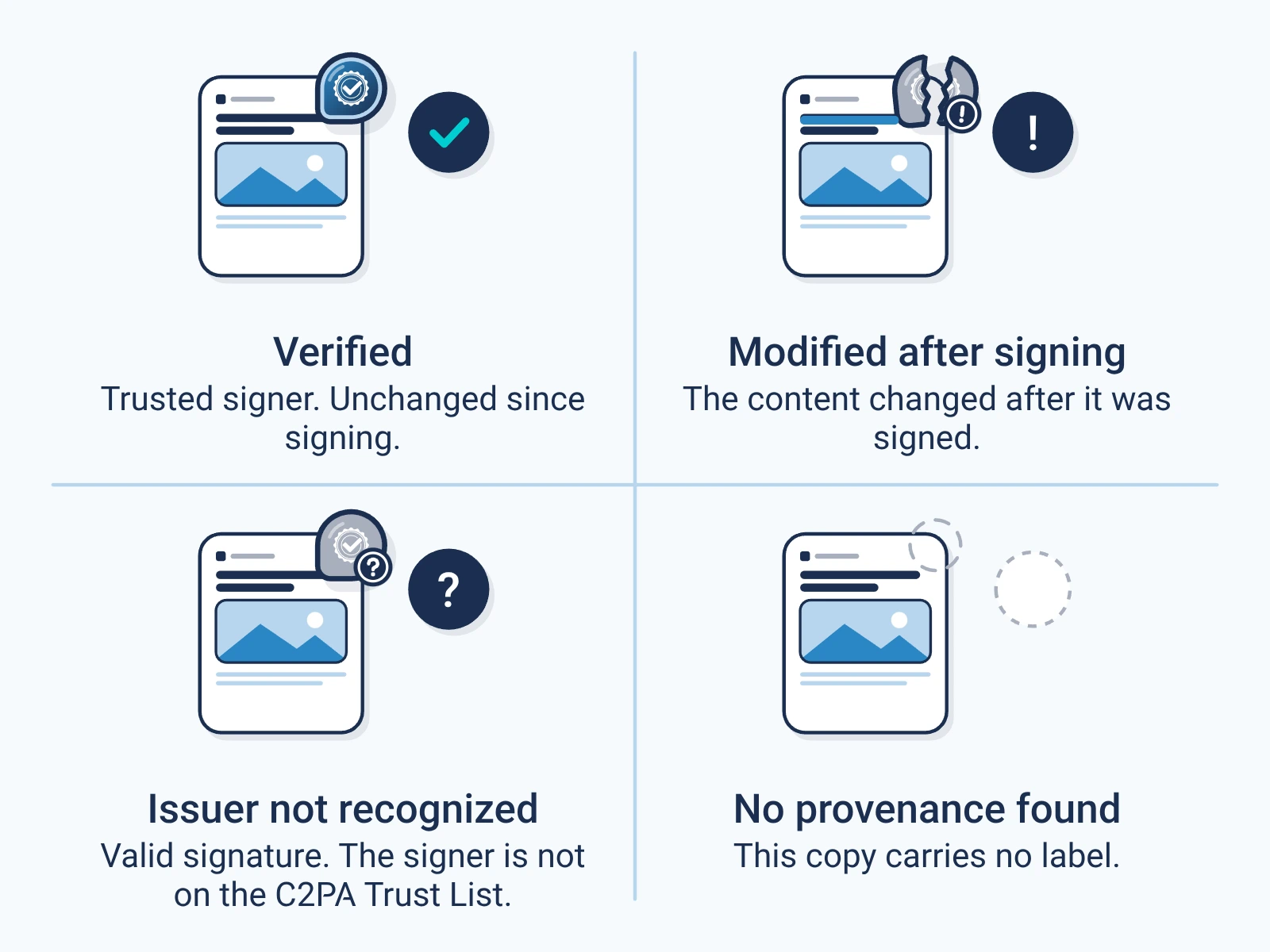
Platforms can check tracks as they arrive. A track signed by its label shows who released it. A track with no label, or a broken one, can go to a closer review. That helps catch AI tracks uploaded under a real artist's name. Checking is free.
Good questions.
Does the label survive streaming?
Does a label prove we own the track?
Can we sign a whole catalog at once?
Can someone fake a label?
For engineers
Show the technical detail
Where the label sits in each format
- WAV: a dedicated RIFFRIFF: The chunk-based file layout behind WAV, AVI and WebP. chunk, apart from the audio data.
- MP3: a binary ID3ID3: The tag block in an MP3 file that holds its title, artist and other details. frame.
- M4A and AAC: an ISO BMFFBMFF: ISO Base Media File Format: the box structure behind MP4, MOV, HEIF and similar files. box.
- FLAC: a metadata block.
Rights data in the C2PAC2PA: The Coalition for Content Provenance and Authenticity: the group that publishes the open standard for content labels. manifest can include label and artist names, ISRC, terms, and release time.