

C2PA for AI Companies
How AI companies use C2PA to mark AI output for software to read, support EU AI ActEU AI Act: The European Union's law on artificial intelligence, which includes rules for marking AI-made content. Article 50Article 50: The EU AI Act rule that AI-made content be marked in a form software can read, and deepfakes disclosed. marking, and check what they license.
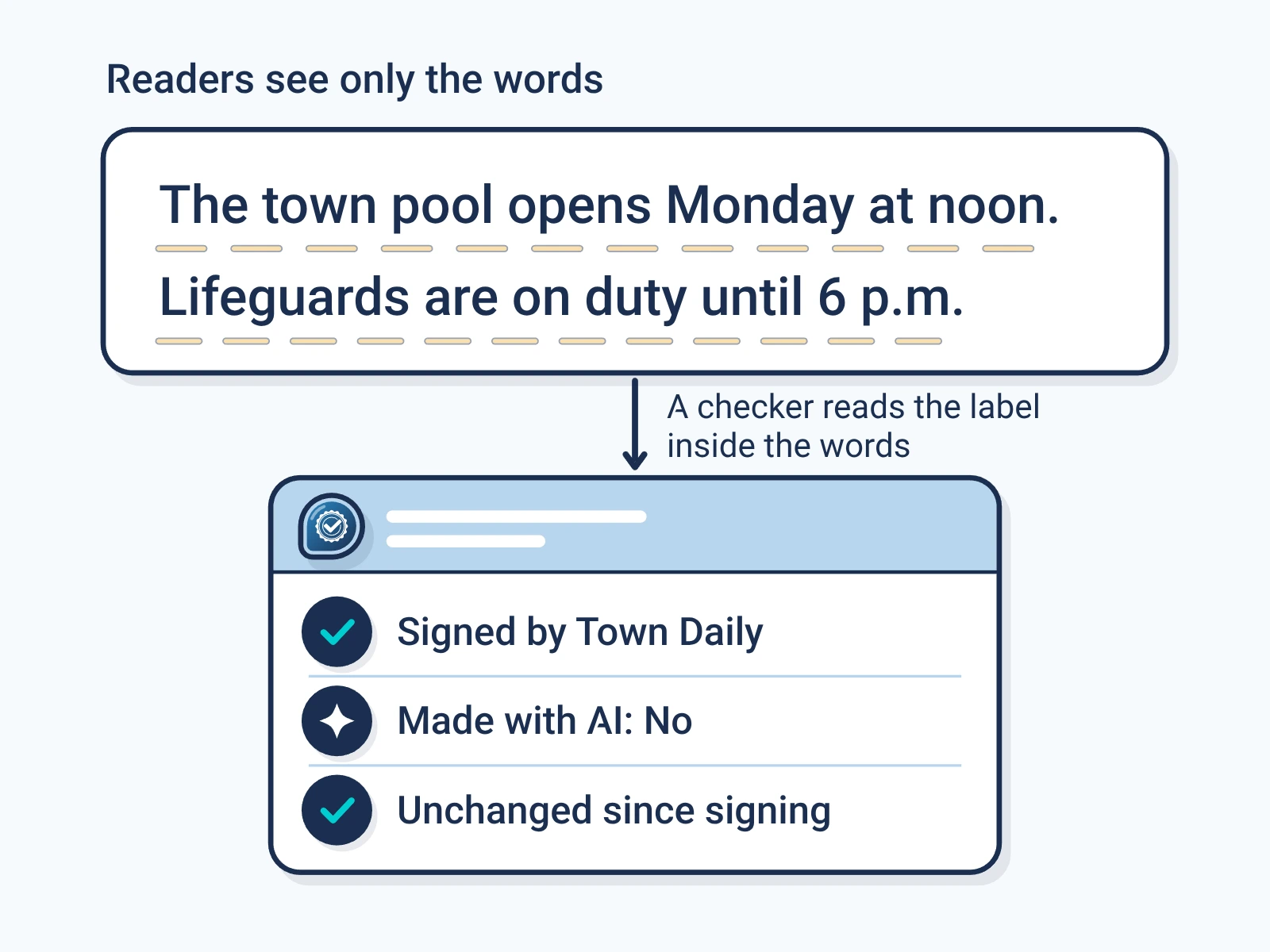
- Digital source type markingDigital source type: A field in the label that says how content was made: captured by a camera, made by AI, or a mix.
- Each output says it was made by AI, in a field software can read. That supports Article 50 marking. It is not a guarantee of compliance.
- C2PA text manifestsC2PA manifest: The signed label itself: a small package inside a file that records who signed it, what they declared and how to check it.
- Text gets a label too, not just images and sound. Most tools skip text.
- Checks at intakeProvenance data: Under California law, information about where content came from and how it was changed, in a standards-based format.
- Check who signed the work you license, and if it changed. Checks are free.
How it works
Create a free account.
No card needed.
Sign your next file or page.
Your name and the time go into a C2PAC2PA: The Coalition for Content Provenance and Authenticity: the group that publishes the open standard for content labels. label inside it.
Anyone can check it, free.
The check shows who signed it, what they declared, and if it changed.
Open the checker
Why AI companies need a label
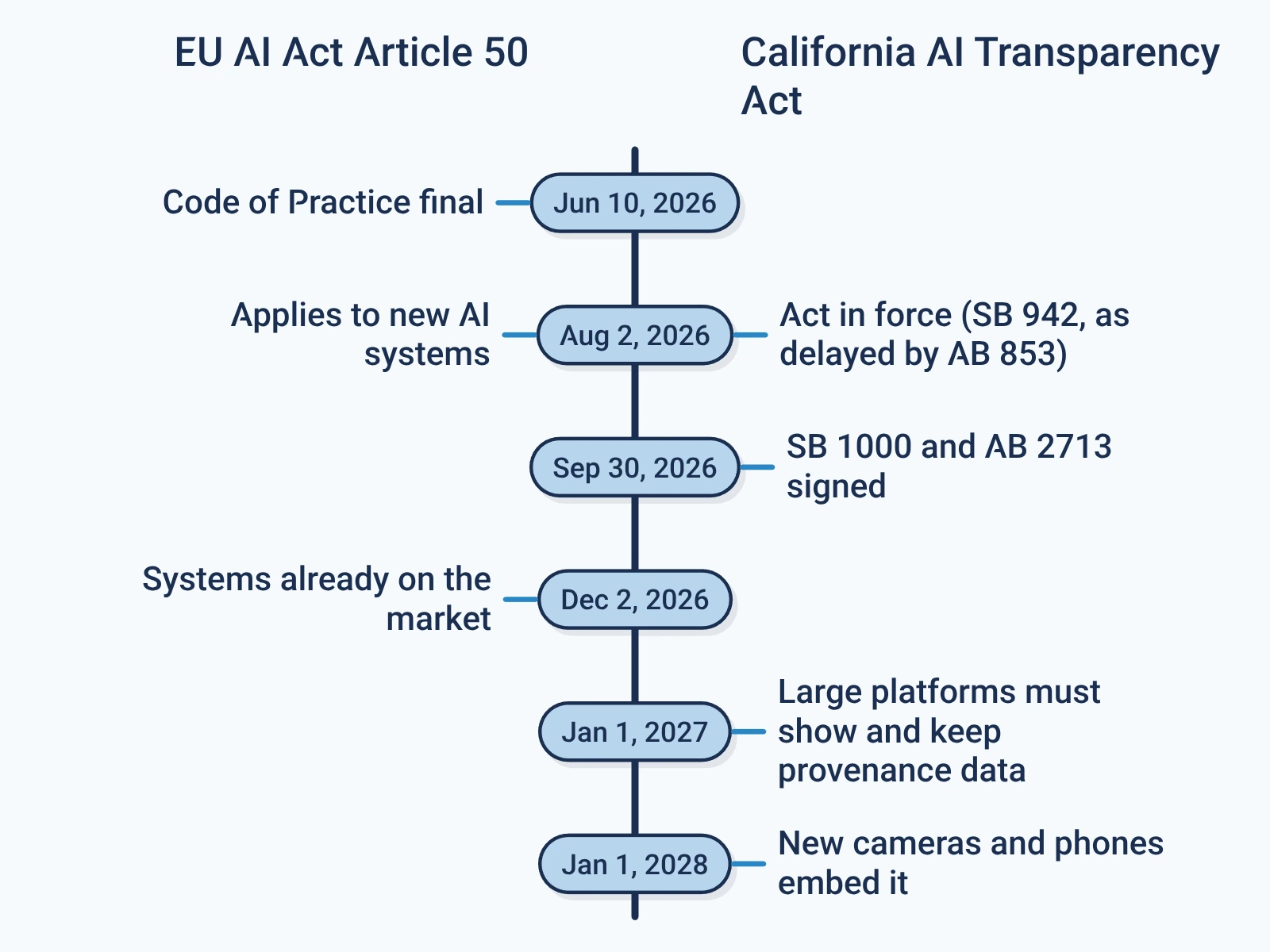
Since August 2, 2026, EU AI Act Article 50 has asked AI providersProvider: Under the EU AI Act, the company that builds an AI system or puts it on the EU market under its own name. to mark output for software to read. Tools sold before then have until December 2, 2026. California asks for a hidden label in AI images, video, and audio. Lawsuits over training data make unlabeled input a cost too.
Tested against the standard
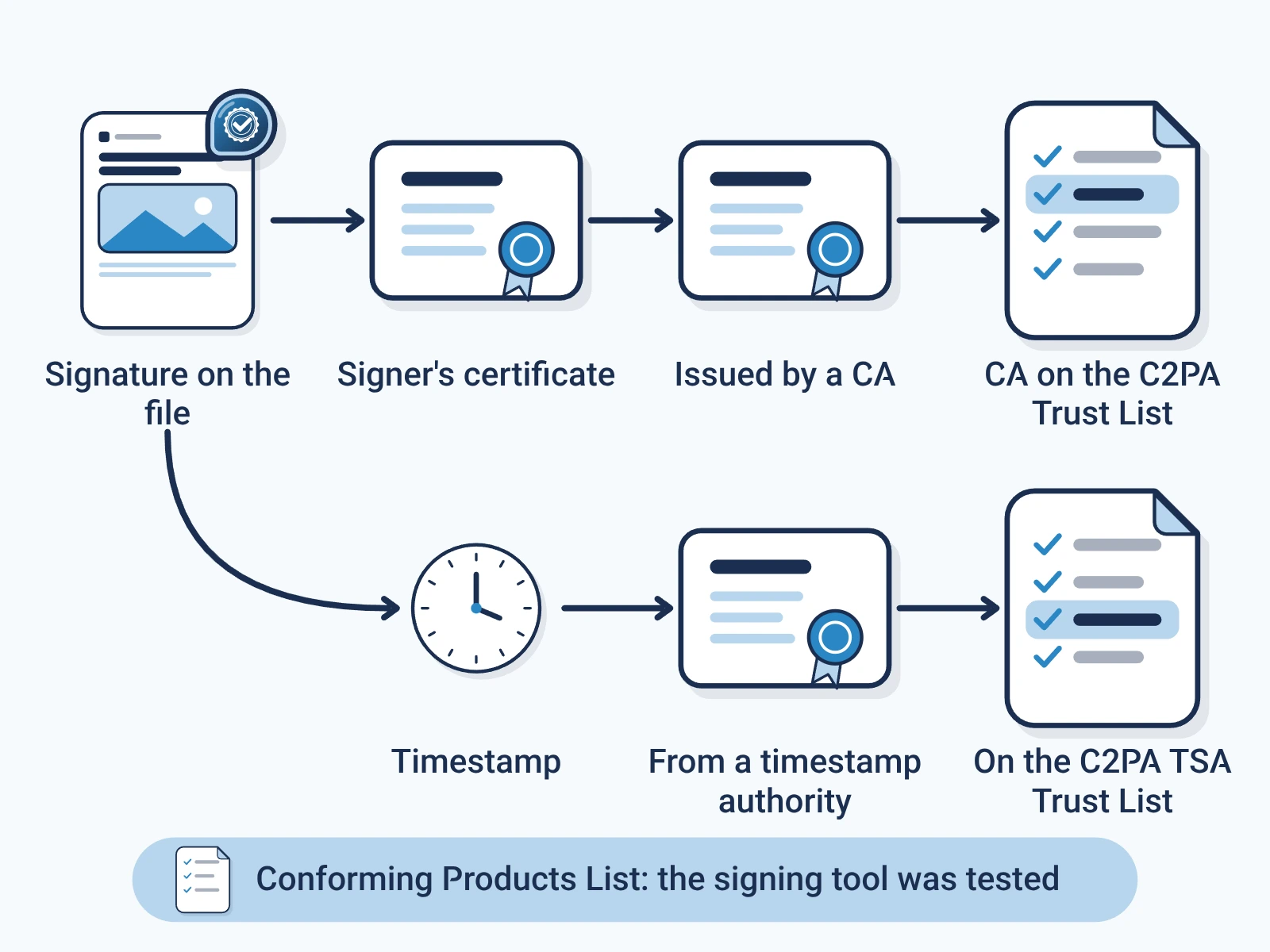
Encypher's product is on the official C2PA Conforming Products ListConforming Products List: The C2PA's public record of products that passed its conformance program., dated May 26, 2026. Our signing and timestamp services are on the official C2PA Trust ListsC2PA Trust List: The list of signing authorities that conforming C2PA checkers trust by default.. That matters when others check how you mark AI output.
Create. Mark. Endure.
Your AI output carries a label that software can read.