

C2PA for News Publishers
How news publishers use the C2PA standard to show who published an article and when, keep that proof in syndicated copies, and build licensing leverage.
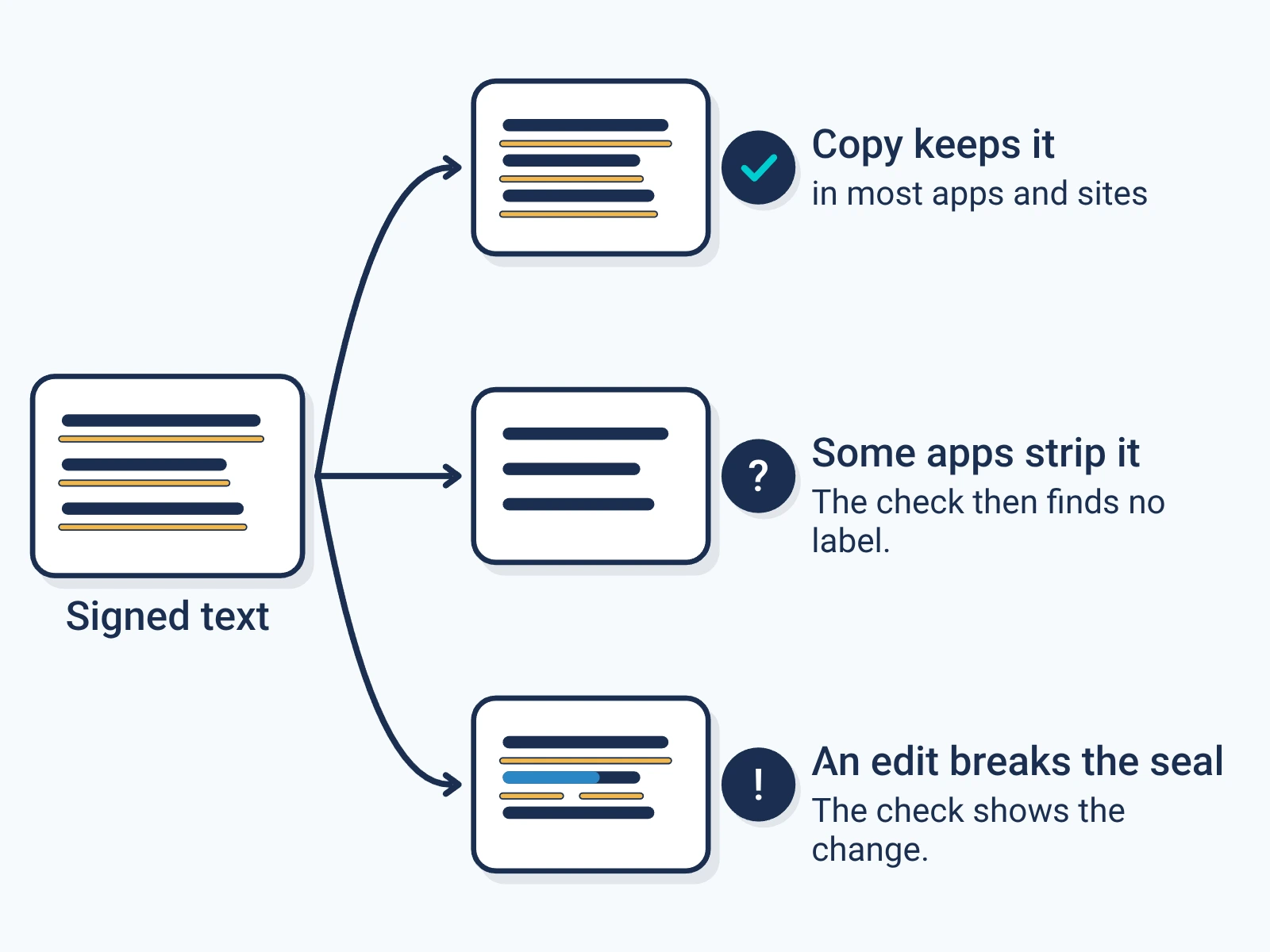
- C2PA text manifestsC2PA manifest: The signed label itself: a small package inside a file that records who signed it, what they declared and how to check it.
- Your name and the publish time sit inside the text itself. The proof goes where the words go, unless a tool strips it.
- The actions assertionActions assertion: The part of a label that records what was done to the content, such as created, edited or redacted, and by what.
- Corrections and updates are signed as edits. Readers and platforms can tell your revision from a third party's change.
- Trust List signingC2PA Trust List: The list of signing authorities that conforming C2PA checkers trust by default.
- Your signature chains to a certificate on the official C2PA Trust List, so wire partners and platforms can check it with standard tools.
How it works
Create a free account.
No card needed.
Sign your next file or page.
Your name and the time go into a C2PAC2PA: The Coalition for Content Provenance and Authenticity: the group that publishes the open standard for content labels. label inside it.
Anyone can check it, free.
The check shows who signed it, what they declared, and if it changed.
Open the checker
Why newsrooms need a label
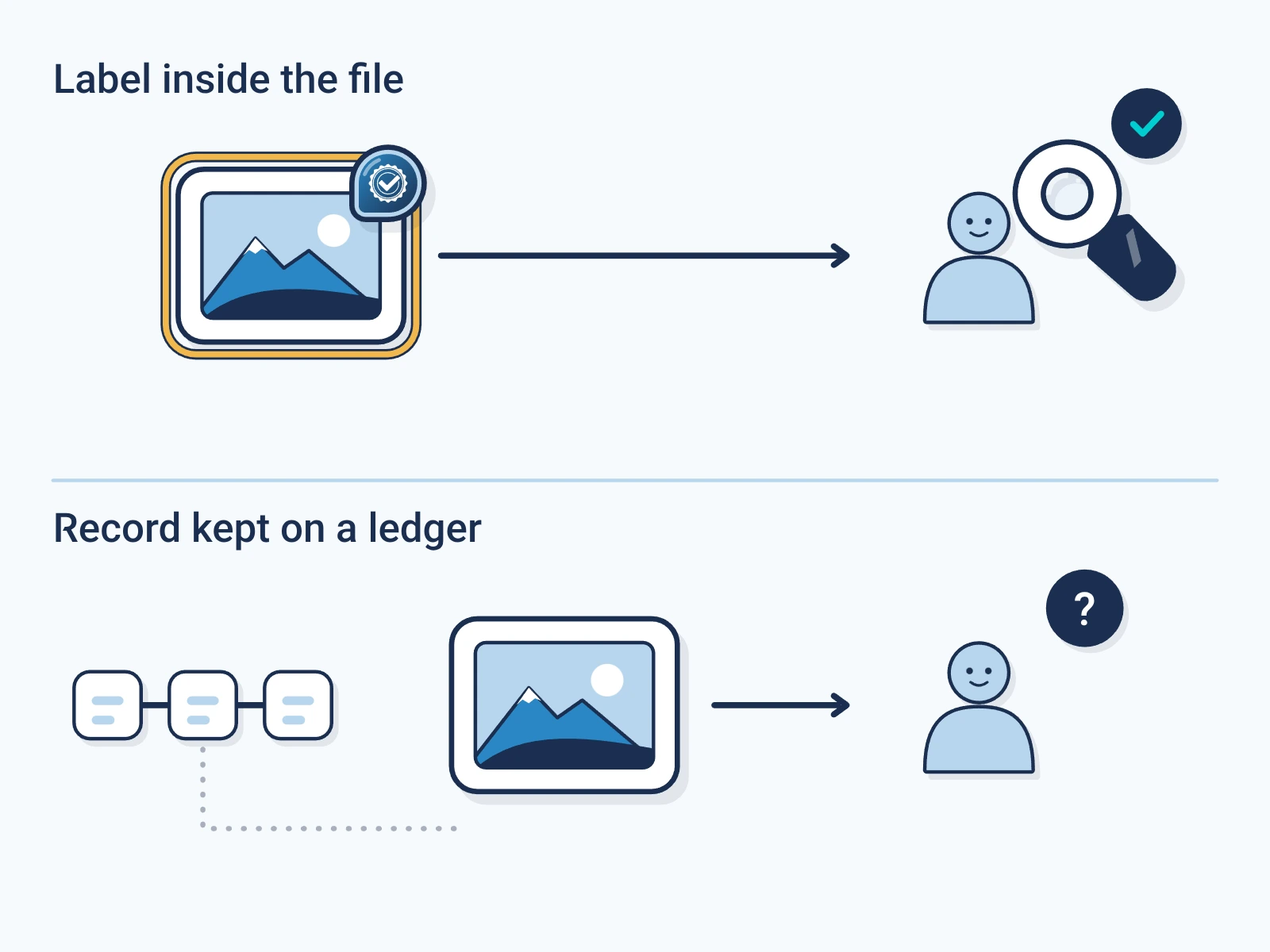
Your stories are copied and reposted within minutes. Readers cannot tell your original from a copy. AI systems take in your archive with no record of who owns it.
Tested against the standard
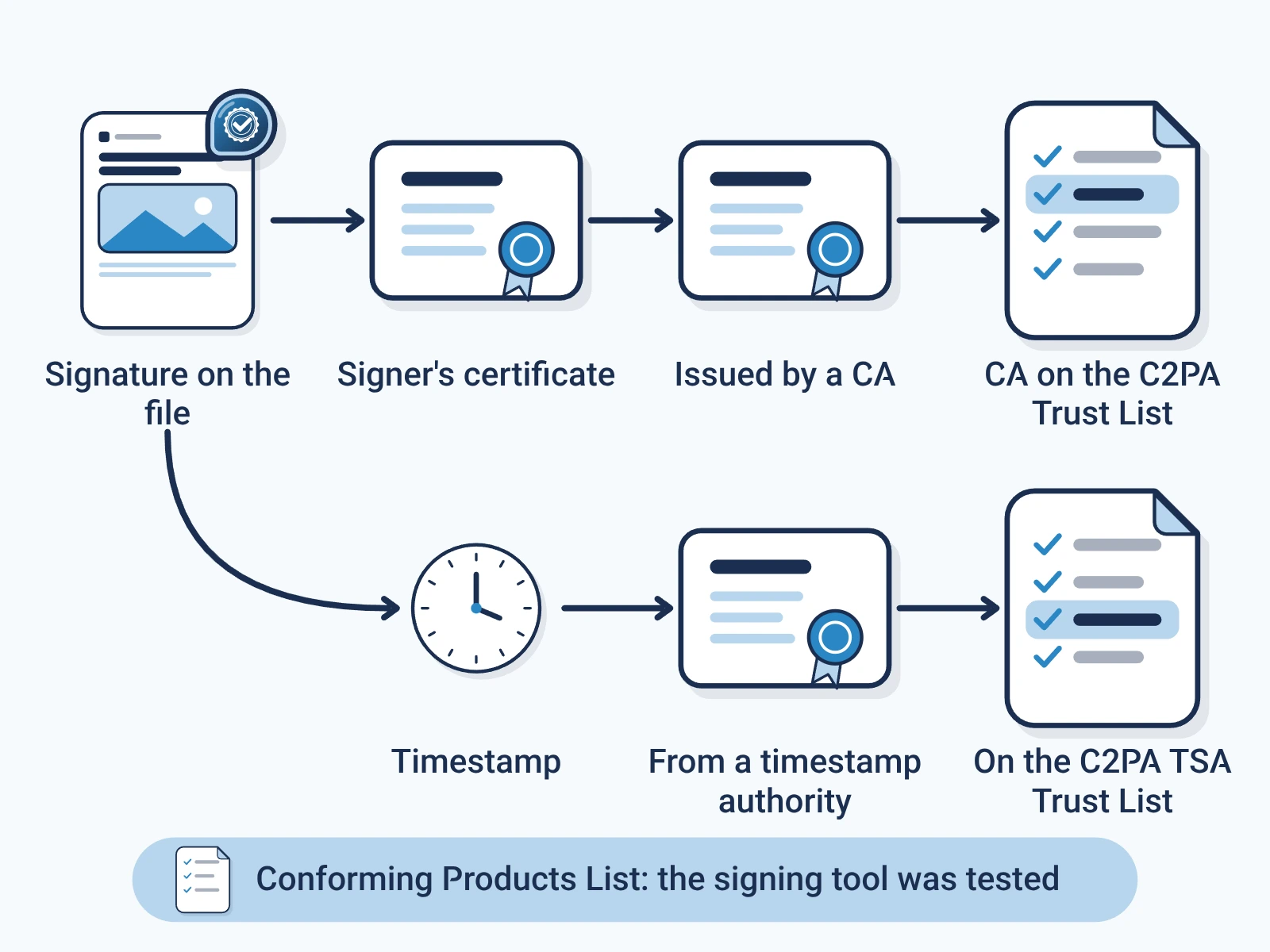
Encypher's product is on the official C2PA Conforming Products ListConforming Products List: The C2PA's public record of products that passed its conformance program., dated May 26, 2026. Our signing and timestamp services are on the official C2PA Trust Lists. That matters when platforms and syndication partners decide which labels to trust.
Create. Mark. Endure.
Every article ships with signed proof of who published it and when.