

AI detectors vs cryptographic proof
An AI detectorAI detector: A model that guesses whether content was made by AI and returns a probability, not proof. reads finished text and guesses whether a model wrote it. A signed mark is added when the content is made, and a check says who signed it and whether it changed.
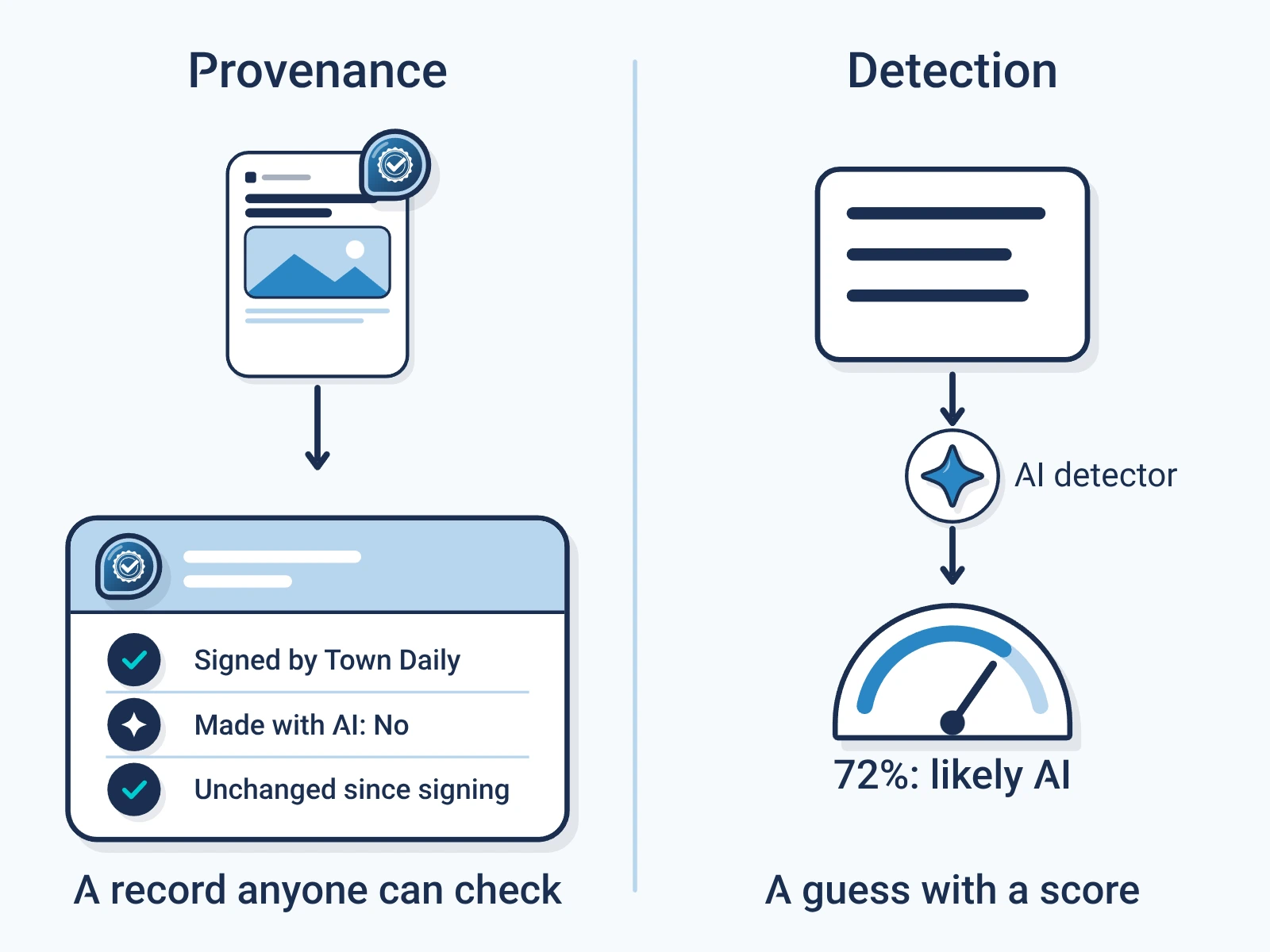
Side by side
| AI detector | Signed mark | |
|---|---|---|
| Question it answers | Does this look AI-made? | Who signed this, and did it change? |
| When it works | After the fact, on any text | On content signed when it was made |
| Result | A likelihood score | Valid, changed or no mark |
| Human work flagged as AI | Happens. Each one is a false positiveFalse positive: A wrong yes, such as human work flagged as AI-made. | No guess from writing style. Unsigned work shows as no mark; a signed AI declaration is reported as declared, and can be wrong |
| Names who signed it | No | Yes, the signer |
| As AI models improve | Harder to tell apart | No change. It checks a signature, not style |
When to use each
- A detector
- To screen work other people send you, when nothing was signed.
- A signed mark
- To sign your own work, or to label what your AI makes.
- Both
- A detector can flag a piece. A signed record settles what was signed and by whom.
What the numbers say
- OpenAI, 2023
- OpenAI's own detector caught 26% of AI-written text and wrongly flagged 9% of human text. OpenAI withdrew it on July 20, 2023 for low accuracy. Source
- Stanford, 2023
- Seven detectors flagged, on average, 61% of essays by non-native English writers as AI-written. Essays by US eighth graders were judged well. Source
Who uses a signed mark instead
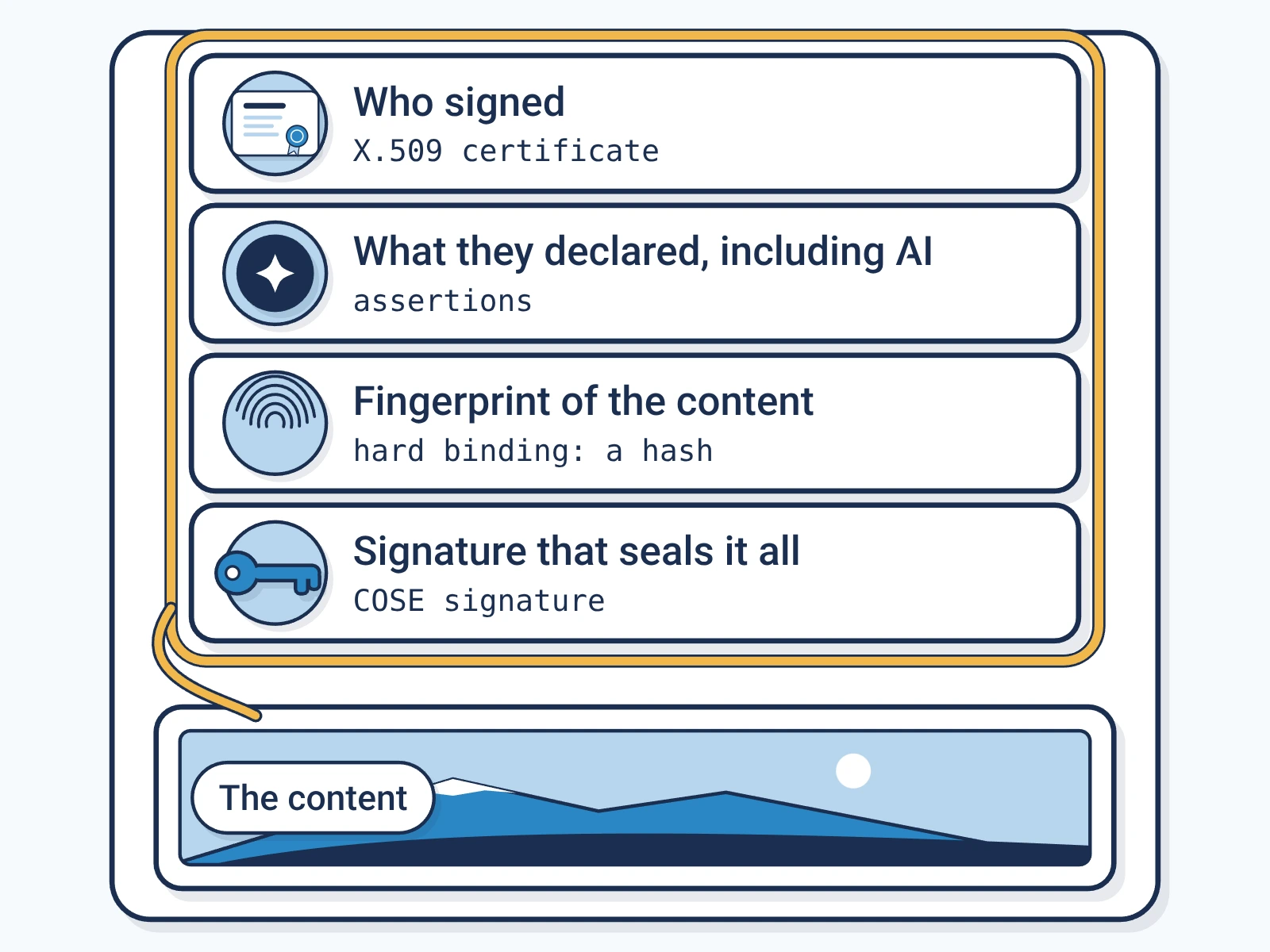
- Publishers
- Sign each article, so copies carry who wrote it.
- Companies using AI
- Label AI output in a form machines can read, as Article 50Article 50: The EU AI Act rule that AI-made content be marked in a form software can read, and deepfakes disclosed. of the EU AI ActEU AI Act: The European Union's law on artificial intelligence, which includes rules for marking AI-made content. asks.
- Platforms
- Show a checked label instead of accusing a user on a guess.
Create. Mark. Endure.
Sign your work or your AI output free, and let anyone check it.