

C2PA for Ad Tech
How ad platforms use C2PA checks to read who signed a page and what they declared about AI, as one input to their own buying rules.
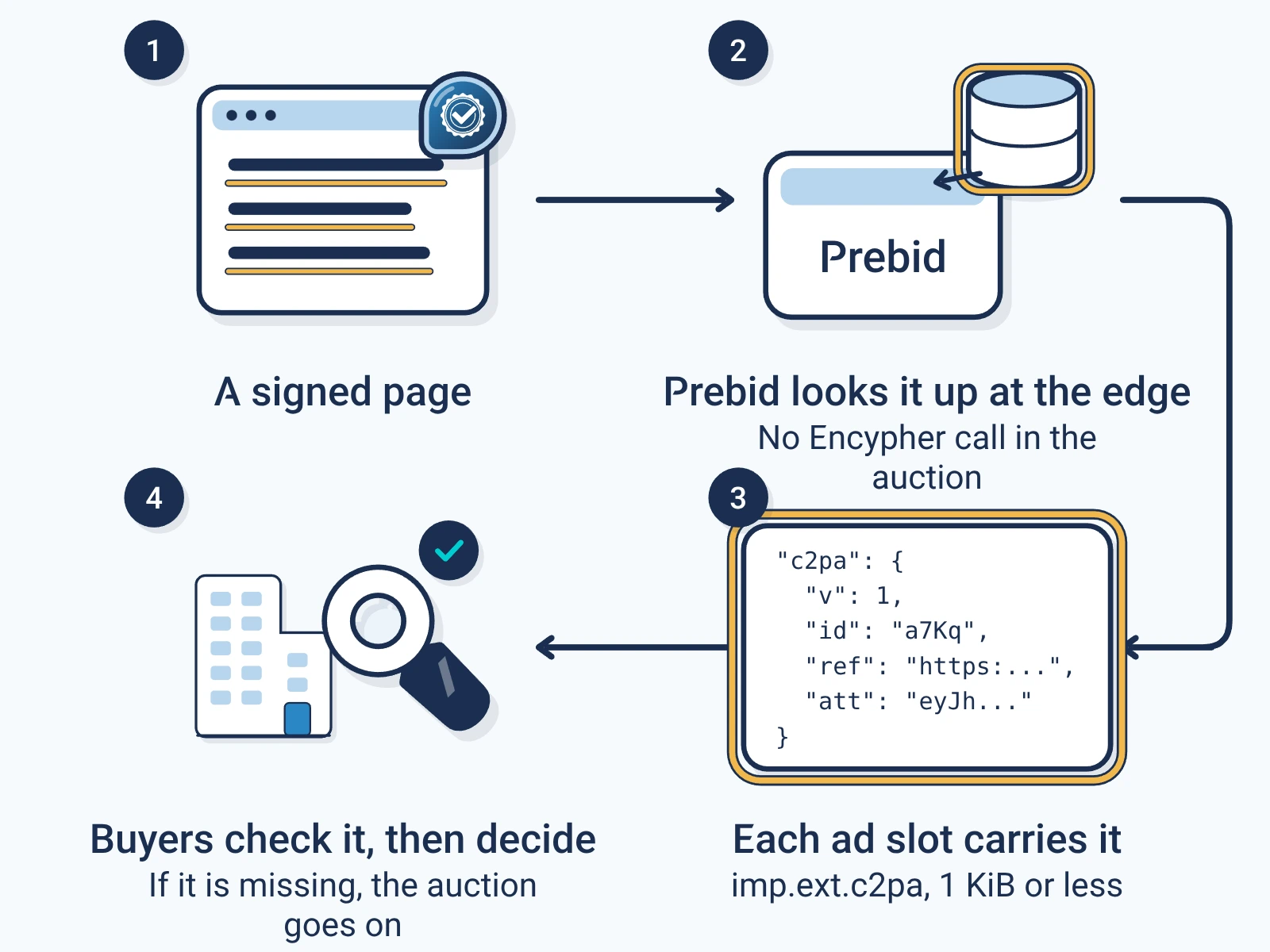
- Manifest checksC2PA manifest: The signed label itself: a small package inside a file that records who signed it, what they declared and how to check it.
- Signed publisher pages can be checked for who signed them and whether they changed before they are sold as inventory. Checking is free.
- Digital source typeDigital source type: A field in the label that says how content was made: captured by a camera, made by AI, or a mix.
- The label carries the publisher's own declaration of human-made or AI-generated content, a field software can read.
- Trust List anchoringC2PA Trust List: The list of signing authorities that conforming C2PA checkers trust by default.
- Checks chain to the official C2PA Trust List, so the signal is standard and works across vendors.
How it works
Create a free account.
No card needed.
Sign your next file or page.
Your name and the time go into a C2PAC2PA: The Coalition for Content Provenance and Authenticity: the group that publishes the open standard for content labels. label inside it.
Anyone can check it, free.
The check shows who signed it, what they declared, and if it changed.
Open the checker
Why ad tech needs a label
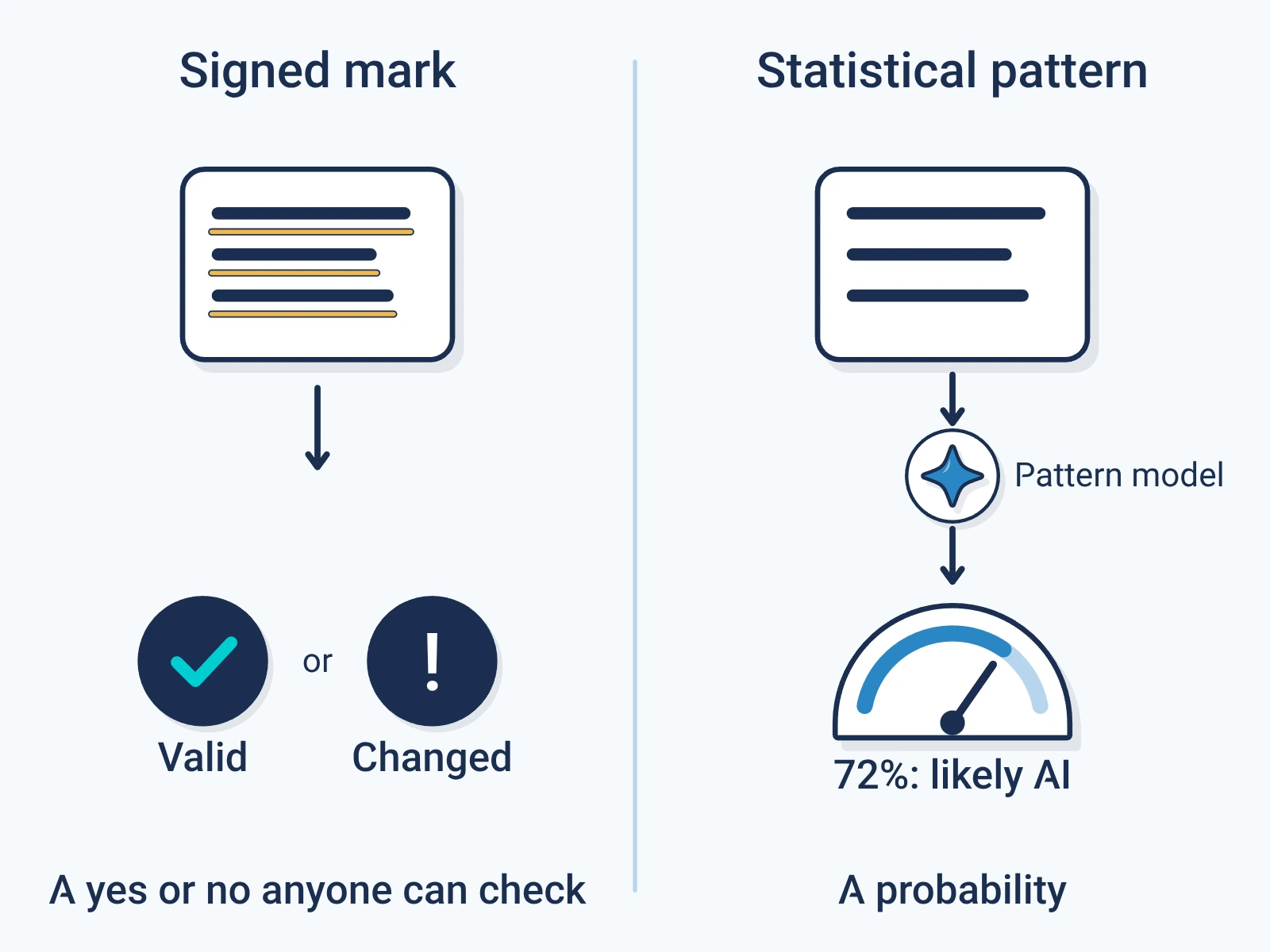
Sites filled with AI-made content take a growing share of ad spend. Filters that guess at AI text fall behind each new model. Buyers want a signed record of who published the page. The buyer still sets the rules.
Tested against the standard
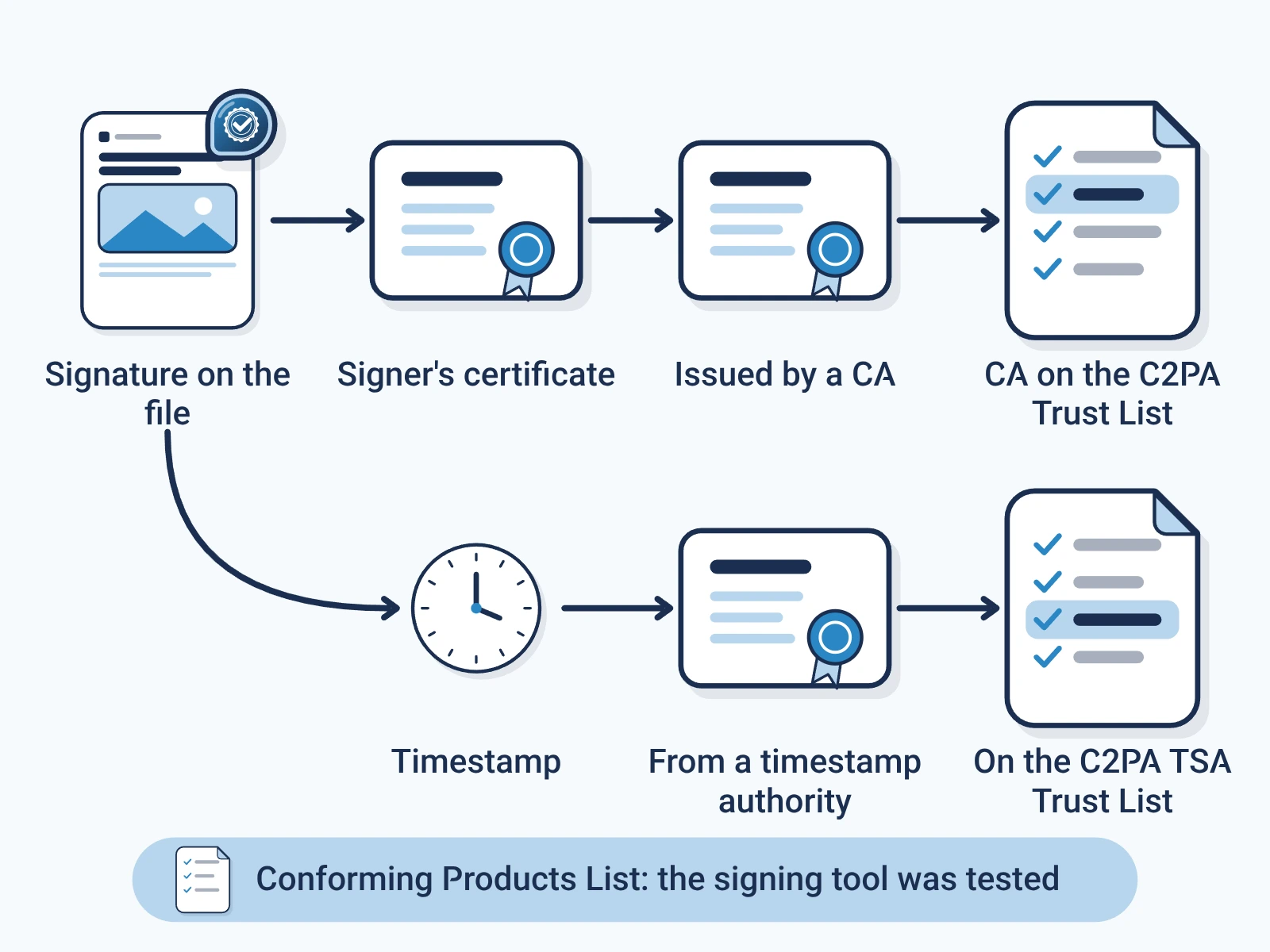
Encypher's product is on the official C2PA Conforming Products ListConforming Products List: The C2PA's public record of products that passed its conformance program., dated May 26, 2026. Our signing and timestamp services are on the official C2PA Trust Lists. That matters when a signal has to stand up for both buyers and sellers.
Create. Mark. Endure.
Where content came from becomes a signed fact on the placement, not a guess.