

Deepfake detection vs signed provenance
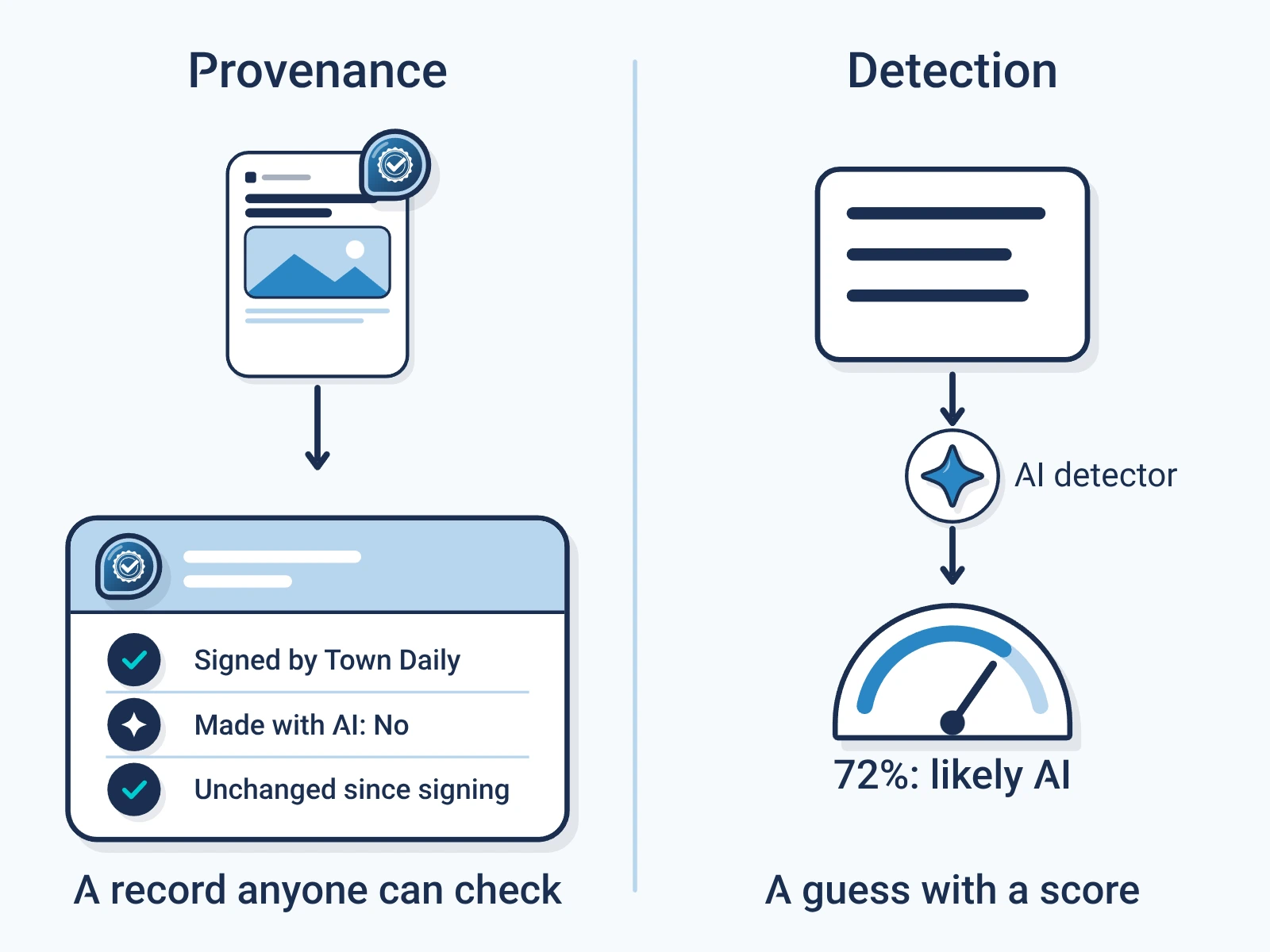
DeepfakeDeepfake: Image, audio or video made or changed by AI so it looks real and could fool people. detection scans a video, image or voice for signs of fakery and gives a likelihood. Signed provenanceContent provenance: The record of where a piece of content came from and how it changed, carried with the content itself. works the other way: signed media carries a record of who signed it, what they declared, and whether it changed.
Side by side
| Deepfake detection | Signed provenance | |
|---|---|---|
| Question it answers | Does this look synthetic? | Who signed this, what did they declare, and did it change? |
| When it works | After the fact, on any file | On media signed when it was made |
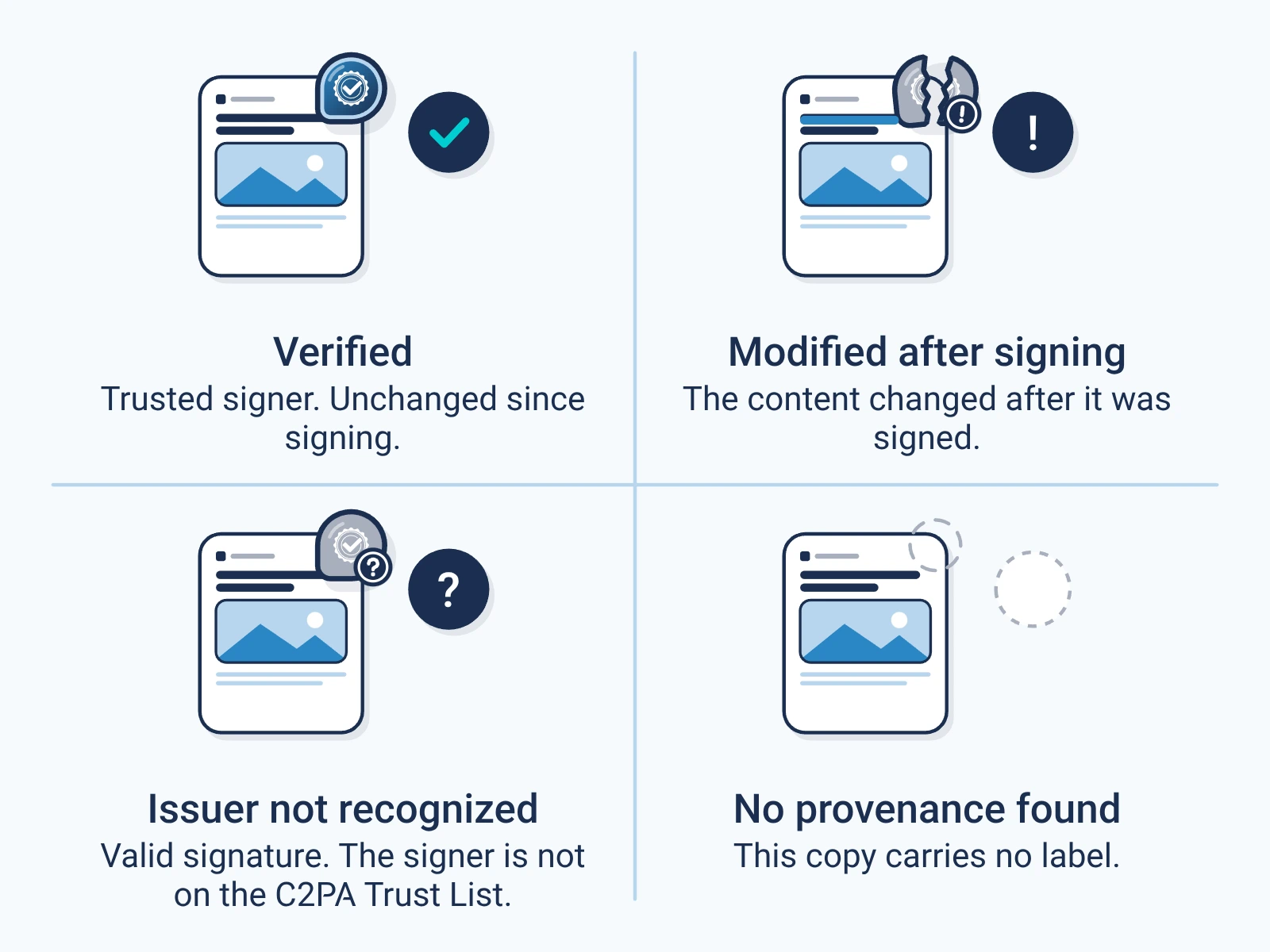
| Result | A likelihood score | Valid, changed or no label |
| Media with no label | Still gets a score | Unknown. No label does not mean fake |
| Names the source | No | Yes, the signer |
| Declares AI | Guesses | The maker states it, as a digital source typeDigital source type: A field in the label that says how content was made: captured by a camera, made by AI, or a mix. |
When to use each
- Detection
- To screen media from unknown sources, where nothing was signed.
- Provenance
- For your own media, so viewers can check it came from you.
- Both
- Newsrooms and platforms check labels first, then screen what has none.
What a label shows, and what it does not
- Shows
- Who signed the file, what they declared, including AI, and whether it changed since.
- Does not show
- That the scene is true, or that a file with no label is fake.
Where the label lives
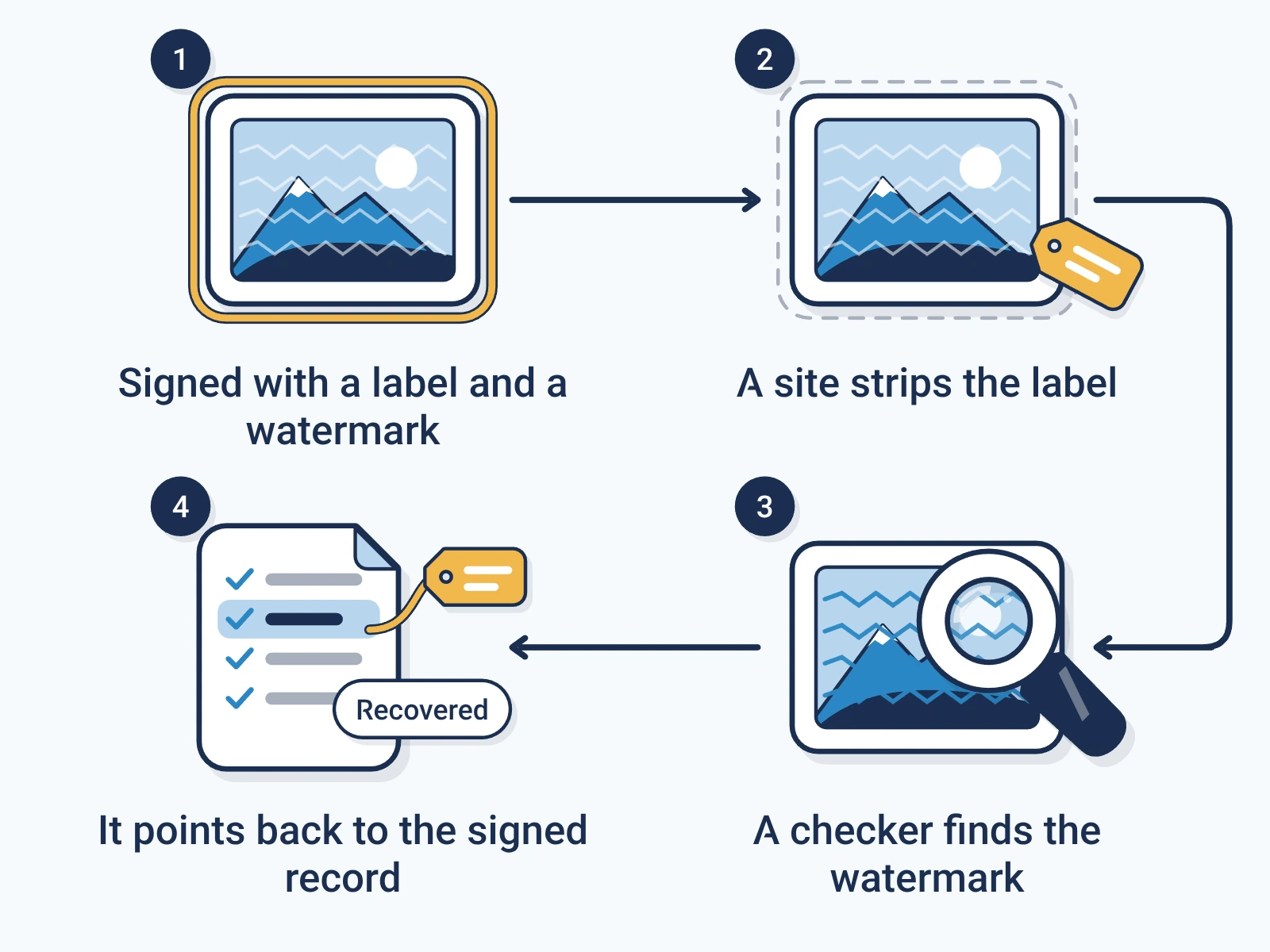
The label is a C2PA manifestC2PA manifest: The signed label itself: a small package inside a file that records who signed it, what they declared and how to check it. inside the image, audio or video file. A hard bindingHard binding: A hash of the content's signed bytes stored in the label, so a change to those bytes makes the check fail. ties it to the exact file, so any edit shows. Some platforms strip it when they re-encode an upload. A supported watermarkWatermark: A mark placed in the content itself, visible or hidden, so it can be found again after the file is copied. can then lead back to the record.
Create. Mark. Endure.
Sign your images, audio and video free, and let anyone check them.