

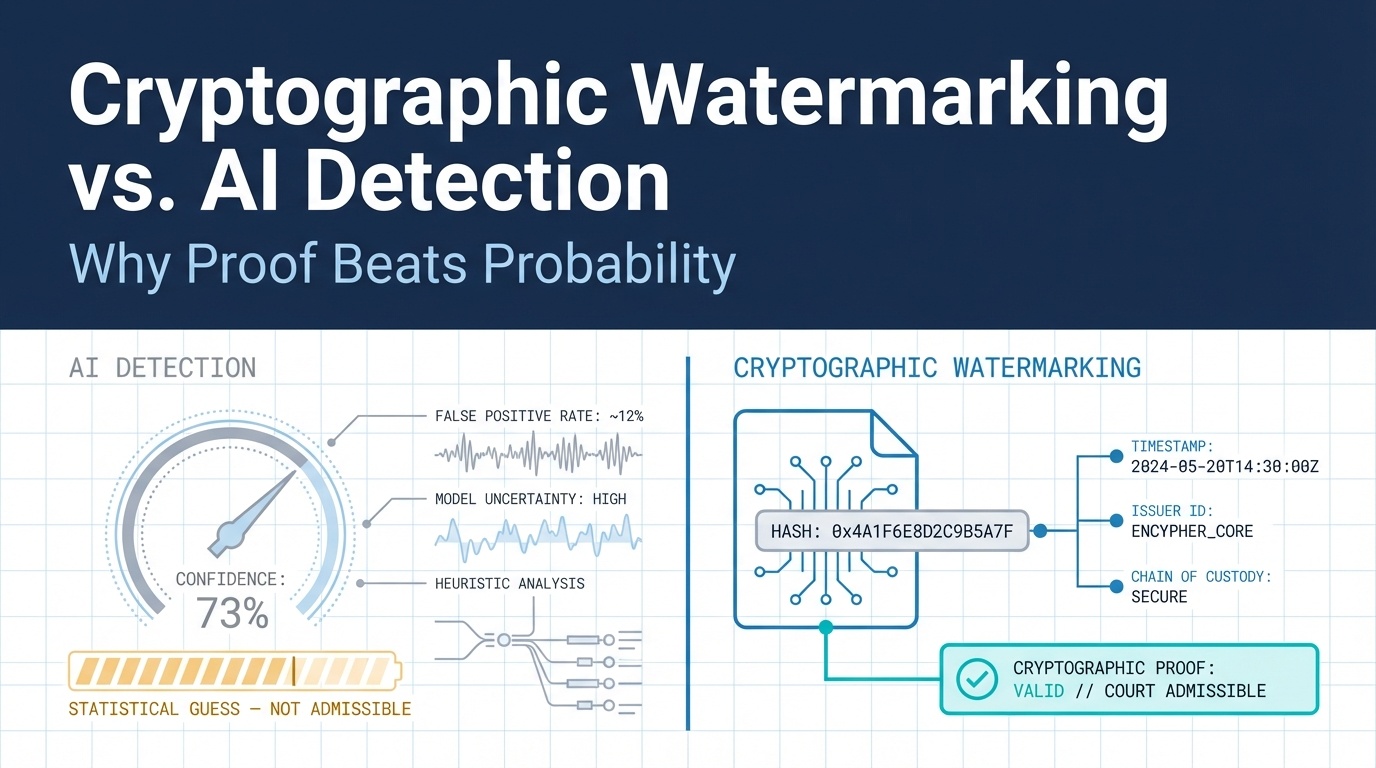
Cryptographic Watermarking vs. AI Detection: Proof Beats Guessing
By: Erik Svilich, Founder & CEO󠇟󠇠󠇡󠇢󠅛󠇉󠄇󠄹󠅔󠅠󠆲󠇋󠆕󠅾󠅥󠆸󠆰󠄚󠅨󠆳󠄨󠄏󠆅󠄯󠅤󠆂󠅇󠄶󠄏󠇁󠇎󠅭󠇭󠄇󠆀󠇞󠅄󠆜󠆂󠇧󠅪󠇉󠆋︀ | Encypher | C2PA Text Co-Chair󠇟󠇠󠇡󠇢󠇋󠅁󠅾︄󠆩󠄷󠇨󠄑󠄗󠆦󠆀󠇗󠅓󠄖󠅬󠆿󠇞󠅴󠆤󠅢󠇯󠆼︎󠄳󠆾󠇭󠆐󠇩󠆡󠆻󠆉󠇅󠆁󠆃󠄅︂󠅑󠅣󠄏󠆑
When someone asks "Is this AI-generated?", there are two fundamentally different ways to answer:󠇟󠇠󠇡󠇢󠆺󠄇󠅧󠄼󠆅󠄿󠅚󠆎󠄘󠆢󠄅︀󠄰󠆒󠅃󠄩󠆍󠇢󠇧󠅕󠆾󠆗󠆧󠅅󠄦󠄀󠇡󠆕󠄿󠅑󠄎󠇝󠆷󠅍󠇟󠇕󠅎󠄽󠆍︈
- Statistical inference: Analyze the text and guess based on patterns󠇟󠇠󠇡󠇢󠅀󠄀󠄨󠆑󠅸󠅙︃︈󠇐󠆊󠇟󠅿󠆆󠅛︋󠆗󠄠󠅠󠆌󠆈󠅦󠆺󠇢󠅇󠆋󠇧󠆧︉󠆡󠄱︂󠅔󠇉󠅀󠅷󠄋󠄽󠄋󠅆󠅤
- Cryptographic verification: Check for embedded proof of origin󠇟󠇠󠇡󠇢󠆻󠅋󠇛󠅀󠆱󠅴󠄩󠅲󠄏󠇔︄󠄭󠄂󠄷󠇯󠄁󠆇󠆽󠆈󠆢󠄧󠆘󠇈󠄆󠅿󠆈󠅠󠄖󠄮󠄿󠆍󠄮󠄤󠄱󠄰󠄬󠇠󠄰󠄢󠆅
The first approach is what AI detection tools do󠇟󠇠󠇡󠇢󠄫󠅧󠆦󠇈󠄔󠄅󠆨󠆭󠆴󠇬󠇍󠅞󠅨󠆲󠅵󠅙󠆕󠅆󠆘󠆮󠇍󠄅󠆭󠅡󠆦󠅵󠅡󠄟󠇢󠆾󠄒︊󠇢󠆽󠅹󠄗󠇀󠄠︀󠄒. The second is what cryptographic watermarking enables󠇟󠇠󠇡󠇢󠅜󠄪󠇕󠅰󠅖󠇒󠇣󠅫󠆁󠅆󠆗󠅍󠄙󠆾󠇮󠆔︅󠅶󠄐󠄳︇󠄡󠅯󠄗︌󠇗󠆛󠅣󠆛󠆪󠅖󠄊󠅏󠆘󠅡󠆈󠄗󠅃󠆩󠆬. The difference between them isn't just technical: it's the difference between probability and proof, between guessing and knowing󠇟󠇠󠇡󠇢󠅬󠄊󠇥󠅄󠅹󠆾󠅤󠄶󠄫󠄉󠅋󠇖󠅩󠆲󠇚󠇏󠇏󠇂󠆰󠆠󠆥󠄽󠄈󠇗󠆚󠅁󠆯󠅰󠄰󠇂󠆵󠆚︉󠆼󠆯󠆫󠄣︈󠄡󠄛.
How AI Detection Tools Work󠇟󠇠󠇡󠇢󠆏󠇣󠄂󠆯󠆥󠆓󠅿󠄼󠄗󠄠󠆧󠆥󠆫󠆸︃󠆂󠇆󠆰󠆫󠆎󠅹󠄧󠄨󠇤󠄣︃󠆕󠅰󠆈󠄮󠅲󠄂󠇃󠄌󠆆󠅥󠇕󠅨󠇚󠇊
AI detection tools like GPTZero, Originality.ai, and Turnitin's AI detector analyze text to estimate the likelihood it was generated by AI󠇟󠇠󠇡󠇢󠅉󠄪󠇟󠆎󠄐󠆒󠄦󠄾󠅺󠅟󠅟󠄮󠆇󠆺󠄬︂󠄎󠄥󠆰󠄲󠇥󠇧󠆞󠇫󠅞󠆔󠅨󠇆󠆁󠇚󠄢󠅜󠄷󠅩︋︄󠄰󠅛󠆟󠄥. They use several techniques:󠇟󠇠󠇡󠇢󠅶󠅅󠄃󠅂︌︌󠄻󠅴︋󠇦󠆣󠅄󠆶󠄴󠄼󠆼󠅲󠅾󠄴󠄑󠄒󠅥󠆏󠇤󠄵󠆔󠆰󠄊󠄓󠇟󠇔󠄇󠅀󠆘󠆨󠄏󠇗󠅕󠄫󠇢
Perplexity Analysis󠇟󠇠󠇡󠇢󠆌󠅚󠆛󠅸󠄦󠇚󠄚󠄝󠄥󠆣󠄁󠆅󠆸󠆳󠆼󠅞󠄆󠇛󠅉󠆈󠆐󠅑󠇈󠇁󠄏󠆉󠅷󠄴󠅝󠇍󠄈󠆵󠄑󠆡󠇋󠆤󠄻󠆡󠄻󠄧
Perplexity measures how "surprised" a language model is by text󠇟󠇠󠇡󠇢󠄹󠇙󠆙󠄎󠆮󠄬󠄔󠅴󠆖󠆋󠅂󠅾󠅹󠄀󠅴󠆾󠇗󠄑󠅵󠅧󠆶󠆍󠄯︅󠇔󠆦󠆿󠄤󠆐󠅮󠇑󠅂󠅜󠅍󠆙󠄙󠅘󠄙󠆛󠆽. The theory: AI-generated text is more predictable (lower perplexity) because it follows the patterns the model learned󠇟󠇠󠇡󠇢󠄌󠅲︀󠅑󠅐󠄊󠅽󠄟󠆒󠆆󠅉󠆚󠅔︌󠅫󠆉󠄀󠇃󠅌󠄂󠅡󠅐󠆅︀︎󠅩󠆫󠄼󠆖󠅩󠆵󠆹󠆀󠆭󠄉󠅳󠄺󠆟󠇏󠆭.
The problem: Human writing can also be predictable󠇟󠇠󠇡󠇢󠆜󠅜︇󠄻󠅖󠅾︉󠇥󠄮󠅸󠄱󠇬󠅁󠅝󠅆󠆩󠆶󠇋󠇉󠇀󠅙󠇟󠆏󠆸󠅿󠆉󠅏󠅇︍︃󠅄󠄫󠆴󠆐󠄠󠅤󠆫︆󠅒︅. Technical documentation, legal language, and formulaic writing often have low perplexity, and get flagged as AI󠇟󠇠󠇡󠇢󠅬󠅠󠆧󠆜󠆐󠅐󠄨󠄯󠄃󠆹󠇉󠆲󠅅󠇭󠅝󠄝󠇒󠇝󠇊󠆐󠄻󠆫󠆶󠆠󠆖󠄮󠇨︃󠄫󠅝󠇟󠄜󠆯󠄤󠆽󠄢󠅞󠆍󠆗󠇌.
Burstiness Detection󠇟󠇠󠇡󠇢󠄆󠆨︌︌󠄸󠆨󠅞󠅤󠅈󠅒󠆻󠅳󠆛︆󠄰󠄼󠄰󠄠󠄔󠆴󠅗󠆏󠇕︆󠆘󠄀󠇒︊󠇪󠇊󠆑󠄱󠄃󠄘󠅍󠆜󠆔󠆍󠅫︄
Burstiness measures variation in sentence complexity󠇟󠇠󠇡󠇢󠇅󠆨󠅢󠅑󠄲󠆼󠄬󠆗󠅼󠅢󠄱󠆋󠅕󠆵󠆏󠆿󠅧󠄯󠄔󠅉󠄉󠆠󠅯󠆗󠆌︇󠇎︊󠄄󠅢󠆽󠄷󠄥󠆡󠆏󠆖󠅧󠄭󠅑󠆾. The theory: Humans write with more variation: some sentences simple, some complex󠇟󠇠󠇡󠇢󠄝󠅘󠄫󠇞󠅟󠅺󠇙󠇥󠄡󠆩︍󠆤󠄀󠆀︊󠅷󠆷󠇬󠅿󠅔󠄀󠄻󠇎󠆝󠄵󠄻󠇊󠇦󠄇󠆦󠆴󠆙󠆯󠆧󠅋󠄗󠅃󠄸󠄩󠄅. AI tends to be more uniform󠇟󠇠󠇡󠇢󠄟󠅮︁󠇤󠇏󠄧︅󠇜󠇝󠅥󠅄󠄨󠆧󠆿󠇎󠄧󠅓󠄟󠅒󠅜󠄼󠇙󠅂󠅝󠅥󠅕󠅧󠄹󠆺󠆰󠇌󠆲󠇬󠇙󠅳󠇚󠄯󠆽󠇦󠅊.
The problem: Many human writers, especially non-native English speakers, write with consistent sentence structures󠇟󠇠󠇡󠇢󠆕󠇛󠄮󠆑󠅭󠆙󠅨︆󠅞󠇠󠄦󠇚󠇦󠆶󠄓󠇢󠅌󠇉󠄊󠆃󠄝󠄕󠆓󠅆󠄵󠆓󠄈󠄌󠄭󠆶󠆧󠄮󠇓󠅤󠄊󠇑󠄍︀󠄍󠇅. Academic writing often has uniform complexity by design󠇟󠇠󠇡󠇢󠄁󠄂󠅭󠄅󠄃󠇟󠄧󠄳󠇀󠇑󠆞󠇮󠅦󠅽󠆇󠅬󠆚󠇮󠄯󠅟󠇮󠆶󠆬󠇣󠆜󠄕󠅎󠅍󠆤󠆌󠅰󠅓󠆪󠄲󠄪󠄻︊󠆨󠅊󠆱.
Statistical Pattern Matching󠇟󠇠󠇡󠇢︂󠇭󠅨︉︃󠆲󠆨󠄄󠅠󠅜󠇃󠄱󠅂󠅽󠅫󠇭󠇂󠇆󠅣󠇡󠅫󠅂󠆟󠆷󠄜󠅐󠄼󠇣󠅼󠅨󠅓󠆓︌󠆠󠆏󠅺️󠄦󠆇󠄣
Detectors look for patterns common in AI output: certain phrase structures, word choices, and stylistic markers that appear frequently in AI-generated text󠇟󠇠󠇡󠇢󠅻󠅍󠄷󠅌󠄠󠄀󠅔󠅮󠇫󠅀󠅦󠅑󠅚󠇥󠄂󠇪󠄗󠆖󠆃󠆳󠆏󠆄󠄃󠆶󠅢󠅰󠄿󠆅󠅋󠅊󠆨󠆍󠄯󠄏󠆺󠅮󠄁󠆪󠄞󠄞.
The problem: These patterns are learned from human writing󠇟󠇠󠇡󠇢󠄌󠅼󠄂󠇨󠆘󠆯󠇥󠄄󠆨󠄇󠅍󠆕󠄸󠅱󠅃󠆏󠄠󠄑󠆂󠄑󠆩󠇗󠄻󠇃󠅦󠄉󠆃󠅀󠅡󠆊󠄥󠇦󠅘︌󠅵󠄶󠄆󠅇󠄱󠆉. As AI improves at mimicking human style, and as humans are influenced by AI writing, the patterns converge󠇟󠇠󠇡󠇢󠇈󠅋󠆻󠆔󠄣󠆜󠆒󠆱󠅁󠇢󠄝󠆔󠅣󠅗󠇟󠄈󠆁󠆋󠇜󠇚󠅁󠆱︇󠅬󠄣󠄩󠅛󠄫󠅂󠄗󠄩󠇌️󠅶󠅻󠄖󠆖󠅧󠄰󠄱.
The Accuracy Problem󠇟󠇠󠇡󠇢󠇠󠅕󠇎󠄹󠅤󠅠󠆠󠇓󠄅󠅱󠅯󠄯󠅂󠇗󠅬󠆏󠆯︄󠆠󠄡󠅮󠄐󠆲󠇈󠆬󠇘󠇠󠅼󠇮󠆦󠅀󠇠󠆻󠅖󠅝󠄚󠅲󠅳󠄺󠆸
AI detection tools have a fundamental accuracy problem that makes them unreliable for high-stakes decisions󠇟󠇠󠇡󠇢󠅠󠇞󠇋󠄙󠅠󠇯󠄈󠄞󠇌󠄉󠆕󠇈󠆈󠆯󠆳󠇔󠄨󠆳󠇆󠅿󠇓󠄘󠄅󠄰󠅋︆󠇓󠆣󠄮󠅢󠆣󠄮︊󠄚󠅕󠅰󠄳󠄁󠇋󠇁.
The Research󠇟󠇠󠇡󠇢󠄏󠄧︎󠆥󠅑󠄱󠆂󠄦󠄄󠅦󠅈󠆟󠇬︆󠇇󠄂󠇊󠅈󠅀󠇅󠅋󠅨󠅧󠇓󠄧󠄳󠇒󠇡󠆦󠅈󠆒󠄗󠇀󠆡󠆤󠄇󠄧󠆼󠄔󠄌
A comprehensive 2023 study by Weber-Wulff et al. tested 14 leading AI detection tools:󠇟󠇠󠇡󠇢󠆃󠄮󠆗󠅋󠇏󠆸󠅔󠇀󠄩󠄜󠆪󠇝󠇯󠇣󠆝󠇅󠅣󠄗󠆃󠄧󠄶󠆇󠄄󠅬󠅘󠅯󠇤󠆩󠄦󠆕󠇚󠇋󠆸󠅳󠄇󠄽󠇊󠄪󠅜󠇘
| Finding󠇟󠇠󠇡󠇢󠅲󠆫󠆧󠄛󠄞󠇪󠇭󠅯󠅥︇󠄥󠆍󠆷︆󠅄󠅖󠅎󠅳󠅒󠅟󠇩󠆧󠅝󠇝󠅣󠆂󠆌󠆙󠄏󠅋󠆤󠄽󠇭󠄖󠆆󠆭󠄴󠄍︍︉ | Implication󠇟󠇠󠇡󠇢󠄿󠅕󠄶󠇅︁󠇃󠇂󠄿󠆟󠄞󠅅󠇔󠄓󠅢󠇕󠄿󠄘󠇛︉󠇟󠇭󠄓󠄑󠅡󠅛󠄢󠆺󠆰󠄉󠅴󠅛󠇥󠆻󠆕️󠅗󠄩󠅲󠆽󠆦 |
|---|---|
| 27.9% overall accuracy󠇟󠇠󠇡󠇢󠅍󠇒󠆏󠄐󠆧󠅋󠇟󠄯󠄿󠄛󠄋󠅗󠅀󠅢󠅠󠅭︈󠄊󠄽󠅎󠄩󠇅󠅩󠅙󠆼󠆕󠄛󠄼󠄩󠆐󠇕󠅀󠆇󠇢󠆅󠆺󠄹󠇍󠆄󠇞 | Barely better than random guessing󠇟󠇠󠇡󠇢󠅤󠅴󠄋︅󠄜󠅵󠄦︊󠆄󠅣󠆖󠆊󠆏󠅁󠅩󠄃︌󠇇󠆡︁󠅺󠄛󠄙️󠇣󠄠󠄣️󠄹󠆟󠇧󠇞󠅖󠅦󠆻󠆘󠇖󠆯󠇕󠄗 |
| High false positive rates󠇟󠇠󠇡󠇢󠆧󠆺󠄊︀︋󠄮󠇘󠆭󠇭󠆁󠆌󠄃󠅦󠄺󠆽󠄎󠆙󠅏󠇩󠄮󠆢󠅺󠄦󠅣󠆊󠅧︁󠆖󠆺󠆨󠅍󠆟󠆜󠅏󠅽󠆭󠆾󠆅󠆹󠇌 | Human writing frequently flagged as AI󠇟󠇠󠇡󠇢󠆹󠄦󠆙󠄬︁󠆠󠆽󠇚󠆯󠄺󠄌󠅾󠇉󠆼󠇡󠆯󠄘󠄿󠇆󠄂︃󠄬︎󠄻󠄚󠄍󠆙󠅲︉󠄒󠇚󠆄󠄳󠆾󠆙󠅜︄󠇖󠄩󠆳 |
| Inconsistent results󠇟󠇠󠇡󠇢󠄡󠇩󠆽󠆣󠄨󠆪󠅑󠆟󠅔󠆦󠇂󠄁󠄶󠆮󠇝󠇨󠅲󠇦󠅆󠅨︀󠆭󠄳︄󠇄󠄽󠇀󠄡󠇥󠇇󠄖󠅐󠆽󠅏󠆨󠄻󠇠󠅧󠄁󠄽 | Same text gets different scores on different runs󠇟󠇠󠇡󠇢󠅾󠇞󠇣󠇤󠄣󠆛󠆑︆󠆻󠅖󠆦󠆄󠅅󠄱󠇨󠄼󠇛󠇩󠆈󠄀󠅓󠆘󠇕󠇛󠆠︊󠄄󠄘︋󠅁󠄡󠅌󠇥󠄕󠇥󠆦󠇗󠇜󠅎󠅏 |
| Easy to evade󠇟󠇠󠇡󠇢︄󠆴󠇅󠄰󠆥󠆻󠅮󠇫󠇪󠆆󠅁󠄙󠆳󠅫󠆖󠇅󠆃󠇟󠆬󠅽󠅘︁󠆋󠄂󠅧󠆂󠆠󠅯󠄂󠅸󠄩󠄱󠆊󠄌󠄧󠇞󠆀󠆔󠄏󠅐 | Simple paraphrasing defeats detection󠇟󠇠󠇡󠇢󠄕󠆽󠅔︂󠅆󠄺︅󠅂󠄖󠄮󠇥󠄳󠄧︅󠇙󠅏󠄻󠄬︃󠄭󠄐󠅄󠅪󠆰󠆿󠅛󠇣󠆞󠄺󠆓󠅙󠇞󠅮󠆧󠆱󠄘󠆾󠆕󠇧󠄳 |
Real-World Failures󠇟󠇠󠇡󠇢󠅇󠄾󠇛󠆀󠄖󠇤󠇨󠆼󠄞󠇨󠆒︉󠆏󠆪󠅥󠇍󠆿󠄋󠄁󠅸󠅇󠅪󠅇󠄞󠇉󠅎󠄦󠇢󠄲󠇉󠆈󠅑󠄛󠄞󠇕󠇂︊󠇔󠆻󠅋
OpenAI's AI Classifier: OpenAI built their own AI detection tool󠇟󠇠󠇡󠇢󠇤󠄅󠇞󠆺󠄭󠆯󠅞󠅶󠆞󠇘󠅑󠆗󠄷󠄀󠅴󠆔󠅱󠆑󠄼󠇓󠆪︁󠅑󠄩󠄡󠆟󠆇󠆭󠄕󠇙󠆠󠄬󠅱󠄧︎󠅬󠇛󠄃︊󠇦. They shut it down after six months because it only correctly identified AI text 26% of the time󠇟󠇠󠇡󠇢󠄒󠅩󠄹󠆷󠇍󠅪󠄽󠅞󠆈󠆨︃︎󠆌󠅈󠅐󠇮󠇔󠅔󠆷󠅞󠅖󠅭󠄜󠆀󠇡󠄚󠇭󠅷󠅽󠅯󠄣󠅧󠅙󠄕󠇡󠄭󠄁󠄏󠆜󠆍.
The Constitution Test: When the U.S. Constitution was run through popular AI detectors, it was flagged as "98.53% likely AI-generated󠇟󠇠󠇡󠇢󠆑󠆊󠅦󠅉󠅷󠅧󠇝󠅐󠇈󠇓󠆝︋︌󠆗󠆹󠇛󠆤󠄺󠄥󠅙󠇅󠅎󠇏󠄍󠅒󠇦︍󠅠️󠇢󠆍󠅈󠇑︅󠆳󠄪󠅉󠆟︃󠆟." The detectors couldn't distinguish 18th-century human writing from modern AI󠇟󠇠󠇡󠇢󠇝󠇡󠄞󠄢󠅍󠅊︄󠄔󠅂󠆬󠄕󠄂󠇛︀󠆗󠇢󠇀󠅉󠆯󠆱󠅈︊󠆤󠅕󠄞󠆸󠄶︄󠄼󠆆󠅨󠇬󠄄󠆒󠅹󠅌󠄝󠄞󠆍󠄣.
ESL Bias: Stanford researchers found that AI detectors flagged 61% of essays by non-native English speakers as AI-generated, compared to near-zero false positives for native speakers󠇟󠇠󠇡󠇢󠄉󠄍󠄿︃󠅢󠅞󠆪󠆍󠄡󠄪󠅜󠄛󠄵󠄄󠄂󠄳󠅻󠄫󠆿󠄘󠅸󠆅󠆧󠆳󠇘󠄾︈️︋󠆊󠆎󠆫󠄪󠅼︊󠆔󠆓󠆲󠄽󠄐. The detectors learned that simpler vocabulary and grammar patterns resemble AI output󠇟󠇠󠇡󠇢󠅗󠅠󠅹󠅞󠄃󠆐󠆛󠅒󠄃󠄫󠅻󠅪󠆍󠆖󠇌󠆦󠇧󠅢󠇣󠇋󠄷󠄥󠅠󠆍󠄴󠄟󠅱󠄣︊󠆓󠆢󠅼󠄙󠆤󠅉󠄡󠅁󠆱󠆋󠅰.
Why Accuracy Can't Improve󠇟󠇠󠇡󠇢󠄢󠄌󠅥󠅝󠆿︃󠆵󠆈󠄐󠄖󠆠󠇪︎󠅄󠅀󠇨󠆘󠇋󠄁󠅾󠅻󠆗󠄥󠆔︊󠄫󠆗󠆶︂󠇩󠄹󠆰󠆗󠆮󠇈󠆙󠆓󠇫󠅶󠇌
The fundamental problem isn't that current detectors need better training󠇟󠇠󠇡󠇢󠄥󠅅󠇌︃󠆛󠇤󠅶󠅲󠆣󠆕󠄇󠆮󠆑󠄷󠄪󠅬󠅌󠇇󠅟󠄿󠄜󠆢󠅣󠆑󠄟󠅺󠆬󠄵󠆦󠄫󠆾󠅉󠆒󠅇󠄍󠆋󠇓󠆙󠆜󠆿. It's that detection is mathematically impossible to perfect:󠇟󠇠󠇡󠇢󠄜󠇮󠆸󠅑󠅄󠄵󠅠󠇓󠇟󠇯󠄌󠆟󠆍󠇍󠄗󠆃󠄎󠇍󠄻󠇆󠇕︁󠆖󠆆󠅣󠆺󠄧󠄾󠆢󠅥󠄣󠆧󠇡󠇜󠄨󠆤󠅉󠄘󠇝󠆚
- AI is trained on human text: AI writing is designed to be indistinguishable from human writing󠇟󠇠󠇡󠇢󠄆󠆠󠄐︁󠄙󠅖󠆰󠅟󠆀󠅂󠇎︇󠆙︄󠄬󠄳󠅩󠄙󠆣󠅌󠅿󠇠󠆰󠆞󠅍󠇇󠅦󠇩︍󠇖󠅃󠆷󠄐󠆎󠅅󠄿󠇘󠆍󠅲󠄙
- The arms race: As detectors improve, AI adapts to evade them󠇟󠇠󠇡󠇢󠅣󠇩󠄘󠆤󠅍󠄽󠅘󠆌󠆻󠇌󠇗󠅏󠄈󠅊󠅻󠆞󠄙󠅵󠄝󠆄󠄋󠄢󠇑󠄒󠇌󠅗󠄌󠅱󠅳󠆮󠄏󠆛󠄃󠄩󠄴󠆇󠄧󠆣󠇍󠆺
- No ground truth: There's no inherent signal that marks text as AI-generated󠇟󠇠󠇡󠇢󠅬︃󠆞󠆌󠆉󠅵󠇏󠄐︄󠄄󠆍󠇎󠆫󠆬︇󠆺󠇣󠅾󠄩󠅯󠅶󠅛󠄣󠄄󠅳󠇐󠅣󠄢󠄂󠄽󠅽󠅥󠄿󠆛󠅮󠆁󠅻󠅛󠄣󠆋
- Adversarial attacks: Simple techniques (paraphrasing, adding typos, using "humanizer" tools) defeat detection󠇟󠇠󠇡󠇢󠅬󠇡󠅪󠇯󠄅󠅐󠆟︋󠅥󠄃󠄋󠇫󠅛󠆬󠆻󠅲󠄸󠄐󠅕󠄐󠄷󠅆󠄻󠅲󠄵󠄾󠄴󠆢󠄊󠄺󠆿󠆖󠅧󠅧󠄓󠆭󠄖󠅡󠆲󠇫
How Cryptographic Watermarking Works󠇟󠇠󠇡󠇢󠆺󠄔󠇐󠇣󠅿󠄬󠇨󠇙󠅾︆󠅈󠄜󠇤󠄟󠇖󠆃󠄜󠆛󠆦󠅏󠇅󠆽󠆠󠆗󠆂󠄤︍󠅱󠇉󠅩󠇃󠇥󠅆󠇤󠇉󠅍󠄞󠅄󠄌󠅰
Cryptographic watermarking takes the opposite approach: instead of guessing after the fact, it embeds proof at the moment of creation󠇟󠇠󠇡󠇢󠄏󠅬󠄰󠄕󠆂󠅓󠆼󠄂󠇅󠆺󠆃󠄸󠄨︉󠅕󠆘󠅏󠅸󠆟󠄋󠇧󠄽︊󠅫󠆆󠆟󠆥󠆢󠇁󠆫󠅢󠆀󠇄󠅟󠄠󠄜󠆏󠆹󠅸󠅦.
The Technical Foundation󠇟󠇠󠇡󠇢︌󠅸󠅂󠇜󠅶󠄧󠇮󠄍󠇖󠇡️︂󠅺󠇂󠅎󠄴󠆶󠄠󠅚󠅗󠅜󠄾󠆪󠇊󠆬󠅪󠆈︂󠇮󠄍󠅅󠅱󠆌󠇃󠅷󠆔󠄈󠆪󠆞󠅲
Digital Signatures: Content is signed with a cryptographic key, creating a unique signature that can only be produced by the key holder󠇟󠇠󠇡󠇢󠆆󠆾󠇩󠅵󠅠󠄬️󠆣󠇆󠇞󠅠󠅰󠄎󠇇󠆁󠆭󠅅󠅬󠅫󠄋︃󠄶󠄕󠇚󠆂󠅧󠄤󠇊󠅔󠆋︃󠆏󠅟󠇚󠆐󠆫󠆻󠆓󠇩󠅍.
Embedding: The signature is embedded into the content itself󠇟󠇠󠇡󠇢󠇢󠆑󠅄󠄵󠆙󠆅󠄾󠅞󠅤󠆐󠆃󠇓󠄤󠆈󠇮󠆐󠆿󠆅󠇀󠅢󠇪󠇨󠄴󠆩󠇞󠅇󠄠︊󠇇󠄻󠆩︎󠆀󠅰󠄖󠄯󠅔󠇘󠆙󠅻. For text, this uses invisible Unicode characters (variation selectors) that don't affect how the text displays󠇟󠇠󠇡󠇢󠅬󠆃󠄣󠆯󠆧󠅫󠄀󠅣󠇃󠆥󠅝󠆾󠆯󠇝󠅡󠆽󠇉󠆉󠇎󠆂󠄫︂󠆬󠆫󠇭︁󠇞󠆵󠄠󠄚󠇆󠅏󠆐󠇠󠅙󠇓󠄝󠆫󠄾󠆃.
Verification: Anyone can verify the signature using the corresponding public key, confirming the content's origin and integrity󠇟󠇠󠇡󠇢󠄆󠆼󠇤󠇣󠄺󠅻󠄩󠆹󠆽󠅙󠅻󠇗󠆴󠆥󠄩󠅑󠆘󠆑󠇊󠄝󠄱󠅇󠅼󠇄󠄷󠇔󠄒󠇥󠆿󠅳󠆰󠆂󠄆󠄅︇󠆁󠇨󠇉󠄷󠄔.
What Gets Embedded󠇟󠇠󠇡󠇢󠆚󠄶︇󠄡󠅭󠇨󠅀󠆙󠆍󠄸󠆔︂󠅔󠇛󠅲󠅧󠆾󠇨󠄌󠅅󠄢︈󠆫󠄷︇󠇓󠇌󠇫󠆔󠄀󠆑󠅁󠄄󠅃󠆵󠆇󠅇󠄃󠄴󠅴
A cryptographic watermark can include:󠇟󠇠󠇡󠇢󠄅󠆊󠇅󠄸󠄴󠇥󠄪󠆰󠄒󠆞󠄭󠅞󠅿󠅚󠄺󠅦󠄂󠇝󠅟󠇄󠄠󠇓󠇔󠅲󠅾󠅁󠅛󠄏󠅅󠆍󠅺󠆠󠅬󠅒󠇝󠄯󠅥󠅜󠇍󠇯
- Origin: Who created or published the content󠇟󠇠󠇡󠇢󠄣󠅏󠅱󠅼󠅾󠅯󠅩󠆘󠇆︅󠆈󠅊︁󠅹󠇠󠆣󠅺󠄱󠄙󠅦󠅵󠆇󠆞󠆏󠄖︌󠅋󠅞󠄅󠇆󠅬󠅹󠆘󠄟󠆞󠄭󠄇󠇌󠄱󠆋
- Timestamp: When it was created󠇟󠇠󠇡󠇢󠅚󠅶󠆲󠅕󠄠󠄣󠇀󠄝󠄼︄󠄓󠄇󠄻󠆚󠅎󠇅󠄥󠄣󠄧󠅨󠅨󠄺󠇗󠆈󠆦󠅍󠆳󠇒󠆆󠆭󠆴󠅸󠆊󠅓󠄆︁󠅦󠆫󠆭󠆄
- Generation method: Human, AI-assisted, or fully AI-generated󠇟󠇠󠇡󠇢󠄵󠇁󠆶︄󠇎󠅐󠆆󠅤󠄂󠅰󠆼󠇎󠄊︊󠇒󠅽󠇞︁󠆕󠄙󠆢󠅝󠅯󠄿󠅿󠇭󠅲󠇁󠅶󠆦󠅼󠅠󠄉󠇚󠄀󠅽󠆺󠅶︍󠆫
- Integrity hash: Proof the content hasn't been modified󠇟󠇠󠇡󠇢󠄉󠆁󠆲󠇁󠇘󠅪︀󠇬󠄨󠄌󠅑󠅯󠇂󠄷󠄱󠄋︋󠆻󠆅󠅩󠅉󠄤󠅚󠄩󠇁󠅹󠅀󠇄󠇆󠇐󠇨󠅗󠄠󠇞󠄯󠅈󠄡󠄴󠇣󠅈
- Custom metadata: Any additional information the creator wants to include󠇟󠇠󠇡󠇢󠇃󠆫󠅼󠇈󠅲︎󠄻󠆌󠅄󠆲󠅆󠄍󠄞󠇈󠆡󠅷󠅬󠅐󠄿󠆟󠆜󠆸󠅇󠅠󠄭󠇠󠆟󠆈󠆛󠅭󠅇󠄉󠆹󠅞󠇀󠇇󠆀󠆶󠅠󠄑
The Verification Process󠇟󠇠󠇡󠇢󠅩󠅮󠆨󠄁󠇦󠅞󠄽󠇚󠆒󠅊󠅉󠇈󠇌󠅽󠆇󠆬󠆫󠅕󠇜󠅙󠄫󠇃󠆃󠆗󠆞󠆔󠆭󠅒󠄪󠆮󠄸󠅊󠆠󠆅󠅛󠄬󠅐󠄭︊󠅣
1. Extract embedded data from content
2. Verify cryptographic signature against public key
3. Check integrity hash against current content
4. Return: Valid/Invalid + metadata
If the signature is valid and the hash matches, you have mathematical proof of the content's origin and integrity󠇟󠇠󠇡󠇢󠇢󠅕󠇙󠅒󠆶󠅛󠇘󠇍︍󠇎󠅮󠄍󠇉︍󠄾󠄨󠇋󠄢󠆓󠆤󠆹󠆹󠄹󠅭󠄅󠆐󠆏󠇨󠄆󠆟󠇮󠄁󠇙󠆔󠆝󠄥󠄚󠄦󠄔󠄥. If the content has been modified, the hash won't match󠇟󠇠󠇡󠇢󠄍󠄢󠇆󠅗󠇞󠇪󠇯󠇡󠅡󠄃󠅫󠅒󠇛󠆀󠅰󠆥󠆚󠄫󠄋󠅫󠅾󠆽󠄠󠄗󠄦󠆓󠇚󠅮󠅙󠇒︍󠄛󠄔󠆩󠄀󠅼󠆬󠆴󠇇󠄆. If someone tries to forge the signature, they can't without the private key󠇟󠇠󠇡󠇢󠇬󠆵󠄇󠅾󠄙︃󠇀󠇈󠆝󠄰󠅡󠅿󠄍󠅉󠆕󠆖󠆻󠇇󠄽󠅷󠄇󠅛󠄢󠅆󠇩󠄡󠄖󠆡󠅵󠆮󠅞󠅤󠄑󠄖󠄝󠆼󠆘󠅑︃󠄺.
The Comparison󠇟󠇠󠇡󠇢󠄖󠇪󠆼󠆴󠆾󠅉󠅫󠆬󠇢󠅵󠅘󠅫󠆈󠄸󠇐󠄹󠅩󠆍󠇞󠄅󠆤󠇧󠄶󠆥󠅓︋󠄳󠄃󠆴󠅏󠆦󠄴󠄞󠅇󠅮󠄌󠆘󠇩󠅶󠆛
| Aspect󠇟󠇠󠇡󠇢󠄕󠆫󠇉󠆍󠄓󠄚󠅦󠇔󠆿󠄧󠇢󠅾󠇈󠇎󠅐󠄓󠇥󠆜󠄉󠅛󠄭󠄴󠄣󠇢󠇁󠄯󠄵󠅢󠅏󠆺󠄃󠄌󠆢󠄵󠅯󠄭󠄛󠆀󠇒󠆬 | AI Detection󠇟󠇠󠇡󠇢󠄡󠆍󠄺󠄢󠄕󠅁󠄯󠅌󠅵︋󠄢󠅟󠆳󠅻󠆯󠇝󠄩︈󠅔︁󠄛︆󠄈󠄫󠅌󠇅󠆪󠅂󠇬󠄇󠅣󠄳︅󠄻󠄾󠇬󠇎󠆅󠇤󠆙 | Cryptographic Watermarking󠇟󠇠󠇡󠇢󠅴󠄸󠅂󠆅󠆌󠆶󠄱󠄙󠄖󠄻󠇑󠇡󠆊󠅀󠆔󠇓︌󠇢󠆲󠆛󠅠󠄣󠅒󠇝︃󠇖︀󠆠󠅮󠆪󠇮󠄈󠅉󠅠󠄨󠄋󠅾󠇣󠄤󠆖 |
|---|---|---|
| Accuracy󠇟󠇠󠇡󠇢󠇀󠄒󠅊󠆩󠅂󠅵󠅬󠅶︅󠅬󠅌󠆤󠄏󠇂󠆟󠅕󠄩󠆺󠆺󠅃︂︀︊󠄺󠄧󠅷󠅈󠅳󠆷󠄹󠄜󠇭󠆢󠆖󠅧󠅘︌󠄭󠄣󠆯 | ~50-70% (often worse󠇟󠇠󠇡󠇢󠇏󠄟󠄽󠅾󠅛󠅇󠆫󠄘󠅅󠄥󠅺󠆌󠇝󠇜󠇨󠅽󠄽󠄚󠇑󠇎󠇞󠆄󠇁󠇡󠄍︄󠆯󠄕︉󠇑󠄹󠅜󠅩︌󠆷󠆉󠆛︉󠅨󠄓) | 100% (cryptographic certainty󠇟󠇠󠇡󠇢󠆛󠇬︅󠆜󠄎󠇒󠅉︂󠄣󠆝󠅃󠄐󠆀󠅁󠇦󠆅󠅧󠆯󠆆󠅙󠆩󠅌󠄤︈󠇉󠇨󠅟󠄔󠇅󠇊󠆁󠆘󠅟󠆆󠆒󠄂󠄻󠅃󠆈󠅝) |
| False positives󠇟󠇠󠇡󠇢󠄠󠄂󠇫󠅸󠆆󠆄󠄾󠆕󠅆󠇐󠆾︃󠆥󠅺󠇐󠄬︇󠄓󠄛󠇙󠅬︌󠅬󠆿󠅵︋︀󠆵󠄽󠅟󠄇󠆭󠆀󠄎󠅣󠅉󠅵󠆱󠆽󠇛 | Common and harmful󠇟󠇠󠇡󠇢󠅀󠇄󠄳󠇮󠆮󠇌︉󠄀︊󠅍󠅰󠇉󠅆󠄀󠄾󠄜︂󠆄󠅆󠄦󠆊󠅦󠅈󠅙󠇇󠄈󠄅󠅬󠄱󠆼󠆖󠆛󠅫󠅤󠄵󠆄󠆥󠅾󠆽󠄽 | Mathematically impossible󠇟󠇠󠇡󠇢󠇉󠇎󠆥󠅌󠅇󠇉󠅈󠄁󠆜󠄌󠅴︄󠄝︃󠄻󠆈󠅤󠆄󠆾󠄔󠅆󠆁󠇁󠇕󠅤󠆍󠆛︎󠇤󠅎󠄵󠇜︍󠄭󠇮󠆝󠅸󠆍󠆫󠆏 |
| False negatives󠇟󠇠󠇡󠇢󠄍󠄥󠆺󠆖󠄴󠅁󠅏󠇚󠇁󠇞󠅛󠆛󠄀󠅋︆󠅗󠅙󠄥󠅱󠄮︌󠆋󠆾󠅪️󠄯󠄌󠇛󠅜󠆦󠄏󠄧󠆯󠄸󠆯󠆳󠅒󠆀󠄢󠅿 | Easy to achieve󠇟󠇠󠇡󠇢󠅧󠄾󠆶󠆆󠅳󠆜󠇑󠆺󠆣󠇩︈󠆁󠅴󠄡󠄴󠇟󠅓󠅌󠆀󠄆󠇠󠆇󠇁󠇐󠇕󠆞󠅅󠅗󠄹󠅐󠄃󠇢󠄷󠄄󠄐󠅲󠅳󠅟󠄵󠆖 | Requires breaking cryptography󠇟󠇠󠇡󠇢󠄘󠆯󠅤󠆧󠄣󠄔󠆹󠅊󠆹󠅱󠄭󠇚󠅭󠇡󠆢󠅛󠅕󠄺󠇎󠆰󠄔󠆼󠇧󠅬󠄼︅󠆝󠇂󠆅󠇬󠅑︌󠅤󠄶󠅼󠅦󠆹󠄲󠄙󠄀 |
| Information provided󠇟󠇠󠇡󠇢󠇅󠇘󠅗󠅐󠆿󠆢󠅿󠆚󠆨󠅗󠇨󠅀󠄲󠅱󠅹󠆇󠅩󠅴󠅮󠅜󠄉︋󠆨󠄖󠄭󠅳󠅧󠄽󠅝󠆴󠅜︅󠅙󠄰︄󠅭󠄅󠇏󠇀󠆕 | Binary guess (AI/human󠇟󠇠󠇡󠇢󠄋󠆤󠆻󠅞󠄙󠅌󠇬󠄄󠆈︆󠄭󠄍󠆽󠅜󠇆󠄬󠅢󠅔󠇝󠅟󠆸󠆾󠄳︂󠆫󠇩󠄳󠅕󠄉󠅚󠆾󠄳󠄵󠅞󠅹󠇌󠅡󠇖󠅂󠆀) | Rich metadata (who, when, how󠇟󠇠󠇡󠇢󠇗󠅦󠆔󠄐󠅝󠅩󠄀󠆜󠅧󠅩󠅤󠄕󠇘󠅾󠆄󠄕󠆩󠆨󠆦󠆺󠅛󠆖󠆢󠄸󠄐󠇄󠆽󠅬󠅩︊󠅔󠄬󠅂󠅁󠅀󠄉󠆟󠅝󠅵󠄌) |
| Evasion󠇟󠇠󠇡󠇢󠄊󠄧󠅧󠆟󠅡󠄙󠆼󠇔󠅊󠄣󠄣󠆠󠄃󠆆󠆤󠆺󠅂󠆗󠄛󠄺󠆼󠆥󠅵󠄍󠇛󠅝󠇏󠅉󠆺󠄴󠅪󠅲󠇗󠆊󠅝󠄎󠄹󠄸󠅛󠇣 | Trivial (paraphrase, humanize󠇟󠇠󠇡󠇢󠆪󠆷󠆎󠆏󠆼󠅜󠅍󠅺︎󠇬󠄥󠅉󠆾󠄎󠅧󠄘󠄒󠆼󠅃󠇚󠅡󠆩󠅣󠄸󠄤󠆈︂󠇐︌󠆽󠅝󠅐󠄷󠄉󠇨󠆨󠅑󠅻󠇫󠄣) | Requires private key or content modification󠇟󠇠󠇡󠇢󠆨󠅗󠅗󠇈󠇠︁󠅬󠇘󠆶󠆉︆󠄎󠄠󠆧󠆏󠅦󠄒󠆕󠇒󠇔󠄉󠆶󠄌󠇩︃󠅔󠇓󠆤󠄴󠅼󠅱󠄀󠄚󠄖󠇎󠄴󠆗󠄞󠆼󠄝 |
| Retroactive󠇟󠇠󠇡󠇢󠄎󠄬󠅚󠆠󠅨󠆼󠆍󠆽󠇔󠄰󠅑󠅠󠆧󠆓󠅢󠄅󠄞󠄵󠄭󠇬󠅋󠄓󠇅󠅑󠆢󠄚󠄸󠆀󠄲󠇬󠅵︎󠅱󠅨󠄪󠆞󠆷󠄪︁󠅈 | Can analyze any text󠇟󠇠󠇡󠇢󠅊󠅔󠆯󠆔󠆦󠅴︄󠇪󠄭󠇜󠅭󠆡󠅷󠄪󠄹󠆀󠅐󠅣󠇂󠆍󠅧󠇄󠄛󠆦󠅖︉󠆬󠄂󠄧󠇚󠅷󠄄︂󠅙󠄞󠄞󠇚󠆫︃󠄴 | Only works on marked content󠇟󠇠󠇡󠇢󠅜󠇔󠆇󠆙󠇕󠆕󠆰󠇯󠆰󠄋️󠅍󠅹󠄨󠄶󠇯󠄡︃󠇌󠇜󠄰󠆍󠇢󠅠󠄫󠇏󠆌󠇐󠇫󠄀󠆪󠄟󠅞󠄅󠆺󠅄󠇉󠇧󠄓󠄋 |
| Court admissibility󠇟󠇠󠇡󠇢󠅿󠅭󠇖󠄶󠇩󠇨󠆤󠅷󠄠󠄨󠆹󠅯󠄑󠄫󠆆󠄰󠇖󠇝󠅍󠆬󠄒󠄺󠇄󠆩󠄣󠆵󠇣󠄒󠄇󠄲󠇂󠆭󠆥󠇣󠆚󠇆󠆅󠆽󠅦󠇤 | Rejected as unreliable󠇟󠇠󠇡󠇢󠄠󠅪󠆫󠆪󠆫󠇕󠆘󠆤󠇉󠄺︍󠇊󠆳󠇫󠆩󠄯󠇅󠇨󠆆󠄟󠆚󠄤󠅞󠄔󠅲󠆃󠄲󠇏󠇅󠄱󠆷󠆦󠅨󠆶󠇓󠄔󠄀︎󠆐󠄍 | Accepted as digital evidence󠇟󠇠󠇡󠇢󠆿󠅸󠅃󠆱󠄭󠅠󠄪󠅿󠇓󠆕󠅗󠇫󠆑󠅸󠅫󠅌︊󠆶󠆉󠆗󠅧︊󠅭󠇫󠅻󠄂󠇋󠄌󠇞󠄃󠇁󠆉󠄷󠆻󠄛󠄢󠅪󠇒󠄟󠄩 |
Why This Matters󠇟󠇠󠇡󠇢󠇈󠅀󠄡󠆑︇󠄣󠄜󠅈󠄕󠄢️󠄸︄󠅝󠄏󠇨︈󠆲󠆹󠇕󠆐󠇡󠅖󠅂󠆢󠅁󠅜󠄇󠅼︉󠇩󠇆󠅍󠅘󠅓󠇎󠆃󠄨󠅤󠅐
For Publishers󠇟󠇠󠇡󠇢󠇃󠆨󠆧️󠄁󠆁󠅺󠇜󠅩󠇌󠆋︌󠅟󠅈󠆱︁󠄱󠆊󠄏󠄁󠅒󠄩󠄂󠅷󠇜󠄧󠇈󠅦󠄤󠅎󠄻󠄚󠄖󠇞󠅡󠄎󠄶󠇇󠆴󠅗
AI detection can't prove your content was used in AI training: it can only guess whether output looks AI-generated󠇟󠇠󠇡󠇢󠆌󠇠︎󠅏󠇏󠇖󠅊󠅅󠄖󠆽󠆘︎󠄺󠇄󠅥󠆬︊󠇡󠇡󠅎󠄎󠅢󠇄󠄥󠄽󠆵󠆚️󠄄󠄹󠅎󠄃︊󠅎󠄧︂󠅞󠆑󠄴󠄏. Cryptographic watermarking proves your content's origin, enabling:󠇟󠇠󠇡󠇢󠅳󠆔󠄞󠅸󠆆󠄷󠆱󠆱󠅒󠆼󠆟󠅌󠄮󠇪󠆣󠅢󠇛󠆃󠄎󠄈󠆢󠄳󠇟󠆣󠄄󠆹󠅜󠆘󠆒󠄮󠆒󠅟󠆬󠆂󠄐󠆂󠄿󠇗󠆐︇
- Proof of ownership that survives distribution󠇟󠇠󠇡󠇢︁󠄮󠅋󠄋󠅦︂󠇏󠇕󠅇󠅯󠇀󠆌󠄻󠅠󠅼󠇑󠇂󠇂󠄴󠆅󠅍󠇨︃󠅡󠄄️󠅋󠅘󠇆󠄽󠅟󠄍︍󠆲󠄼󠆨󠆕󠄪󠅶󠇖
- Formal notification to AI companies󠇟󠇠󠇡󠇢󠆐󠄤󠄠󠇃󠆡󠄆󠄑󠆓󠅽󠇍󠇌󠇮󠄫󠄘󠆇󠅐󠄤󠄓󠆓󠅼󠄋󠇩󠇐󠆮󠅙󠅗︃󠆽󠄻󠅇󠆖󠆠󠅳󠆫󠇟󠅰󠆭󠇖󠆎󠄈
- Willful infringement claims when marked content is used without permission󠇟󠇠󠇡󠇢󠅇󠆭󠅒󠅚󠅶󠄼󠆏󠄩󠇊󠆞󠇥󠇋󠅯󠇏󠄷󠆎󠄑︆󠄃󠅒󠅾󠄟󠅊󠄃︌󠆶󠆰︅󠄥︁󠇩󠄢󠅚󠆐󠇢󠇖󠇀󠅢󠇩󠅖
For Educators󠇟󠇠󠇡󠇢󠇫󠅔󠄦󠄡󠆄󠆯󠄗󠄺󠇕󠄸󠆭󠆛󠄿︉󠄠󠄼󠄎󠅺󠅳󠅸󠇐󠆿︁󠅴󠆇󠇓󠅲󠅢󠆉󠅮󠅭󠅢️󠄙󠆎󠅎󠅓󠅘󠄑󠆺
AI detection has falsely accused countless students of cheating, with devastating consequences for their academic careers󠇟󠇠󠇡󠇢󠅋󠇐︄󠅤󠆩󠇊󠅙󠅱󠆖󠅬󠆴󠅟󠇟󠅑󠇠󠄪󠇎󠆹󠅍󠅦󠆐󠆝󠅣󠆺󠆶󠇞󠅕󠄨󠄴󠅳󠆝󠄎󠇅︂󠆆󠇃󠄱󠄡󠇜󠇢. Cryptographic watermarking offers a better path:󠇟󠇠󠇡󠇢󠆿󠆄󠇯󠆕︂󠄩󠅷󠅲︅󠇅󠅶󠆁󠅧󠆗󠅞󠅕󠅀󠄵󠇞󠆉󠅎󠅈󠄿󠄬󠅪󠄭󠆣󠆘󠆌󠅞󠄸󠄢󠄿󠅻󠄶󠄒󠇝󠅈󠆗󠅂
- No false accusations: Only marked content is identified󠇟󠇠󠇡󠇢󠆗󠆖󠇞󠄁󠅄󠄓󠆗󠄅󠄥󠇓󠇝󠆋󠅈󠇗󠆞︋󠇇󠅾󠄄󠆝󠅔󠅫󠅑󠄌󠄽󠆞󠄧󠅣󠇕󠄬︄󠆁󠅆󠅄︋󠅔󠅆󠄍󠇕󠄛
- Clear provenance: Know exactly what was AI-generated and when󠇟󠇠󠇡󠇢󠅦󠆢󠄘󠆊󠄚󠆅󠆵󠆷󠄻󠅁󠇋󠅄󠄕󠅘︍󠄓󠆪󠆖󠅄︃󠄿󠄸󠇠󠄰󠄻󠅧󠇉󠄗󠇂󠇃󠆆󠅝︄󠅆󠅫󠆞󠇤󠆷︁󠄼
- Ethical AI use: Students can use AI transparently with proper attribution󠇟󠇠󠇡󠇢󠆫󠅕󠄯󠄸󠄯󠇡󠆚󠇠󠅕󠅷󠆟󠄷󠇃󠄺󠅽󠇗󠅝󠄐󠄀󠆞󠆂󠆗󠆨󠇫󠆼󠅔󠆤󠆡󠆶󠆅󠆜󠇇󠄎󠄠󠇭︊󠆞󠇇󠄓󠄷
For Enterprises󠇟󠇠󠇡󠇢󠄳󠄎󠇤󠆥󠄫󠅵󠇌󠄳󠅆󠆑󠇛󠇔󠇗󠆂󠆉󠅒󠆻󠇝󠅱󠄣󠅽󠆳󠆝󠆫󠄂󠅠󠇟󠆝󠅧︉󠆱󠇣󠆉︃󠇩󠆻󠄯󠄺󠆇󠆑
AI detection creates liability: what happens when you wrongly accuse an employee or vendor of using AI󠇟󠇠󠇡󠇢󠇪󠆟󠆧󠅅󠄣󠄕󠇔󠅮󠅔󠇆󠄼󠅝󠅢󠆄󠇁󠄚󠄁󠄕󠄗︂󠇥󠅒󠆽󠇋󠇉󠇆󠅣󠄻󠇯󠆔󠇄󠆔󠆷󠆆󠆨󠇝󠄱󠆍󠄣󠇂? Cryptographic watermarking provides:󠇟󠇠󠇡󠇢󠄨󠇠󠅆󠆔󠆥󠅾󠇔󠇢󠆵󠅤󠇀󠄷󠇪󠄕󠆲󠄭󠅨󠇁󠅉󠅍󠆾󠆭󠆅󠆄󠆲︁󠇎󠇖󠄳󠇡󠄨󠇦︈󠅻󠅰󠇘󠄜󠅞󠆶󠄖
- Audit trails: Know the provenance of all content󠇟󠇠󠇡󠇢︀󠅕󠅠󠅍󠆏󠆗󠆤󠅡︇󠄠󠇯󠇉︎󠆷󠅑󠆍󠆝󠅆󠆢󠅆󠆨󠇅󠆘󠇢󠄩󠅎󠄫󠄁󠆙󠆱󠅇󠇧󠆨󠄶󠄕󠇮󠆜󠆽󠇩󠅱
- Compliance evidence: Meet regulatory requirements for AI transparency󠇟󠇠󠇡󠇢󠅑󠆧󠄫󠄯󠄅󠆱󠅝󠆐󠄿󠆇󠄖󠅝󠆢󠄕󠇖󠆑󠆇󠇮󠄗󠄔󠇎︅󠇪󠇤󠄁󠆵󠇀󠅆󠄜󠄶󠆸󠄆󠅣󠇆󠆇󠅇󠇍󠆧󠄅󠆻
- Risk reduction: No false positive liability󠇟󠇠󠇡󠇢󠆭󠆎󠆭󠇘󠅲󠇄󠄀󠆡󠇈󠅹󠇡︍󠅪󠅐󠄮󠄳󠄗󠄨󠄃󠄳󠅬󠇪󠆺󠅟󠆙󠇛󠇌󠇟󠅏󠄓󠆖󠄉󠅁󠇐󠇊󠇀󠅽󠅓󠇍󠄍
For Courts󠇟󠇠󠇡󠇢︊󠄣󠆚󠇕󠅤󠅾󠇮󠅪󠄩󠇥󠄚󠇦󠆏󠅠󠅺󠆨󠇀󠇥󠄫󠇩󠆤󠄧󠇭󠇩󠆤󠄛󠅩󠆌󠇭󠆔󠇨󠅧󠄙︆︅󠄜󠆊󠇈󠅔󠄙
Legal proceedings require evidence that meets evidentiary standards󠇟󠇠󠇡󠇢󠇭󠆊󠄁󠅺󠅑󠅢󠆃󠅒󠄟󠆛󠄈󠇮󠆨󠄸󠄖︄󠆨󠆴󠄦󠄢󠄀󠆂󠆐︁󠅡󠅝󠅾󠄓󠆦󠄖󠆉󠄑︎󠆓󠄌󠅱󠅮󠄌󠅓󠅍. AI detection has been rejected by courts as unreliable󠇟󠇠󠇡󠇢󠆌󠆦󠄷󠅓󠄶󠅻󠆿󠇒󠇧󠅨󠄷󠆗󠆾󠆏󠆩󠇋︁󠄦󠆜󠆡󠅍󠅳󠄪󠅊󠅢󠆫󠆛󠆠󠇝󠄿󠄄󠅚󠅵󠅒󠅊󠇠󠇆󠆋󠄦󠄎. Cryptographic signatures are:󠇟󠇠󠇡󠇢󠇥󠄟󠅈󠄊󠇈󠇂󠆦󠅶󠆱󠅝󠄿󠇬󠅐󠅡󠇗︈󠅔󠆼󠅯󠅄󠆀︇󠄶󠅢󠆘󠇔󠇔󠆳󠅃󠄝︌󠅼󠇧︈󠆀󠆃󠆍󠅉󠄉󠇇
- Mathematically verifiable: Not subject to interpretation󠇟󠇠󠇡󠇢󠄝󠅄󠇡󠆞󠇕󠄓󠇕󠅾󠆰󠆰󠇦󠄚󠅚󠄈󠄣󠆌󠅪󠆸󠆿󠇪󠄲󠄣󠄨󠅡󠄷󠆮󠆣󠇥󠄆󠄳󠅲󠄫󠅕󠅶󠅛󠄾󠅍󠆅󠅁󠄩
- Tamper-evident: Any modification is detectable󠇟󠇠󠇡󠇢󠆢󠄘󠅥󠇞󠇐󠇈󠆭󠆸󠇠󠇮󠆭󠆏󠇙󠆑󠇩󠅣󠄦󠇀󠄋󠇍󠄾󠄙󠅗︉󠄜󠆈󠆂󠆃󠇊󠆗󠄺󠄢󠄻󠅭󠄎󠄽󠇫󠆅󠄟󠄏
- Established precedent:󠇟󠇠󠇡󠇢󠄛󠆹󠇬󠅬󠆓󠆌󠄺󠅅󠄑󠄸󠆛󠄈󠅐︇󠇏󠅀󠆈󠇢󠅣󠄸󠆅󠆦󠄠󠆊󠇠󠄢󠅕󠆦󠄼󠇎󠇩󠅺󠆡󠅰󠆅󠆷󠆨󠆕󠅒󠄴 Digital signatures are accepted in legal proceedings󠇟󠇠󠇡󠇢󠇪󠆿󠆃󠆰󠆒󠆵󠇛󠇏󠄮󠇫󠄨󠅯󠇇󠄜󠄸󠅷󠅐󠇇󠆡󠅔󠆬󠄎󠆓󠄯︎󠆀󠆂󠄚󠆺󠆏󠆔󠇞󠅄󠄨󠆷󠄸󠄄󠆋󠅅󠇏
The Limitations of Watermarking󠇟󠇠󠇡󠇢󠅧󠄥󠄝󠅽󠇥󠇒󠅠󠅓󠇑󠄹󠇅󠆉󠇂󠇃󠅋󠅰󠆮󠆁︈󠅉󠆡󠄺󠆸󠅾󠇠󠄧󠄾󠇪󠄸︃󠅿󠇖󠅥󠅇󠄚︉󠆞󠄢󠇣󠄔
Cryptographic watermarking isn't perfect󠇟󠇠󠇡󠇢󠆊󠄴󠄙󠇗󠇈󠅲󠅱󠅀󠅠󠄠󠅡󠆵󠅟󠄟󠅓󠆭󠅄󠄱󠄄󠅫︅󠆱󠆠󠆔󠅥󠅏󠇦󠆌󠅘󠇠󠄇󠅀󠄄󠆤󠆘󠅝󠅚󠇄󠅶󠆉. Important limitations:󠇟󠇠󠇡󠇢󠄾︃󠆡󠆀󠄶󠇘󠆒󠅾󠄘󠆱󠇌󠆠󠄌󠅮󠇮󠆮󠇄󠅇󠄷󠄝󠇭󠆝󠆄󠅡󠄑󠆀󠅉󠆝️󠆲︃󠄺󠄕󠅒󠇭󠄥󠆇󠆹󠆼󠆹
Only Works on Marked Content󠇟󠇠󠇡󠇢󠇊󠆯󠆚󠄺󠅲󠄂󠇞󠆞󠄭󠆳󠆈󠄺󠅰󠅂󠄸󠇐󠇊󠆘󠄽󠄡󠇀󠄬󠆲󠆰󠅝󠄀󠇓󠅷󠇮󠅍󠇍󠅺󠇧󠆖󠄑󠅢󠄬󠄃󠅞󠄽
Watermarking can only verify content that was marked at creation󠇟󠇠󠇡󠇢󠄄󠆆󠄫󠄌󠄚󠇧󠄜󠆢󠇁󠄆󠄘󠆠󠅞󠅗󠆿󠅅󠅿󠇭󠅡󠅬󠄯󠇡󠆦󠅻󠇈󠅎󠅂󠇉󠅍󠇗󠆴󠄼󠆇󠆓󠆪󠄕󠆜󠄶󠆢󠅚. It can't retroactively identify unmarked AI content or prove the origin of historical content󠇟󠇠󠇡󠇢󠄈󠇯︋󠅋󠆃󠆞󠆆󠆙󠆉󠄵󠅕󠇖󠇦󠆵󠅁󠆁︁󠇫󠅿󠆔󠇑󠅒󠆶󠄢︁󠆕󠇅󠆩󠆅󠅘󠆪︌︃󠇁󠇂󠆔󠇄󠅺󠅔󠆒.
Implication: Watermarking is a forward-looking solution󠇟󠇠󠇡󠇢󠄢󠆕󠄜󠄸󠅦󠆛︍󠄦︎󠄼󠆕󠄪󠇤󠄜󠅪󠄟󠅅󠄏󠆕󠆵󠄦︊󠅧󠅶󠆻󠅨󠇔󠇞󠄉︄󠅺󠇗󠇝︇󠆃󠆌︁󠄝󠅝󠆿. It doesn't solve the problem of content already in AI training datasets󠇟󠇠󠇡󠇢󠅿󠄩󠅌󠆅󠅗󠇩󠆢󠆣󠇑󠅛󠇦󠅥󠄴󠆁󠅨󠆋󠅿󠄐󠆺󠅼󠇍󠄚󠇮󠇀󠄈󠄔󠇐󠆩󠆩󠇪󠄫󠄞󠆨󠇪󠆢󠇘󠄘︀󠆝󠄱.
Requires Adoption󠇟󠇠󠇡󠇢󠅾󠄓󠆼󠆥󠄇󠄑󠅰󠆥󠄮󠄅󠆴󠇀󠅈󠆅󠆷󠅖󠅍︉󠇇󠅤󠅗󠆲󠆗󠆃󠅃󠇋󠆦󠆧󠄄󠆅󠇖󠆃󠄅󠇉󠅠󠇫󠇮󠄓󠅑󠅔
For watermarking to be effective, it needs to be implemented by content creators󠇟󠇠󠇡󠇢󠆟󠅷󠇩󠆊󠅑󠅻󠅾󠇆󠆠󠆽󠇎󠄁󠄖︌󠄇󠇄󠄟󠄝󠅮󠇖󠅗󠄏︃󠄠󠅉󠆿󠇨󠇩󠄯󠄕󠄈󠄅︈󠆑󠅺󠇂󠆺󠆱󠄽󠄴. A watermark only proves origin if the creator embedded it󠇟󠇠󠇡󠇢󠅫󠇖󠆡󠇔󠅪󠇝󠆌󠇩󠄵󠆽󠇜󠅍󠆋︂󠇎󠆍󠄛󠇂󠄞󠅸󠄳󠆙︁︀󠄣󠆜󠆇󠆘󠄥󠅓󠅮󠆮󠆆󠅅󠆸󠇇󠅑︄󠆐󠄲.
Implication: Industry adoption is necessary󠇟󠇠󠇡󠇢󠇧󠅿︇󠅬󠆄󠄊󠅫󠅮󠄙󠅬󠅍󠅮󠅺󠅫󠅫󠅹󠇠󠅽󠆇󠅓󠄫󠅧󠆈󠇂󠅖󠆧󠆺󠅑󠇩󠄶󠆣󠄥󠆯󠄄󠇌󠄳󠄠󠇅󠆈󠅨. Standards like C2PA are building this ecosystem󠇟󠇠󠇡󠇢󠄧󠄏󠅹󠇤󠆞󠅵󠅕󠅘󠆥︍󠇋󠄆󠄝︎󠄴󠅕︂︄󠄷󠇉︉󠅾󠆇󠄯︁󠅗󠆅󠆔󠆦󠆔󠇯󠇡󠅓󠅁󠆥󠄨󠇨󠅩󠆏󠅉.
Can Be Removed (With Detection󠇟󠇠󠇡󠇢󠄽󠅬︇󠆒󠅑︊󠆶󠅆󠆨󠆙󠆦󠆱󠇠󠅉󠅦󠆧󠄰󠄺󠆭󠄆󠆢󠇊󠆪󠄗󠄴󠄻󠇗󠄿󠅢󠆢󠅤󠇥󠅫󠄷󠆸󠆏︍󠅑󠅟󠆫)
If someone copies the visible text without the invisible watermark characters, the watermark is lost󠇟󠇠󠇡󠇢󠄿󠅃󠆄󠆖󠇬󠅟󠆭󠅋󠅰󠇜󠅌󠅇󠆲󠆸󠅱️󠆔󠆯󠅬󠇮󠆔󠅚󠅐󠄾󠅦󠇎󠅊󠄤󠄘󠆨󠅽󠇢󠇃󠆩󠇮󠄑󠆰󠄏󠅫󠇩. However:󠇟󠇠󠇡󠇢󠆸󠄞󠅕󠆔󠅚󠆙󠆦󠅚󠅶︅󠅘󠄲󠅼︎󠅙󠅔󠅀󠅖󠆧󠄔󠆮󠇗󠄉󠆸󠇝󠄍󠇯󠅾󠄥󠆙︂︆󠄹󠅺󠇉︈︁󠆋󠇐󠄲
- The removal is detectable (content without expected watermark󠇟󠇠󠇡󠇢󠆪󠆱󠅸󠆝󠆌󠅦󠅱󠄷󠅹󠆻︌󠄰󠅚󠅠︁󠅾󠇀󠅞󠇩󠅻󠆳󠅚󠅖󠅧︊󠆃󠅝󠆳󠇫󠇣󠄭󠆹󠄓󠇔󠇢󠇡󠄆󠅘󠇣󠄏)
- Removal requires intent (accidental preservation is common󠇟󠇠󠇡󠇢󠅘︃󠅣󠄱󠅳󠅝󠇨󠆉󠆩󠆥󠇝󠇭󠄾󠅶󠇧󠅟󠅺󠇟󠆢󠇥󠆾󠇧󠇣󠄙󠅔󠇗󠇠󠄖󠇩󠆗󠄽󠆱󠆖󠇫󠆷󠅇󠄪󠆁󠅠󠆺)
- Formal notice makes removal legally significant󠇟󠇠󠇡󠇢󠄽󠅓󠅳󠆾󠆂︄󠄊󠇠󠅀󠄶󠅑️󠄦󠅬󠄞󠇅󠅄󠅢󠅫󠆌︂󠅈󠄑󠄡󠄝󠄅󠆋󠇝󠄀󠆴󠄩︉󠅳󠆕󠄐󠄽󠆳󠇭󠄪󠆨
The Hybrid Approach󠇟󠇠󠇡󠇢󠆄󠅖󠆮󠄒󠅼󠄳︉󠄤󠇕︅󠄐󠄶󠅛󠇛󠅑︅󠅔󠄌󠅼󠆨󠄸󠆷󠅢󠅢󠇐󠅝󠆉󠆓󠅺󠄭󠄅󠅠󠅯󠆹︆󠆍󠅓󠄟󠅦󠄿
The best strategy combines both approaches:󠇟󠇠󠇡󠇢󠇅︅󠇇󠅧󠅽󠄷󠆹︃󠄶󠇫󠅚󠅷󠆾󠄪󠆝󠇍󠇃󠅞󠇖󠆋󠄌󠆺󠄓󠆷󠆺󠇖󠄢󠅣󠆊󠇈︎󠆳︎󠆸󠆸󠇐󠆚󠅎󠅜󠆲
Use Detection For:󠇟󠇠󠇡󠇢󠆸󠇪󠅺󠆕󠆗󠇀󠅫󠇚󠅲󠅰󠄿󠅒󠅁󠄫󠅋︅󠅛󠄒󠆟󠅠󠆨󠆲︄󠇗󠅣󠇧󠄍󠇤︂󠆼︋󠆨󠇓󠇛󠄤󠅄󠇧󠆔󠅞󠆚
- Screening unmarked content where watermarking wasn't implemented󠇟󠇠󠇡󠇢󠄋󠅉󠆣󠇕󠄎󠄫󠅓󠆈󠅞󠅜󠆮󠅜󠇙󠆫󠆀󠆤󠅞󠅶󠅐󠇤󠄰︋󠆓󠅃󠆅󠅜󠆱󠄒︎󠇕󠄦󠇛󠇏󠄰󠆖󠇃󠆌󠅽︃󠅯
- Initial triage before deeper investigation󠇟󠇠󠇡󠇢󠅡󠆳󠄊󠆯︊󠆧󠅟󠄙󠄝󠇄󠇙︊󠇐󠄩󠅟󠅹󠅯󠅕󠅄󠅝󠅹󠇟󠇒󠅉󠄤󠅰󠅐󠆧󠄄󠄡󠅣󠇫󠆵️󠅉󠇡󠄐󠆴󠄼󠄣
- Research and analysis (with appropriate uncertainty󠇟󠇠󠇡󠇢󠅐󠇗󠇪󠇓︌󠄉︀󠄠󠅾󠄁󠆿󠆘󠇩󠄪󠄎󠄡󠇬󠄱󠅽󠆫󠅓󠅏󠅑󠅺󠆗󠅠󠄒󠅸󠅞󠅄󠆬󠆸󠄠󠇪󠇊󠄂󠇍󠆳󠆹󠄅)
Use Watermarking For:󠇟󠇠󠇡󠇢󠅍󠇝󠇔󠆿󠆢︂󠇪󠄦󠆀󠄾󠅕󠇧󠄚󠅨󠄙󠄰󠇖󠅆󠅺󠅺󠅳󠅋󠄞󠅬󠅃󠆸︋󠄭󠇠󠆋󠅁󠇚󠆽󠆲󠆺󠅤󠆊󠅀󠄳󠇟
- High-stakes verification where accuracy matters󠇟󠇠󠇡󠇢󠅘󠆶󠇖︇󠆍󠅝󠄙︅󠄻󠄼󠆑󠆭󠇦󠆿󠅻󠅉󠄲󠄀󠄢︌󠅩󠅮󠆪󠄏󠆺󠄛󠆿󠇖󠄯󠄣󠆏󠇒󠇉󠇂󠆅󠆫󠆟󠆧󠄨󠄁
- Legal evidence and compliance documentation󠇟󠇠󠇡󠇢󠇁󠅱󠇆󠇈󠇀󠆥󠅴󠇯󠄃︅󠅨󠅡󠆺󠄂󠇤󠄈󠆄󠆲󠄆󠇤󠆿󠆽󠅾󠅼󠄪󠅴󠅜󠆙󠅌︋󠅃󠄶󠇡󠅌󠆌󠇋󠆹󠇅󠆹󠇉
- Content you control and can mark at creation󠇟󠇠󠇡󠇢󠆞󠄌󠄒󠇥󠅪󠆁󠄊󠅥󠆝󠆳󠇁󠅯󠄌󠄂󠆍󠆁󠄻󠄑󠆩󠅫󠆐󠇍󠄅󠄽󠄗󠇛󠅧󠄡󠅾󠅠󠇣󠄖󠆲󠅁󠄓󠆮󠅗󠅾󠆯󠅇
- Formal notification and rights enforcement󠇟󠇠󠇡󠇢󠇍󠅮󠆴󠅎󠇧󠅊󠆽󠇋󠆹󠄠󠄥󠆞󠄛󠄎󠄂󠄇󠆠󠄺󠆕󠆎󠅷󠆢󠅥󠆾󠅫︀󠄿󠅡︍󠅎󠇀󠆥󠄜󠅓󠆴󠇟󠄙󠆎󠇢󠆽
The Industry Direction󠇟󠇠󠇡󠇢󠄬󠆼󠇌󠇬󠇬󠅺󠄂󠆢󠇆󠇍󠅝󠄟󠆺󠄤󠅡󠇊󠆞󠄂󠄆󠄅󠅐󠆻󠆀󠇂󠆱󠆦󠇀󠇤󠇝󠄇󠅄󠇏󠆭󠆑󠆉󠅗󠄊󠄤󠄱󠇓
The industry is moving toward watermarking:󠇟󠇠󠇡󠇢󠅳󠅥󠄻󠅼󠇭󠄃︀󠅓󠅋󠆺󠅯󠅣︁󠇙󠄮󠆊󠆅󠆆󠅡󠇙︉󠅕󠅽󠆝󠄔󠄽︅︍󠄈󠆔󠅤󠄪󠇂󠄛󠅋︀󠆔󠄚󠅠󠅥
Google's SynthID: Embeds watermarks in AI-generated images and is expanding to text󠇟󠇠󠇡󠇢󠆋󠇆󠆾󠆏󠇈︅󠆳󠆅󠅚󠆪󠄑󠄴󠅲󠄜︁󠆔󠆜󠆸󠆙󠇩󠆅󠅩󠄄󠆵󠄈︍󠄴󠆚󠅁󠆼󠅃󠅋󠆏󠅾󠄃󠅭󠅐󠄍󠆆󠇊.
OpenAI's Approach: After abandoning detection, OpenAI joined C2PA to work on provenance standards󠇟󠇠󠇡󠇢󠄗󠇓󠆯󠄩󠆦󠅄󠄺󠄉󠄬󠄱󠅹󠅲󠅝󠅬󠅝󠆧󠆯󠅶󠅗󠆉󠄺󠇮󠅮󠄮󠆛󠅗󠄧󠆝󠇤󠇬󠇧󠅶󠄛󠆩󠆡󠄢󠄵󠆁󠄼󠇋.
C2PA󠇟󠇠󠇡󠇢󠇂󠆆󠇜󠇗󠆣︌󠅥󠆗󠄫󠇜󠅍󠅶󠅺󠅣󠅴󠅦󠅾󠄑󠅢󠄚󠅔󠄗󠅹󠇂󠆌︃󠄌󠇥󠅼󠅾󠄗󠇭󠆮󠆨󠅘󠇕󠇏󠅸󠄖󠆎 Standard: The Coalition for Content Provenance and Authenticity (including Adobe, Microsoft, Google, BBC) is building the infrastructure for cryptographic content provenance󠇟󠇠󠇡󠇢󠄗󠇕︅󠄨󠆉󠄬󠆎󠆻󠅑󠄞󠅦󠅩󠆼󠄘󠄸󠇁󠆅󠄕󠇛󠇇󠅻󠅢󠆺︎󠅗󠄬󠇮󠆃󠇅󠆵󠅞󠇎󠄜󠄉󠄊󠇧󠆸󠇋󠄕󠇫.
Regulatory Requirements: The EU AI Act requires machine-readable marking of AI content: detection alone doesn't satisfy this requirement󠇟󠇠󠇡󠇢󠄿󠄕󠇊︉󠇂󠇯󠄭︄󠇪󠇁󠆰󠆛󠆣󠇠󠇚󠄥󠇫󠅰󠆪󠇢󠅤︉󠄰󠆫󠆟󠄲󠄩󠄛󠅩󠄌󠆋󠇂󠅓󠇨󠇃󠅈󠄻󠅉󠅀󠄵.
Conclusion󠇟󠇠󠇡󠇢󠆔󠅄󠇃︊󠇍󠄶󠇭󠆓󠆌󠅵󠆷󠄞󠄨󠇗󠅚󠄛󠅟︋󠅸󠇕󠅵󠅑󠄜󠅢󠆬󠇯󠅝󠇉󠇢︃󠇅󠇛󠆧󠇮󠆇󠆥󠅷󠅆󠅘󠇋
The question "Is this AI-generated󠇟󠇠󠇡󠇢️󠆺󠅩︍󠆤󠅊󠄂󠆵󠆍󠆂󠄉󠇍󠆝︊󠅋󠄤󠇎󠄯󠆦󠇟󠄺󠅝󠅶󠇨󠄧󠆛󠄣󠄉︊󠅰󠄜󠇂󠅽󠄴󠅣󠄊󠅶󠅽󠄠󠄣?" has two possible answers:󠇟󠇠󠇡󠇢󠆈󠇮󠆅︄󠄢󠅩󠄟󠆎󠇘󠅈󠅼󠄈󠅒󠆎󠅨󠄸󠇡󠇞󠄋󠄩󠅃󠇨󠅳󠅟󠇒󠆶󠆄󠄙󠅇󠆍󠅖󠅞󠅸󠆝󠅈󠄂󠄮󠆕󠅳󠆣
- "Probably": Based on statistical patterns that are often wrong󠇟󠇠󠇡󠇢󠄩󠇮󠅘󠆝󠅽󠄪󠆮󠅗󠆄󠄰󠇯󠇛󠆖󠇑󠄮󠆬󠄵󠅌󠆒󠄜󠆲󠆈󠄍󠇁󠄞󠆑󠅑󠅏󠇈︀󠆢󠇟󠇑︃󠅥󠆅󠅺󠄦󠅑󠅳
- "Definitely": Based on cryptographic proof that is mathematically certain󠇟󠇠󠇡󠇢󠄌︄󠆡󠆇󠆵󠅹󠆿󠆑󠅇︃󠆊󠆍󠄈󠄙󠅉󠆅︂󠄒󠆞󠄤󠅜󠅦󠇫󠄖󠆈󠇫󠇊󠄩󠇦󠆮󠄖󠅘󠅍󠆄󠅢󠅽󠆹󠇭󠄾︅
AI detection tools provide the first answer󠇟󠇠󠇡󠇢󠄁󠄢󠅽󠅂󠆡󠆃󠆱󠄩󠄦󠇛󠇑󠆵󠆏󠇅󠆉︎󠆤󠅤︆󠅵󠅰󠇣󠅇󠇋󠆣󠆞󠇄󠅪󠇮󠇗󠅳󠆋󠆚󠅯︁󠆤󠆆󠆱󠄭︆. Cryptographic watermarking provides the second󠇟󠇠󠇡󠇢︀󠇞󠇉󠅗󠇕󠅺󠇛󠆧󠆍󠅴󠄪󠆍󠅶󠅿󠇆󠇖󠄍󠇉󠆰󠆣󠆣󠄯󠅤󠆷󠅮󠄉󠅠︀󠄖󠇦︉󠆙󠄽󠅇󠄫󠇊󠄟󠇨󠆶󠇑.
For any decision with real consequences (academic integrity, legal proceedings, content licensing, regulatory compliance), probability isn't good enough󠇟󠇠󠇡󠇢󠇭󠅋󠆀󠄎󠅴󠄗󠆊󠅓󠆥󠇯󠆏󠄤󠇞󠅽󠅲󠄒󠅸󠇓󠄀󠅏󠇒󠆩󠅲󠅘󠆗󠅐󠆴󠅹󠅏󠄸󠆩󠆌󠄙󠄑︉󠇝︌󠆡󠄢󠄎. You need proof󠇟󠇠󠇡󠇢󠄪󠆣󠆃󠆛󠅜󠅜󠄶󠆟󠇆󠅐󠆁󠅉󠅫󠆠󠄔󠆆󠆪󠄶󠅆󠄔︅󠆘󠇔󠄬󠅘󠆬󠇕󠅭󠅼󠄜󠇯󠅦󠄧󠆝󠄁󠆃󠄰󠅟󠅧󠅱.
The future of content authenticity isn't better guessing󠇟󠇠󠇡󠇢󠅒󠄗󠆳󠄖󠆄󠄬󠆙󠄰󠅑󠆉󠅣󠆴󠄻󠆷󠇚󠅧󠄅󠆃󠇕󠅘󠄳󠄎󠅶󠆔󠇞󠅇︇️󠆘󠆠󠄆󠇜󠄱󠄣󠆳󠇨󠄉󠇃󠅃󠄸. It's embedded proof of origin that travels with content and can be verified by anyone󠇟󠇠󠇡󠇢󠆢󠅈󠄀󠄚󠆡󠅺󠄢󠅀󠄞󠄋󠇌󠆸󠄶󠆷󠆡󠇮󠆑󠇦󠄫︊󠇪󠆗󠄧󠆅󠄞󠇉󠅵󠄑󠄇󠅭︌󠄘󠅇󠄵󠅤󠇤󠆚󠇪󠄤󠄄.
Learn more about cryptographic content provenance: encypher.com󠇟󠇠󠇡󠇢󠆏󠅪󠆭󠅟󠄱󠆺󠄪󠆖󠆳󠅕󠇆󠆣︄󠇘󠇛󠄼󠆼󠇖󠇧󠄥󠆦󠅴󠆧󠅃󠄁󠄠󠇛󠆒󠄷󠄿󠄮󠇖󠇩︋󠇕󠆹󠆈󠄱󠅯󠅆
#Watermarking #AIDetection #Cryptography #ContentAuthenticity #FalsePositives󠇟󠇠󠇡󠇢󠇠󠆣󠄉󠄇󠄳󠇪󠅢󠇬󠅩󠄲󠇕󠆶󠄇󠅾󠅄󠅞󠇎󠅁󠆂󠄹󠅘󠆕︃󠆀󠇟󠄖󠅀︊󠄆󠄱󠄼󠆮󠇥󠄹󠅖︁󠅤󠇊󠅰︈
Get the weekly Encypher briefing
Analysis of AI copyright, content provenance, and publisher rights - written from inside the C2PA standard-setting process. No filler.