

C2PA for Healthcare
How healthcare organizations use the C2PA standard so patients and platforms can check that health guidance came from them, against AI-made fakes.
- Signed institutional contentDigital signature: Math that shows which key signed something and that it has not changed since. Any edit to the signed bytes breaks it.
- Patient guides and notices carry your name. Patients and platforms can check it.
- Digital source typeDigital source type: A field in the label that says how content was made: captured by a camera, made by AI, or a mix.
- A label can record that you declared AI help. EU AI ActEU AI Act: The European Union's law on artificial intelligence, which includes rules for marking AI-made content. Article 50Article 50: The EU AI Act rule that AI-made content be marked in a form software can read, and deepfakes disclosed. makes marking a duty only for some AI output, with exceptions.
- The actions assertionActions assertion: The part of a label that records what was done to the content, such as created, edited or redacted, and by what.
- Edits and format changes are signed as steps, so each file keeps its own history.
How it works
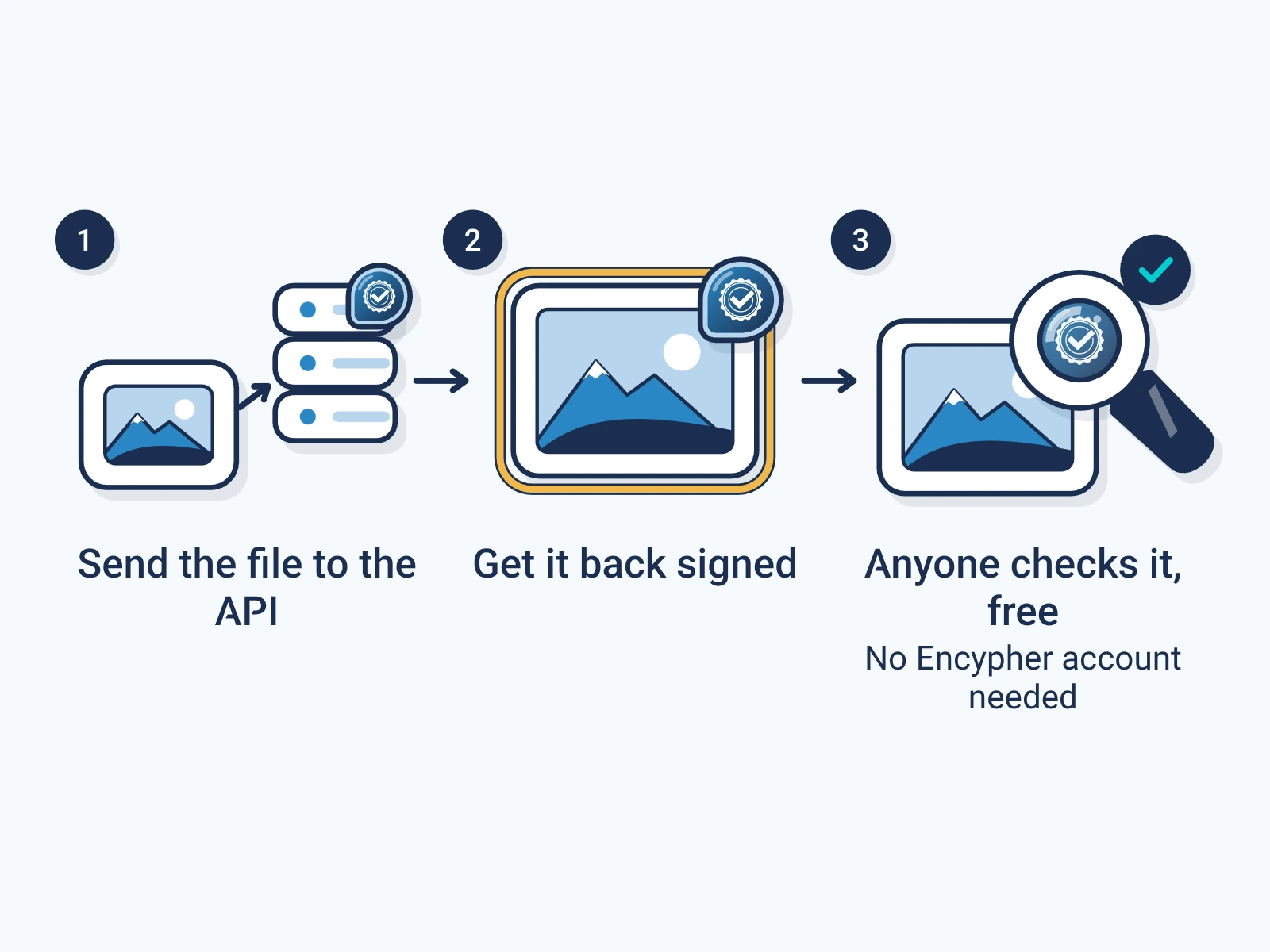
Create a free account.
No card needed.
Sign your next file or page.
Your name and the time go into a C2PAC2PA: The Coalition for Content Provenance and Authenticity: the group that publishes the open standard for content labels. label inside it.
Anyone can check it, free.
The check shows who signed it, what they declared, and if it changed.
Open the checker
Why healthcare needs a label
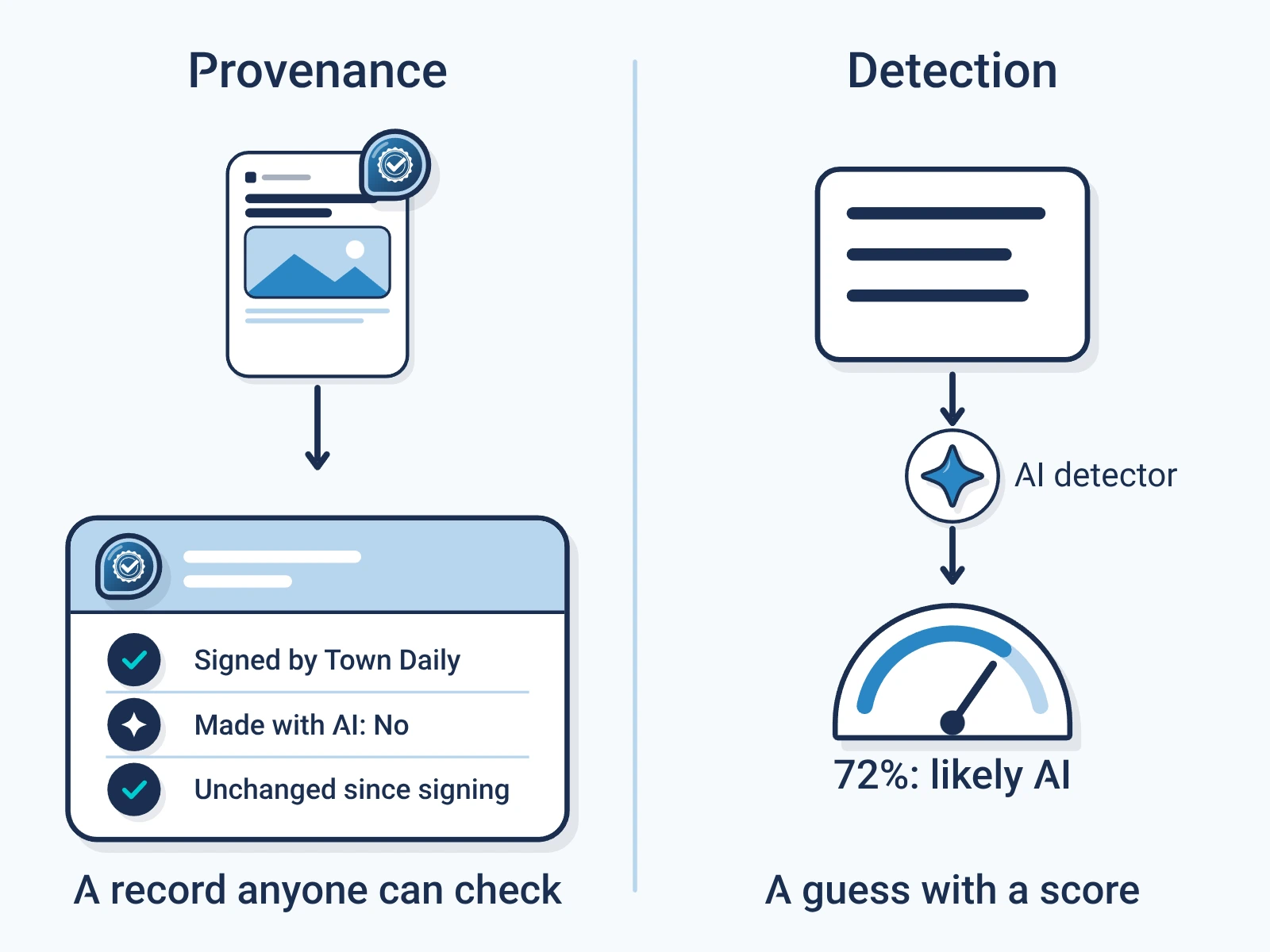
AI fakes of health advice spread under the names of real hospitals. Patients cannot tell the real page from a good fake. Records and scans also move through tools that drop their details.
Tested against the standard
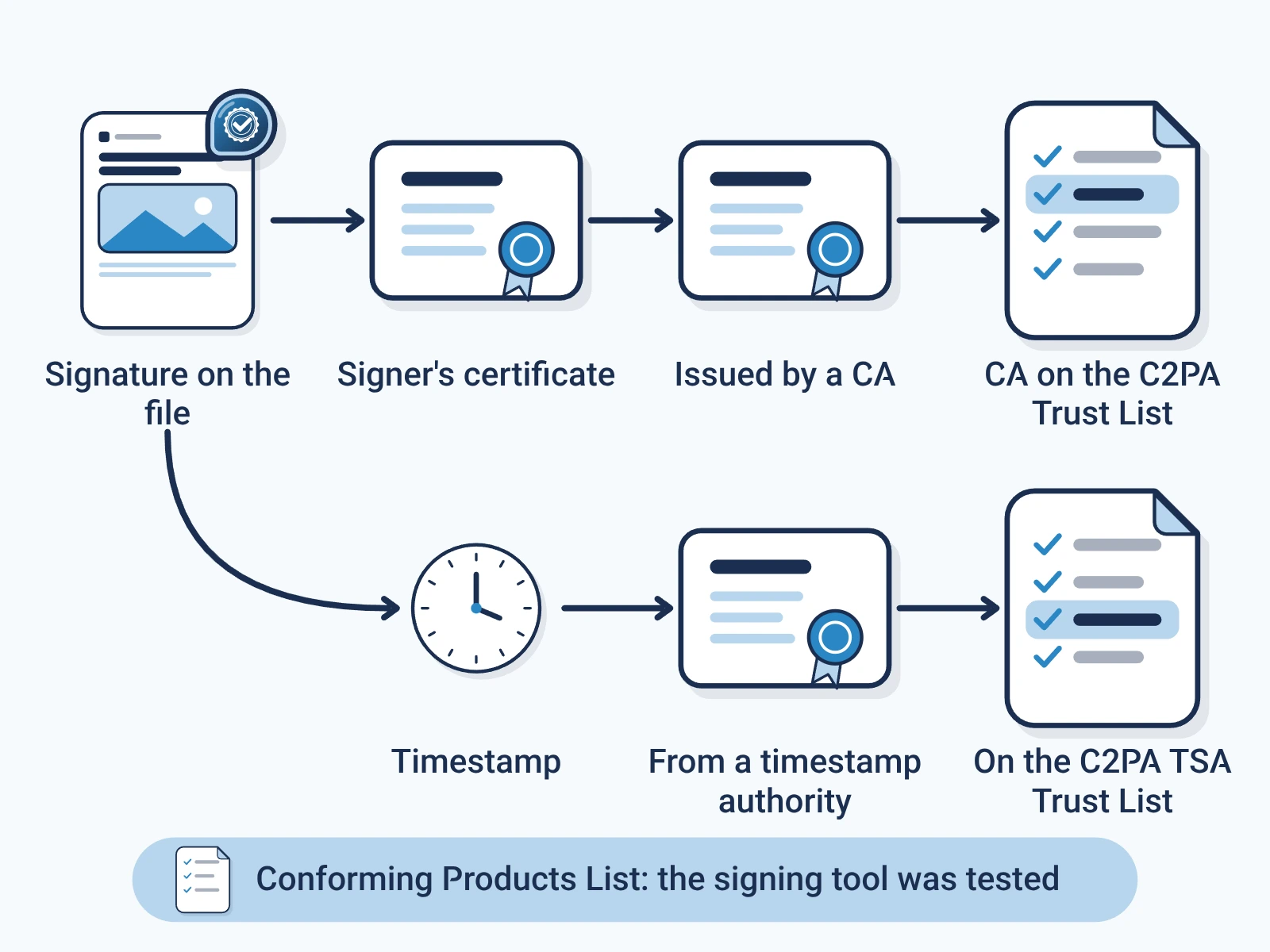
Encypher's product is on the official C2PA Conforming Products ListConforming Products List: The C2PA's public record of products that passed its conformance program., dated May 26, 2026. Our signing and timestamp services are on the official C2PA Trust ListsC2PA Trust List: The list of signing authorities that conforming C2PA checkers trust by default.. That matters when patient trust rests on every step.
Create. Mark. Endure.
Patient-facing content carries a checkable record of which institution published it.