

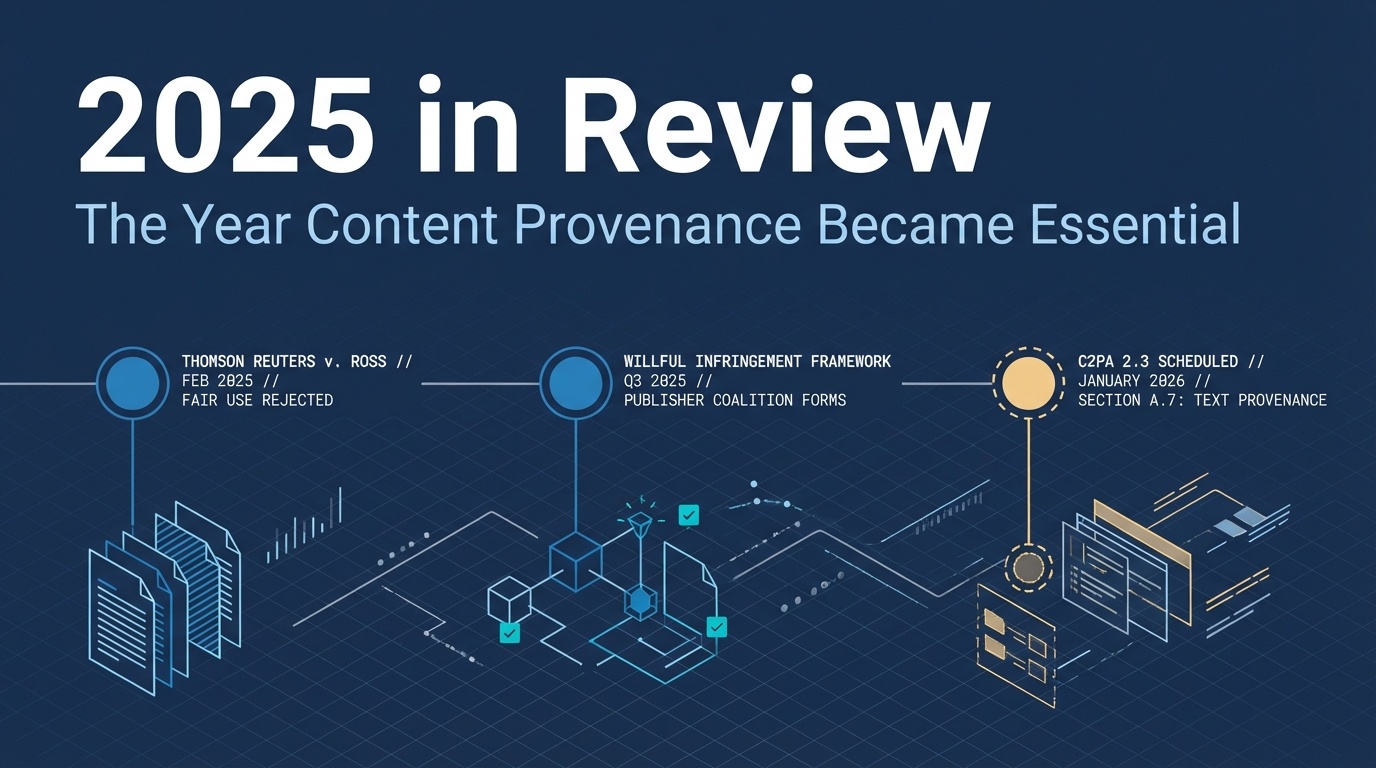
2025 in Review: The Year Content Provenance Became Essential
By: Erik Svilich, Founder & CEO󠇟󠇠󠇡󠇢󠆻󠄻󠇇󠆆󠆚󠄔︉︈︊󠄴󠇅󠄄󠇝󠄅︈󠄋󠄉󠄮󠆽󠇆󠆫󠆊󠆓󠇔︍󠅮󠄗󠆩󠅃󠇐󠇌󠆿󠆵󠄣󠆎󠅷󠇬︀󠆉󠆧 | Encypher | C2PA Text Co-Chair󠇟󠇠󠇡󠇢󠇕󠆿󠄗󠆅󠇂󠆵󠆅󠇀󠅱󠄌󠆞󠄢󠆽󠇛󠄬󠆸󠅲󠇨󠆈󠄅󠆼󠆣󠇊󠆏󠇂󠇮󠇬󠄽︋󠆥󠇣󠅭󠅗󠇁󠄄󠅺︆󠅮︃󠄚
As 2025 draws to a close, it's clear this was a pivotal year for content provenance󠇟󠇠󠇡󠇢󠇟️󠅪󠅥󠅻󠇑󠅆󠄭󠇃󠇘󠆫󠆫󠅢󠄯󠄘󠆫󠇭󠄠󠇡󠆥󠅫󠅐󠅞󠅾󠆱󠇛󠆋󠄙󠄢󠆬󠄼󠆷󠇑󠄘󠄨󠄸󠅍󠆴󠇑󠄕. What began as a technical concept discussed in standards committees became essential infrastructure for publishers, AI companies, and enterprises worldwide󠇟󠇠󠇡󠇢󠅨󠅇󠇀󠇞󠆣󠆨󠇋󠄶󠅭󠄯󠇘󠆨󠄮︋︀󠅅󠆪󠆏󠆢︁󠅄󠄃󠇉󠅈󠅵󠇦󠄉󠆅󠄥󠇃️󠆏󠆁︉󠆉󠅬󠅍󠄢󠄿󠅡.
Here's a look back at the developments that shaped the year, and what they mean for 2026󠇟󠇠󠇡󠇢󠄪󠅍󠆥󠅅󠆦󠄻︌󠇨󠄅󠅰󠇀󠄦󠄉󠄉󠆄󠆬󠇦󠆆󠆔󠅀︄︋󠅾󠇬󠇁󠆝󠄬󠇠󠆂󠆌󠅼󠇋󠇚󠅄󠅠󠄜󠇨︌󠇦󠄥.
Legal Milestones󠇟󠇠󠇡󠇢󠄻󠅼︄󠇎󠇡󠅁󠅤󠄱󠄟󠇧󠇨︂󠆒󠆯󠄠󠅹󠄌󠆸󠆶󠅉󠄞󠅰󠇐󠅭󠄩󠆱󠇣󠄙󠄭︁󠆋󠅴󠆥󠇢󠅋󠇮󠄿󠄊︎󠆾
Thomson Reuters v. ROSS Intelligence (February 2025󠇟󠇠󠇡󠇢󠇖󠆕️󠄂󠆓󠅪󠄐󠆽󠆴󠇬󠆍󠄗󠅤󠆱󠆨󠅏󠇖󠅁󠄮󠄉󠆥︄󠇝󠅠󠄲󠅩󠄜︀󠆦󠅢󠇭󠅼󠅮󠇁󠆢󠄀󠆡󠆹︍󠇌)
The first major federal court decision rejecting fair use for AI training󠇟󠇠󠇡󠇢󠅼󠇗󠇬󠄝󠅖󠄆󠇑󠆽󠇒󠆃󠄥󠇏󠆺󠆈󠄊󠅱󠇝󠄓󠇮󠇥󠆶󠆷󠄀󠅆󠆳️󠅺󠅲󠄦󠄈︂󠆃󠄏󠅪󠄎󠄉󠆈󠅖󠄠󠇑. Judge Stephanos Bibas ruled that ROSS Intelligence's use of Thomson Reuters' legal content to train an AI system was not fair use󠇟󠇠󠇡󠇢󠄓󠅓󠅸󠇮󠆾󠆨󠄻󠆸󠅐󠅟󠆥󠆚󠇝󠆽󠄃󠆞󠄜󠅏󠅡󠄨󠅴󠇤󠅠󠅟󠄳󠅕󠅚󠆅󠆰󠆿󠆬󠇅󠅕󠄠󠄯󠆧󠄙󠇁󠄓󠆒.
Why it mattered: This decision signaled that courts would not automatically accept fair use defenses for AI training, changing the risk calculus for AI companies󠇟󠇠󠇡󠇢󠄩󠆁󠆻󠆜󠄲󠅆󠅊󠅓󠇣󠆧󠅚󠅀󠄨󠅪󠆿󠆇󠅑󠅮󠇙󠇫󠆝󠇑︁󠇤󠇯︇󠆨󠇧󠄇󠅭󠆃󠆪󠇚󠆷󠆞󠇤󠄥󠇎󠅎︄.
NYT v. OpenAI Proceeds (March 2025󠇟󠇠󠇡󠇢󠅇󠇚󠄛󠆆󠆛󠆝󠄥︇󠆰󠆈󠇣󠅠󠆆󠇣󠄉󠇐󠄡󠆚󠇘󠇥󠆣󠄋󠅸󠄋󠄆󠆏󠅉󠆅󠄩󠆽󠆾︁󠅜󠄓󠆄󠆗󠇧︇󠄿󠅣)
Judge Sidney Stein allowed The New York Times' main copyright claims against OpenAI to proceed, rejecting OpenAI's motion to dismiss󠇟󠇠󠇡󠇢󠆅︄󠇌󠅒︌󠆋󠅞󠇈󠅇󠆺󠄦󠄀󠆔󠅤󠆢󠄄󠇒󠅛󠄉󠅊󠄝󠅜󠅺︉󠇇󠆲󠅰󠄮󠄁󠅑󠆴󠄒󠄘󠆜󠅣󠄧󠆾︆󠆩󠄷.
Why it mattered: The case moving forward validated that major publishers could pursue AI companies for training data usage, encouraging others to consider litigation or licensing󠇟󠇠󠇡󠇢󠇩󠆮󠆩󠅕󠆍󠆩󠄐󠆉󠄝󠄽󠆎󠅸󠆀󠅇󠅺󠆺󠆅󠇇󠄰󠄃󠄛󠅳󠆓︍󠇡󠅼󠄡󠇂󠅶󠇙󠆣󠄍󠄒󠅷︀󠄱󠅵󠄣󠆑󠄼.
Discovery Challenges Emerge󠇟󠇠󠇡󠇢󠆏󠄠︁󠆪󠆼󠅇󠄋󠄄󠄼󠆱󠇑󠆧󠅻󠇩󠆯󠆕󠅺󠆷󠆓󠄒󠆂󠅘󠅩󠄡󠄕󠅪󠆄󠅬󠅯󠅭󠄓󠅥󠅯󠆁󠇍︆󠆕󠄲󠆫󠆷
Throughout 2025, discovery in AI copyright cases revealed significant challenges:
- OpenAI's "accidental" deletion of expert search data
- Difficulty tracing specific content through training pipelines
- The "we didn't know" defense gaining traction󠇟󠇠󠇡󠇢󠇥󠇐󠆅󠅯󠅸󠆥󠅊󠇫󠄨󠇕󠆘󠄗󠄀󠆗󠆳󠆹󠆊󠄵󠄜󠄉󠅻󠄑󠇙󠇂︅󠆋󠇗󠆞󠅽󠅜󠆔󠄝󠇆󠆪󠄥󠄱󠇬󠆳󠆰󠆟
Why it mattered: These challenges highlighted the need for technical solutions, like content provenance, to establish proof of ownership and usage󠇟󠇠󠇡󠇢󠆛󠅼︅󠅇󠇂󠆇󠆍󠇞󠄐󠅆󠅱󠆦󠅅󠄷󠇁󠇍󠇇󠆜󠅄󠅜󠇥󠅢󠅟󠅦󠆋󠄧󠄚󠅡︂󠄳︉󠄫󠇤󠄘󠅴󠄼󠄜󠇦󠅎󠇅.
Regulatory Developments󠇟󠇠󠇡󠇢󠆅󠅖󠄙󠇪󠅮󠄊󠇢󠆳󠅡󠄔󠅌󠇞󠅭󠆫󠄝󠄽󠆤󠆐󠅢󠆜󠇮󠅍󠄾󠇙󠆶︎󠅄󠆾󠄼󠅾︄󠄎󠄈󠆹󠄃󠄂󠄰󠆽󠄶󠅛
EU AI Act GPAI Obligations (August 2025󠇟󠇠󠇡󠇢󠆢󠅴󠆃󠆩️󠇨󠆝󠄾󠄝󠄓󠆀󠇟󠄓󠅮󠆜󠅸󠆿󠇝󠄌󠄱󠄛󠆖󠆢󠅷󠇞󠅦󠄁󠄐󠅆󠆙󠇕󠄿󠆏󠇟󠆨󠅻󠆉󠇑󠆸󠆸)
The EU AI Act's GPAI-model obligations took effect; the Article 50 content-transparency provisions follow on August 2, 2026 and will require:
- Machine-readable marking of AI-generated content
- Clear disclosure of synthetic media
- Documentation of AI system capabilities󠇟󠇠󠇡󠇢󠇉󠇊󠅡󠄍︉󠅧󠇈󠆕󠆚󠇎󠆏󠅥󠄆󠆥󠅫︎󠅀️󠆰󠄚󠄕󠆴󠆠󠆑󠇡󠄉󠄅󠅁󠆦󠇧󠆂󠇥︍󠆫󠇒󠄆󠅠︅󠅲󠅎
Why it mattered: The world's first comprehensive AI regulation created compliance requirements that content provenance directly addresses󠇟󠇠󠇡󠇢󠅻󠇭󠇭󠄍󠇇󠄦󠄈󠇪󠅐󠄆󠆃󠆶󠇖󠅪󠅛󠇛︇󠄲󠅏󠄼󠄌︈󠅅󠄷󠆩󠇅󠆀︆󠆏󠄜󠄇󠆑󠆁󠆡󠄟󠅦󠅯󠇭󠄲󠆬.
California SB 942 Signed (September 2024, Effective January 2026󠇟󠇠󠇡󠇢󠄷󠇆󠅔󠆼︀󠆃︈󠆜󠆴󠅪󠅕󠇪󠆚󠇨󠅣󠆗󠇒︈󠅦󠆮󠅱󠇤󠆁󠄉️󠇗󠅃󠇗󠆵󠆯󠆘󠄣󠇯󠄰󠇩󠆴󠄬󠄀󠆐󠆵)
California's AI Transparency Act established requirements for:
- Visible labeling of AI content
- Imperceptible watermarking
- Free detection tools
- Provenance data inclusion󠇟󠇠󠇡󠇢󠆛󠅅󠄤󠅿󠅶󠄔󠆴󠄪󠅀󠄖󠅠󠅖󠇫󠆵󠇁󠅨󠆙󠄜󠇈󠆑󠄼󠄦󠇌󠄳󠅕󠅊󠅴󠅣󠆏󠅸󠆡󠅡󠆾󠄹󠅃󠄦󠆵󠄘󠄑󠆶
Why it mattered: The largest U.S. state market now requires exactly what content provenance provides󠇟󠇠󠇡󠇢󠆽󠆫󠅼󠅄󠅝󠄀󠅣󠄌󠅵󠇖󠄒󠅲󠅂󠄍︊󠅒󠆯󠆳󠅖󠆗󠅄󠅞󠆣󠅖󠇆󠇅󠇛󠆞󠄠󠆵󠄺󠆩󠆫󠄙󠅟󠄋󠄛󠇅󠄷󠄅.
Global Regulatory Momentum󠇟󠇠󠇡󠇢󠅻󠄷󠅣󠆁󠇝󠅗󠅛󠄹󠄫󠅺󠇘󠆻󠆼󠅓󠅢󠆲󠆋󠅫︉󠇀󠅺󠆱󠄀󠆟󠄽󠅴︄󠄉󠆕󠆶󠅉󠇁︊󠆺󠇟󠅻󠆩󠇁󠆾󠇫
Beyond the EU and California:
- China continued enforcing deep synthesis regulations
- UK advanced its AI regulatory framework
- Canada progressed AIDA legislation
- Multiple U.S. states introduced similar bills󠇟󠇠󠇡󠇢︃󠅸󠄭󠇊󠆐󠅶󠄅󠅧󠅰️󠇇󠅃󠆍󠄉󠅜󠆙󠇜󠄞︊︊󠄔󠆪󠅘󠄧︄󠄕󠆄󠇘󠅔󠇃󠄇󠄜󠇬󠇬󠅱󠆙󠅼󠆆󠇚󠅘
Why it mattered: Regulatory convergence around transparency requirements validated provenance as essential infrastructure󠇟󠇠󠇡󠇢󠄨󠇙󠆡󠄔󠆲󠆚︆󠅇️󠆸󠄽󠇄󠆙︊︀󠆼󠆓󠆠󠄬󠇖󠇥󠇭󠆓󠅀󠅶󠆁󠅢󠄕󠄕󠅊󠅏󠅙󠅅󠇠󠇅󠆜󠄽󠆚󠆒󠇞.
Industry Shifts󠇟󠇠󠇡󠇢󠇖󠆮︂󠅪󠅜︍󠅏󠆕󠄄󠆦󠄳󠅞󠄇󠄦󠄺󠆼︆󠅔󠆉󠅩󠄮󠇉󠄶󠅾󠆷󠅏󠅾󠆽︂󠄏󠅴󠄦󠇩󠄨󠅳󠆧️󠄬󠅩󠇥
Major Licensing Deals󠇟󠇠󠇡󠇢󠆳󠇌󠇑󠄤󠇝󠇆󠆥󠅞󠅅󠆷󠅇󠅿󠄍󠄫󠄥󠄴󠇘󠆔󠆆󠅨󠅪󠄎󠇍󠄌󠆚󠄶󠆥󠇈󠅛󠅼󠅩󠆜󠇞󠇜󠅡󠆎󠅜󠅔󠄆󠅠
2025 saw an acceleration of AI content licensing:󠇟󠇠󠇡󠇢󠇚󠆪󠄟󠄒󠆸󠄬󠄆󠄈󠇅󠆿󠄵󠅁󠄳󠅡󠅿󠆂󠆣󠆆󠅎󠇬󠅆󠅕󠅂󠅉󠆂󠇕󠅈󠆔󠄋󠄪󠇎󠅻󠆔󠄐󠅺󠆨󠆗󠆨󠇪󠆅
| Deal󠇟󠇠󠇡󠇢󠅔󠄃󠆽󠇉󠅥󠅐󠆩󠇙󠆽󠄶󠇂󠅂󠇊󠅳󠆻︂󠄽󠅶󠇗󠇘󠆩󠇋󠅐󠅲󠄢󠆅󠇗︀󠅍󠇒󠇇󠅥󠇘󠇩󠅇󠆮󠆉󠅋󠄘󠆦 | Significance󠇟󠇠󠇡󠇢󠅥󠆋󠇆󠅕󠆜󠅃󠇒󠆿󠆾󠅯󠄜󠆒󠆅󠆹󠄿󠄼󠅅󠄥󠅙󠄼󠅄󠄨󠄁󠅣󠆦︍󠇩󠆴󠄋󠅨󠅲󠆫󠄽󠅡󠅔󠄻󠄢󠅯󠄼󠅚 |
|---|---|
| News Corp + OpenAI ($250M+󠇟󠇠󠇡󠇢󠇊󠅢󠅟󠆜󠄎󠄮󠄅󠄲󠅠󠅤󠅖󠅧󠄂󠅝󠅖󠆮󠆻󠇓󠆔󠆭󠄪󠄼󠅼󠆂󠇚󠇙󠇯󠅣󠆠󠇇󠄤󠇤󠄎󠇡󠅒󠄔󠇖︊󠄞󠆤) | Largest announced publisher deal󠇟󠇠󠇡󠇢󠆘󠅥󠆲󠄔󠆩󠆳󠄎󠆀︀󠅽󠇥󠄴󠅧󠇊󠆘󠅈󠄆󠇎󠆧󠅑󠆮󠄉󠇜󠆈󠄧󠅄󠆤󠄴󠇗󠄠︅︆󠇀󠄕󠅉󠇟󠇯󠆇󠆕󠆚 |
| AP + OpenAI󠇟󠇠󠇡󠇢󠄌󠆻︍󠆋󠆯󠆽︌󠆩󠅞󠅄󠇇󠄿󠅇󠇙︃󠅼󠄽󠄛󠆡󠆣󠇋󠅗󠆁󠇔󠅽󠅷󠄠󠆅󠅨󠆸󠅬󠇕󠅅󠅊󠄲󠅶󠄏󠆟󠅰󠆵 | Strategic partnership model󠇟󠇠󠇡󠇢󠆽󠄃︊󠅀󠅥󠇑󠄓󠆯󠄅󠆕󠆣︉󠅽󠄇︆󠄗󠄸󠆫󠇖󠆋󠅙󠄹󠇟󠇓︋󠆀󠇎︄󠅔󠅩󠅇󠄦︂󠄾󠄾︁󠄤󠄼󠆙󠅠 |
| Axel Springer + OpenAI󠇟󠇠󠇡󠇢󠄎󠅏󠆄󠅏󠄸󠇀󠅃󠆪︂󠄁󠅁󠅬󠆥️󠅢󠅒󠄴󠅂︎󠆁󠅯󠄛󠇨󠆋󠆖︍󠆜󠄸󠅙󠇢󠅧󠇀󠇔󠇥󠇮󠇦󠅂󠆻󠄘︊ | European publisher engagement󠇟󠇠󠇡󠇢󠆇󠅰󠇟󠆓󠆽󠆥󠄽󠇫󠅤󠇮︁󠅉󠄠󠄩󠄰󠄺︃󠅲󠆕󠇫󠄊󠄲󠆟󠅌︅󠄖󠆨󠆩󠆐︊󠅩󠅼󠄧󠆠󠄈︊︀󠆂󠆹󠅳 |
| Reddit + Google ($60M/year󠇟󠇠󠇡󠇢󠅻󠆯󠅨󠇚󠅒󠄁󠄝󠇊󠇓︈󠅲󠇩󠆕󠆬󠄅󠇥󠄅󠄘󠄠󠆏󠆡󠄔󠄹︂󠇄󠄈󠆸󠆽󠅧󠄾󠇨󠇧󠅌󠇌︆️󠅧󠇬󠇂󠄘) | Platform content licensing󠇟󠇠󠇡󠇢󠆁󠅏󠅑󠄣󠇢󠇃󠅮󠄻󠆰󠆿󠄂󠄏󠄕󠆶󠆼󠄿󠄵󠇪󠄴󠅓󠅛󠆧󠄩󠅗󠆦󠄾󠅺󠅬󠆺󠅥󠄶󠅧󠄉󠅔󠆳󠆁󠄴󠇐️󠇤 |
| Multiple academic publishers󠇟󠇠󠇡󠇢󠆲󠆾︁󠅆󠅚󠆱󠄱󠄭󠅯󠆓󠄟󠅪󠄠󠇐󠇦󠇖󠅱󠆍󠆪󠅠󠄚󠆫󠅮󠇥󠇑󠄺󠄫󠄇󠇪󠄟󠅩󠅲︂󠅶󠅝󠆮󠄙󠆰︇󠄉 | Scholarly content deals󠇟󠇠󠇡󠇢󠅊󠄸󠄣󠆮󠆮󠅧󠆙󠇙󠅕󠄪󠆣󠅋󠅀󠅲󠆍󠄥󠆼󠆶︉󠄴󠄧󠆍󠅇󠅃󠆔󠅊󠅧󠅸󠅥︋󠄲󠅍󠄳󠆼󠇢󠆤󠅛󠆆󠄝󠄻 |
Why it mattered: The market for licensed AI training content emerged as a real business, not just a legal threat󠇟󠇠󠇡󠇢󠄵󠆃︅󠆹󠇋󠇨󠇀󠆒󠆦󠄎󠄅󠆤󠇖󠄞󠇑󠇟󠆰󠄳󠄉󠄓󠅖󠇧󠆬󠆋󠆬󠇠󠄒󠆥󠆭󠇂󠄿󠆴󠅹󠅺󠇡︊󠇚󠇧󠅪󠄛.
OpenAI Joins C2PA󠇟󠇠󠇡󠇢󠆙󠆭󠅡󠇠󠄼󠄹󠄡󠆭󠅎󠄢󠅁󠇒󠇝󠆤󠆽󠆠󠇃󠆂󠆼󠄱󠅚󠆽󠅔󠇤󠄆󠄑󠅷󠅉󠄤󠆛󠇓󠆁󠄂󠇎󠇅︈󠆇󠅣󠆒󠄿
OpenAI's membership in the Coalition for Content Provenance and Authenticity signaled industry recognition that provenance infrastructure is necessary󠇟󠇠󠇡󠇢󠆷󠄄󠅠󠇟󠇅󠇆󠆝󠇅󠇪󠇩󠄷󠅿󠆚󠄚󠆒󠆠󠆂󠅲󠅗󠅹󠄉󠅩󠇓󠄕󠄎󠄒󠅸󠆚󠇡󠄶󠅂󠆓󠆹󠅺󠄣󠆊󠄦󠅁󠄅󠇦.
Why it mattered: The leading AI company acknowledging the need for content provenance validated the approach󠇟󠇠󠇡󠇢󠆅󠇊󠆱󠄆󠆹󠄑󠄸󠆍󠆒󠅮︀︄︃󠅂󠆀󠅾󠅔󠅝󠅴󠆻󠄟󠄷󠅄󠇎󠅠󠆅󠅓󠄯󠆭󠅐󠆛󠆑󠅣󠄸󠄸󠇕󠅗︆󠅨󠅧.
Google Expands SynthID󠇟󠇠󠇡󠇢󠇤󠄴󠄞󠅒󠇖󠆫󠇅󠄥󠇇󠄒󠄭󠄠󠆥󠆇󠄊󠇒󠅹󠄶󠄯󠅜󠇗󠇢󠇞󠄮󠆯󠇋󠇛󠅁󠆄󠆩󠇉󠄧󠄝󠄹󠅂󠄿󠅺︄󠄠󠇐
Google extended its SynthID watermarking technology beyond images to text, demonstrating commitment to AI content transparency󠇟󠇠󠇡󠇢󠄰󠅗󠇫󠇒󠅧󠆲󠄃󠅳󠆪󠇮󠄌󠄾󠅀󠆩︆󠆥󠆽󠄉︉󠅸󠅁󠅝󠄈󠄍︄󠇃󠅴󠆦󠅳󠇎󠆈󠄥󠄗︄󠆉󠆓󠅾󠅧󠇓󠄝.
Why it mattered: Major AI companies investing in watermarking confirmed the technical direction󠇟󠇠󠇡󠇢󠄠󠇨󠇓󠄑󠇕󠇑󠇮󠄧󠆲󠄰󠅂󠅿󠅂󠅯󠄁󠄞󠆭󠅣󠅐󠄺󠇞󠅳︅󠅆󠆀󠅛󠄂󠇖󠇓󠄦󠆮󠆍󠆋󠇟󠅋󠇣󠇠󠅮󠄮󠆵.
Publisher Coalition Formation󠇟󠇠󠇡󠇢󠇅︂󠅝󠆧󠄾󠆯󠆄󠆕󠄊󠄬󠄕󠄋󠇂󠄼󠆢󠆲󠇯󠆕󠇡︀󠄊󠅻󠅣󠅰󠆑󠇈󠅤󠆗󠇪󠆨󠇨󠆑󠄞󠆰󠆳󠆃󠅖󠆊︁︀
Publishers began organizing collectively:
- News Media Alliance discussions on AI licensing
- Academic publisher coordination
- Regional publisher coalitions forming󠇟󠇠󠇡󠇢󠆈󠄗󠆶󠄔󠆟󠅰󠆤󠇟󠅯󠆻󠇨󠄃󠄢󠆧󠇓󠆮󠇙󠅷󠇇󠆞󠄄󠆫󠄷󠅨󠄨󠅾󠅐󠄪󠆰󠆖󠅬󠆽󠇟󠇟󠄸󠄘󠄸󠄞󠆶󠇂
Why it mattered: Collective action increases publisher leverage in licensing negotiations󠇟󠇠󠇡󠇢󠅄󠄄󠄿󠄩️󠅌︇󠆰󠅍󠇚󠄎󠇎󠇁󠅝󠅑󠄓󠅂󠇭󠅍󠇣󠇑󠇣󠄛︉󠅠󠆛󠄺󠆫󠆑󠅓󠅿󠄽󠆁󠅟󠇅󠆬󠄀󠅫󠆬󠅠.
Technical Advances󠇟󠇠󠇡󠇢︈󠇫󠇁︆󠅰󠄷󠄩󠅽󠇪󠄅󠇆󠆹󠇯󠄅󠇞󠄤󠇛󠄙󠅷󠆣󠇀󠇗󠆸󠄵󠆸󠅴󠆘󠆟︎󠆲󠅤󠄪󠇚󠄏󠆄󠇬󠆅󠄬󠇉󠇯
C2PA 2.0 and Beyond󠇟󠇠󠇡󠇢󠅡󠆐󠅄󠇞󠅒︊󠆭󠆰󠅔󠆾󠆴󠄇󠆺󠆌󠆚󠇀󠄈󠄬󠅔󠅴︈󠆧󠅩󠅀󠅲󠅖󠄶󠄜󠆛󠅥󠆘󠅆󠅮󠅕󠆅󠇥󠅞︀󠅁󠆃
The C2PA standard continued evolving:
- Enhanced manifest structures
- Improved interoperability
- Broader content type support
- Text provenance specifications advancing󠇟󠇠󠇡󠇢󠆿󠅀󠆙󠇉󠆶󠅨󠇫󠆶󠅽󠆍󠄴󠄮󠄡󠆾󠆸󠆐󠆄󠄉󠆰󠄇󠆁󠇖󠆇󠅰󠇢󠆍󠆰󠇌󠅍󠇞󠅟󠇢󠄱󠄆󠆖󠅯󠄨󠇭︁󠆬
Why it mattered: The technical foundation for content provenance matured significantly󠇟󠇠󠇡󠇢󠇀󠄁󠇦󠅓󠄼󠄍󠅱󠄔󠅋󠇊󠅧󠄰󠆶󠆲󠇢󠆖󠅃︉󠆪󠅦󠄲󠄰󠄩󠅭󠆤󠄻󠅗󠄘︈󠇝󠇬󠆒󠆱󠆓󠅝󠅊󠆱󠄺󠆞󠇝.
Text Provenance Emerges󠇟󠇠󠇡󠇢󠄰󠄥󠄓󠅙󠅐󠄿󠇫󠆀󠇍󠆡󠅫󠄆󠆴󠆊󠄵󠆗︎󠅐󠇑󠆹󠄴󠆰󠇍󠄹󠇌󠆕󠇗󠆘󠅗󠇧󠆻󠄬󠅽󠆵󠆛󠆌󠆑󠆗󠆦︎
2025 saw critical progress on text-specific provenance:
- Unicode-based embedding techniques refined
- Sentence-level tracking capabilities developed
- Quote integrity verification introduced
- Integration with existing C2PA infrastructure󠇟󠇠󠇡󠇢󠄯󠆅󠄚󠇡󠇃󠅋󠆟󠄽︇󠇤󠅆󠇫󠄚󠇥󠆇󠄴󠆣󠆰󠇨󠇀󠅲󠆝󠅓󠄪󠅀󠄬󠄊󠇢󠅆󠅒󠇓󠆞󠇛󠄟󠆿︊󠄶󠄚︉󠇭
Why it mattered: Text, the majority of AI-generated content, finally got provenance solutions󠇟󠇠󠇡󠇢󠆭󠅨︀󠄣︍󠆍󠆼󠇅󠇟󠆫󠄂󠇀󠄍󠇗󠆊󠄮󠄡󠄣󠄽󠇪󠄛󠇔󠄩󠄢󠆴󠅈󠆽󠅀󠇦󠅛󠄘󠆑󠄷󠄣󠇁󠄡󠄓󠇌󠆽󠅥.
Detection Tool Failures󠇟󠇠󠇡󠇢󠄺󠄗󠇂󠆅󠇥󠆘︂󠄭󠅖󠆜󠇕󠆬󠆖󠅻󠅇󠅉󠆲󠇤󠇧󠄨󠄅󠇂󠇯󠅧󠅁󠅅󠆪󠅒󠅢󠄂󠇆󠅪󠅏󠄒󠄖󠇄󠅄︎󠄷󠆼
AI detection tools continued to demonstrate unreliability:
- OpenAI shut down its classifier (2023, impact continued)
- Academic studies confirmed poor accuracy
- False positive controversies in education
- Courts rejecting detection evidence󠇟󠇠󠇡󠇢󠄕󠅚󠆌󠄒󠄖󠇨󠄉󠄖󠆞󠅞󠆍󠄩󠄌︌󠄩󠄩󠅙󠄨󠇁󠄡󠆥󠅶󠆮󠅙󠆄󠄑󠅆󠇩󠅭︎󠆯󠇆︄󠇁󠄌󠇤󠅶󠅏︍󠇈
Why it mattered: Detection failures reinforced the need for provenance-based verification󠇟󠇠󠇡󠇢󠅜󠄃︎󠆜󠇠󠅣󠆮󠅇󠇪󠄨︍︊󠄉󠅏󠅿󠇦󠆓󠇋󠄜󠇕󠅀󠅈󠆄󠇧󠆖󠆉󠄹󠇦󠆬󠆏󠅀󠆾󠄌󠄽󠆛󠄭󠆝󠆁󠇣󠆒.
Market Recognition󠇟󠇠󠇡󠇢󠆰󠆈󠇌󠄱󠄫󠇝󠇆󠆢󠅱󠆻󠇞󠅎󠅰󠇚󠄰󠄌󠇊󠆁️󠅆󠅮󠄗󠅮󠄝󠅹󠅂󠆤󠇃󠆓󠅓󠇜󠇇󠆟󠇯󠆴󠅾󠄛󠅯󠄦󠆌
Analyst Coverage󠇟󠇠󠇡󠇢󠄞󠄲󠅹󠆄󠆁󠄷︎󠆜󠄁󠄋󠅐󠇩󠅈󠆖󠇫︃󠆙󠅠󠅭󠇄󠆬󠄟󠄳󠄊󠄆󠅲󠇤󠅃󠆝󠅈󠄍󠇃︀󠄠󠄚󠆗󠇡󠅩󠄴󠅃
Major analyst firms began covering content provenance:
- Gartner included provenance in AI governance frameworks
- Forrester analyzed content authenticity markets
- IDC projected market growth󠇟󠇠󠇡󠇢󠄑󠅃󠆃󠅀󠄳󠄮︄󠆔󠆋󠆍󠆶󠄹󠅼󠆀󠄪󠆁󠅁󠇦󠅄󠆐󠄈󠅣󠅑󠄻󠆥󠆩󠆋󠇬󠅽󠇁󠄳󠄯󠄙󠆢󠅆󠇤󠅜󠅢󠄎󠄢
Why it mattered: Analyst validation helps enterprise adoption󠇟󠇠󠇡󠇢󠄓󠇄󠅙󠅫󠄩󠆐󠆺󠆻󠅺󠄻󠄲󠇓󠄕󠄩󠅔︍󠇆󠇠󠄙󠅩󠆥󠇬󠆹󠆴󠇨󠇥󠄧󠅓󠄽󠆓󠆣󠆺󠆁󠇮󠆩︋󠇚󠆴󠇯󠆈.
Investor Interest󠇟󠇠󠇡󠇢󠄊󠇧󠆔󠅰󠆆󠄷󠆗󠄛󠆅󠅎󠄢󠆧󠆧󠅼󠆦󠅽︀󠄦󠇯󠇟󠅙︍󠄕󠅔󠆦󠆷󠅢󠇢󠄜󠆷󠅭󠅮󠆈󠇜󠄐󠆝󠄎󠄉󠅋󠅕
Venture capital and strategic investors showed increased interest in:
- Content provenance infrastructure
- AI transparency solutions
- Publisher technology platforms
- Licensing infrastructure󠇟󠇠󠇡󠇢󠅛󠅇󠄠󠅀󠅬󠄰󠅲󠅎󠆬󠇉󠄏󠆫︎︆󠅐󠄣󠄍󠄶󠆞󠅰󠅸󠇓󠅥󠇨󠄵︅󠆻󠆿󠅵󠆃󠅯󠇌󠇏󠇑󠇁󠆋󠇭󠇉󠇄󠆰
Why it mattered: Capital flowing into the space accelerates development󠇟󠇠󠇡󠇢󠄌󠇇󠅐󠇓︅󠇘󠆑󠄽󠄹︇󠅓󠇜󠇕󠅩󠇫󠆃󠆉󠇠󠅊󠆨󠄖󠄻󠄆󠄲󠅈󠄅󠅅󠆛󠅯󠄶󠆩︃󠄼󠄟󠅝󠅳󠄢󠅉︋󠄃.
Enterprise Adoption󠇟󠇠󠇡󠇢󠄀󠄞󠄏󠇝󠇋󠄥󠆮󠆗󠇓󠅂󠇔︅󠄱󠄮󠅗︆󠄆󠅝󠇣󠅅󠇙󠇇󠅒󠄣󠅊󠅛󠆠󠆳󠅰󠄇󠅝󠄃󠇒󠅅󠅊󠇞󠆃󠇒󠅁󠄿
Fortune 500 companies began implementing provenance:
- AI governance frameworks incorporating provenance
- Content authenticity requirements in procurement
- Compliance programs addressing transparency regulations󠇟󠇠󠇡󠇢󠄞︇󠄒󠅒󠆇󠇜󠅗󠄴󠇛󠅄󠄫󠄥󠇣󠆋󠄽󠆌󠇄󠅽󠇙󠄔󠇏󠆦󠄙󠆉󠄈󠇏󠄒󠆅󠇫󠆗󠅓󠄗󠅝󠄍󠇌󠆀󠆫󠇢󠄇󠅮
Why it mattered: Enterprise adoption creates market pull for provenance solutions󠇟󠇠󠇡󠇢󠆔󠆃󠅈󠄫󠇖󠅎󠆻󠄣󠅒󠄖󠆖󠄢󠆦󠅑󠇜󠆺󠄽󠅨󠇞󠆐󠇠󠄚󠇈󠆬󠄣󠅳󠄧󠇁󠆛󠄿󠆟󠅶󠆘󠄖󠇟󠇋󠇀󠆌󠅳󠄎.
Lessons Learned󠇟󠇠󠇡󠇢󠅧󠄗󠄂󠄏󠅪󠄚󠅑︂󠆜󠇞󠆑󠄍󠇑󠄧󠄚︍󠇥󠅍󠄇︁󠆙󠆼󠄸󠅞󠆧󠅾󠆎󠅨󠆈󠅩󠄭󠇔󠆊󠅑󠅘󠄎󠇓󠄢󠇣󠇄
What Worked󠇟󠇠󠇡󠇢󠇟󠄛󠆌󠅀󠆛󠆻󠅾󠄣󠇥󠅹󠇉󠅄︁󠆘󠇊󠇥󠅐󠅕󠆎󠄢󠇝󠇧󠇦︆󠇥󠄗󠇌󠅈󠄀󠅤󠅭󠇯󠅭󠇕︈󠅋󠅩󠇡󠄌︎
Standards-based approaches: C2PA's open standard gained traction because it wasn't proprietary󠇟󠇠󠇡󠇢󠄞󠆩󠇦󠄵󠆥󠄾󠄷󠄥󠄍󠇘󠄣󠆊︃󠆾󠅴󠄙󠅡󠆨︋󠇤󠆊󠅍󠄲󠆆󠆵󠆬󠄜󠄮󠆦󠅞󠆂󠇣󠆿󠅣󠆮󠆰󠄝️󠇫󠅭.
Collaborative framing: Positioning provenance as infrastructure benefiting all parties (publishers, AI companies, users) enabled broader adoption󠇟󠇠󠇡󠇢󠄯󠆧󠆙󠄤󠆟󠅎󠆎󠇛󠆑󠆛󠅵󠄻󠆪󠅳󠇏󠅾󠇦󠄇︈󠄋󠇩󠇣󠇎󠅸󠅣󠆁󠆪󠆅󠅀󠆦󠆟󠄅󠆫󠄭󠄧󠅃󠅔󠇍󠄭󠅔.
Regulatory alignment: Solutions designed for compliance found faster adoption paths󠇟󠇠󠇡󠇢󠆖󠅗󠄤󠇟󠆆󠅈󠄳󠆲󠅿󠇜󠅹󠄷󠆉󠇔󠆙󠇁󠄍󠄫󠇬󠅰󠇈󠄝󠅵󠄻󠄽󠇮󠅮󠇃️󠆮󠄥󠅲󠇉󠅅󠆤󠆷󠄿󠄭󠅐󠅙.
Technical credibility: Cryptographic approaches provided the certainty that statistical methods couldn't󠇟󠇠󠇡󠇢󠅁󠅧󠄣󠆄󠆛︍󠇃󠆇󠅌︈󠅚︎󠇬󠅛󠅠󠇃󠇑󠆠󠇋󠇌󠄴󠇓󠆂󠄜󠇄󠆵󠇉󠄶󠅴󠅺󠇬󠅁󠅺󠆅󠅣󠄉󠇍󠄱󠄤󠇈.
What Didn't Work󠇟󠇠󠇡󠇢󠄅󠆢󠄛󠆲󠅀󠆀󠆨󠅓󠆶󠇠󠅆󠄭󠅞󠄇󠇊󠇘󠇩󠆅󠆄󠆠󠅌󠅆󠄠󠅖󠆕󠇌󠇊󠇡󠆒󠅼︉󠅀󠅌󠇕󠄝󠅑󠅪󠄨󠄐󠇕
AI detection: Statistical detection continued to fail, reinforcing provenance alternatives󠇟󠇠󠇡󠇢󠅸󠄭󠅏󠆦󠅪󠆲󠄇󠅒󠅰󠅤󠇖️󠅘󠄮󠅄󠄢󠅍󠅸󠅗󠇑󠄈󠆳󠄬󠄆󠅅󠄀󠇬󠆲󠄂󠅑󠇟󠇆󠅂󠅱󠅋󠆠󠇀󠇩󠄯︁.
Adversarial positioning: Publishers who only threatened litigation without offering licensing paths made less progress󠇟󠇠󠇡󠇢󠅘󠄬󠇜󠄁󠇞︊󠄸󠄎󠆞󠄃󠄎󠄑󠄎󠄺󠆓󠄠󠅒󠄶󠄰󠄹󠅪︍︊󠆘󠅵󠆼󠆕󠇒󠄡󠄩󠄴󠄴󠄚󠆆󠄪︅󠅬󠆑󠆎󠅐.
Proprietary solutions: Closed systems struggled against open standards󠇟󠇠󠇡󠇢󠄖󠆯󠆂︀󠄱󠆚󠆶󠄕󠆶︁󠆅󠇈󠄕󠄰󠅗󠄐󠆚󠆧󠇡󠆎󠇒󠆋󠇥󠅶󠇠󠅕󠅮󠇧󠇤󠄕󠇪︇󠄘󠆟󠇀󠆐󠄜󠅉󠄽󠄜.
Waiting for clarity: Organizations that waited for "the market to settle" fell behind early movers󠇟󠇠󠇡󠇢󠄩︈󠄸󠅲󠇃󠇚󠇄󠆪󠄧󠄘󠅹󠇛󠆖󠅔󠆹󠆣󠄬󠆭󠆹︍󠄦󠅕󠇭󠅘󠆽︊󠆑󠆬󠆯󠄿︎󠆸󠆡󠇯󠅻󠇇󠆣󠄿󠄩󠇁.
The State of Play: December 2025󠇟󠇠󠇡󠇢󠅋󠇆󠄭󠆥󠅙󠆹󠄴󠆿󠅬󠅱󠅌󠅕󠄮󠇅󠅤󠄘󠇙󠅖︀󠄻󠇚󠅹󠅆󠇃󠅫󠆡󠅙󠆥󠅣󠇂󠅍󠅚󠅛󠇙󠆤󠇈󠅑󠅎󠇞󠆰
As the year ends, here's where we stand:󠇟󠇠󠇡󠇢󠅎󠅦󠇛󠆃󠄜󠇉󠄫󠄄󠄜󠅖󠅡󠄸󠇧󠅁󠆔󠅱󠆬󠆇︈︂󠆞󠅀󠆝󠆑󠅼󠇨󠆃󠅦󠄼󠅵󠄦󠆼󠇦󠇏󠅉󠅢󠇃󠄒󠅧󠅿
Publishers󠇟󠇠󠇡󠇢󠇛󠄋󠅼󠅼󠅁󠆳󠆤󠆥󠇗󠄝󠆹󠆑󠆙󠄣󠇩󠄤󠆾󠆎󠄙󠆿󠆏󠆐󠆞󠅩󠄑󠄵󠅟󠄆󠇫󠇔󠄉󠇦󠆁︃︆󠄎󠅌󠄌󠇑︎
- Major publishers have licensing deals or active negotiations󠇟󠇠󠇡󠇢︋󠄧󠆚󠅱󠆻󠆱󠆰󠆿︊󠆒󠆒󠇧󠄽󠇫󠅧󠇂󠆏󠅀󠆌󠆴󠆅󠆫󠅹󠇙󠅆󠇝󠅯󠆋󠇣󠆡󠇩󠄧󠇂󠅳󠄐󠇌󠆭󠅐󠄞󠆘
- Mid-size publishers are evaluating options󠇟󠇠󠇡󠇢󠆌󠄻󠆴󠄋󠅥󠆧󠆂󠆴󠅼󠄒󠆰󠅡󠄄󠅑󠇩󠅞󠆬󠆎󠅻󠄺󠄏󠆝󠅺󠅆󠄴󠅐󠇟󠇯󠅢󠆭󠆢󠇪󠇡󠄴︇󠆶󠆄󠄷󠅿󠅧
- Provenance infrastructure adoption is accelerating󠇟󠇠󠇡󠇢󠄼󠆵󠅊󠅆󠇗󠄯󠆿󠆰󠇖󠆵󠄿󠄨󠇘󠇍󠄤󠇘󠅥󠆝󠄧󠄱󠆾󠆈󠅸︄󠆺󠄥󠆬󠄸󠆓󠄨󠇁󠅧󠆟︅󠆕󠄓󠇝󠇈󠅳󠄧
- Coalition approaches are gaining traction󠇟󠇠󠇡󠇢󠅼󠅕󠅅󠅹󠅋󠇣󠅫󠄫󠄵󠆘󠆄󠄄󠅋󠅞󠇥󠆣󠇁󠆉󠄬󠅟󠆖︌󠄀󠆔󠇚󠆗󠅺󠄅󠆲󠇌󠅷󠇯󠆀󠅺󠇐󠇇󠄳󠄏󠄌󠄏
AI Companies󠇟󠇠󠇡󠇢󠅳󠇞󠆾󠅾󠄙︅󠇙󠆈󠄓󠅧󠄼󠅵󠆼︄󠇭󠅄󠄹󠇍󠇞󠇖󠆣󠆸󠇦󠅋󠆅󠄑󠇣󠆇󠅩󠆝︃󠇙󠇉︀󠅤󠆪︊󠆎󠄶󠇝
- Leading companies are engaging on licensing󠇟󠇠󠇡󠇢󠄒󠅚󠆜󠄙󠆲󠇖󠄲󠄒󠄅󠆣󠅍󠇭󠆇󠇩󠅧󠅤󠆐󠆠󠇒󠅪󠇣󠆰󠆐󠄂︊󠇝󠅠󠇙󠇐󠄬󠇫︁󠄯︂︂󠆾󠄢󠅑󠆪󠆛
- Provenance compatibility is becoming a requirement󠇟󠇠󠇡󠇢󠄩󠇛󠅣󠇗󠅔󠇈󠆕󠅄︉󠅞󠅡󠄯︃󠅢️󠅙󠇊󠄩󠆮󠄓󠇬󠅮󠇬󠅃󠇩󠆮󠆶󠄥󠄤󠇁︊󠇠󠄬󠆤󠄂󠄰󠆩󠄐󠄚󠆔
- Transparency compliance is operational priority󠇟󠇠󠇡󠇢󠆴󠅧󠇜󠅏󠅊󠄍󠇙︁󠆏︂︁󠆻󠆗󠄳󠄍󠆊︍󠆳󠇦󠇇󠇬󠆰󠆟󠄼󠇕󠅭󠅭󠄋󠆆󠄽󠇠󠆢󠄋󠅶󠄦󠇏󠅺󠄄󠅊󠅬
- Training data quality concerns are growing󠇟󠇠󠇡󠇢󠇨󠆃󠇄󠇛󠆣󠇀󠄵󠅳󠄍󠅊󠅃󠅻󠆤󠄵󠄝󠅔󠇍󠅛󠄬󠄒︄󠄌󠅢󠆅󠅙󠄏󠆌󠇥󠆩󠄫󠅜󠅩󠅋󠆙︎󠇚󠆕󠆘󠇉󠆻
Regulators󠇟󠇠󠇡󠇢󠆄󠄧󠇔󠆢︊󠅹󠅱󠇆󠄇󠆹󠅃󠄯󠄳󠅐󠄦󠄠︅󠆦󠄝󠄤󠄎󠆅󠆎󠄮󠆊󠄭󠆑︌󠆙󠆏󠅆󠄾󠄋󠆀󠆭󠆙󠅓󠄞󠆣󠅢
- EU AI Act transparency provisions are in effect󠇟󠇠󠇡󠇢󠄎󠅒︍󠆉󠆡󠅱󠆳󠆽󠅞︉󠅄󠇪︅󠆜󠇭󠅐󠄒󠄊󠆥󠄷󠆯󠄰󠆫󠅠󠅔󠇭󠆖󠅥󠄐󠆸󠅯󠆌󠅋󠄴󠄐󠇙󠄧󠆍󠇟︇
- California SB 942 takes effect in days󠇟󠇠󠇡󠇢󠅷󠆁󠆌󠇮󠆵󠄙󠇓󠆖󠆐󠄅󠅚︎󠆢󠄗󠆨󠄰󠄮󠄟󠆑󠆧󠆣󠇧󠄤󠄎󠆘︈󠅠󠆆󠄙󠇃󠄙󠄋󠆰󠇭󠇀󠆜󠆏󠅧󠅮󠅁
- More jurisdictions are developing requirements󠇟󠇠󠇡󠇢󠆜󠆼󠆳󠅮︄󠇗󠆬󠆴󠇧󠄽󠆔󠅖󠅜󠄰󠅈󠆵󠇐󠆫󠆽󠄑󠆓󠅥󠆦󠄋󠇇󠆩󠄃󠅙󠄭︍󠆵︆󠇧︊󠇁󠆬󠅝󠇠󠄢󠆋
- Enforcement frameworks are being established󠇟󠇠󠇡󠇢󠄸󠇗︇󠅐󠆮󠅅󠄰󠇣󠄫󠅍󠅂󠄸󠆕󠅩󠆆󠄘󠄿󠆼󠆓󠆻󠆘️󠆌󠄚󠄤󠆅󠅞󠆭󠅾󠄷󠅑󠄩󠆄󠄋󠇕󠇃󠇇󠅐󠅢󠇛
Technology󠇟󠇠󠇡󠇢󠄊󠅟󠇝󠄓󠇥󠄬󠆛󠆉󠇓󠅜󠅨󠄾󠆰󠆃︋󠅔󠆲󠆬󠅹󠆴󠇨󠄐󠅹󠇑󠆸󠄙󠅲󠆾󠆠󠆫󠄅󠇖︌󠆾󠇝󠅬󠅐󠆒󠇈󠅊
- C2PA is the dominant standard󠇟󠇠󠇡󠇢󠆼󠄉󠇤󠄦󠇐️󠄠󠆬󠄪󠅆󠄯󠅰󠇝󠄥︈󠆒󠅍󠅺︌󠄟󠅳󠅂󠅻󠅶󠇥󠄵󠄘󠅢󠅈󠄅󠄹󠅺󠄟󠆡󠇧󠅴󠆙󠇙󠆎󠆚
- Text provenance is production-ready󠇟󠇠󠇡󠇢󠅣󠄑󠆂󠅺󠆄󠆧󠆬󠄎󠆂󠅹󠄚󠅎󠅿󠆖󠄬󠆔󠆼󠄝󠇣󠄄󠄧󠇠󠄢󠇣󠇋󠇜󠇬󠄜󠅫︃󠄒󠆛󠆅󠆭󠄺︌󠅰︊󠇘️
- Detection tools remain unreliable󠇟󠇠󠇡󠇢󠄑󠄡󠅗󠆘󠆇󠅀󠅠󠆰󠆖󠆩󠅄󠅕󠆡󠇣󠄐︈︋󠄷󠅬󠅦󠆠󠆆󠅵󠄔󠅔󠆵󠅠󠅵󠄌󠄇󠄼󠅉󠆌󠇗󠆚󠆅󠄲︂󠄖󠄵
- Infrastructure is maturing rapidly󠇟󠇠󠇡󠇢󠆋󠅗󠇦󠆾󠆓󠄰󠅾󠇅󠄰󠆳󠆔󠆏󠆓󠄹󠆋️󠆥󠅓󠇩󠆳󠆍󠅺󠆰󠄁󠆀󠅦󠅃󠆨󠆶󠄦󠆡󠆘󠆌󠆵󠆥󠅯󠇟󠄧󠄑󠄎
Looking Ahead to 2026󠇟󠇠󠇡󠇢󠅷󠅱󠅄󠄳󠆗󠄬󠇎󠇉󠅝󠅐󠅅󠇔󠅗󠅆󠇛󠅩󠇍󠅭󠄷󠇒󠅒󠆻󠅞󠄽󠅞󠄼󠆲󠆦󠄦󠄃󠄄󠇥󠅴󠆎󠅪󠆱󠇡󠄺󠅈󠆽
Based on 2025's developments, here's what to expect:󠇟󠇠󠇡󠇢󠇛󠆹󠇄󠇂󠅈󠅳󠅿󠄮󠄴󠄏󠆙󠅨󠆑󠅈󠅤󠅙󠄶󠄶󠄕󠆄󠆽󠆄󠅓󠇌󠅣󠄳󠇖󠇨󠆗󠆀︁󠆌󠆥︍󠄒󠇭󠇕󠅠󠅓󠅒
Q1 2026󠇟󠇠󠇡󠇢󠆌󠅉︌󠆀󠇩󠆏󠇯󠅷󠆄󠆤󠆈󠆅󠆶󠆹󠇈󠆰󠆥󠄂󠆟󠅫󠄝󠅃󠅲󠆪󠅏󠄺󠆹󠆂󠄎󠆸󠇅󠅷󠅑󠄜󠄄󠅩︍󠆣󠅫󠅗
- California SB 942 enforcement begins󠇟󠇠󠇡󠇢󠆊󠄃󠆞󠄞󠆢󠆁󠇪󠆼󠅜󠅭󠆣󠅮󠆆󠆗󠇫󠇢󠄬󠄡󠅋󠅆󠆝󠅈󠅼󠅞󠄰󠇟󠆽󠅪󠄕󠆸󠅐󠇜︉󠆜󠆥󠇜󠇔󠄊󠆊︎
- C2PA 2.3 text provenance standard scheduled for publication (Section A.7 authored by Encypher󠇟󠇠󠇡󠇢󠆎󠅲󠅉󠅒󠅭󠅆󠆳󠆴󠄭󠆺󠄔󠅡󠄁󠄽󠇇󠅚󠄞󠄣󠇛󠄈󠆭󠄆󠅮󠅧󠆥󠇉󠄓󠆊󠆛︊󠇧󠆮󠅇󠇚󠇊︂󠆤󠆘󠅝󠄝)
- More publisher licensing announcements󠇟󠇠󠇡󠇢󠇨󠇮󠄷󠅞󠇚󠅪󠄌󠄾󠅳󠅋󠄵󠄸󠄣󠆥󠄩󠆞󠄇󠇉󠄹󠆝󠇛󠄍󠆣󠆝󠅖󠆜󠄔󠄆󠇡󠅶󠄿󠆸󠄅󠆀󠆐󠆰󠅟󠆩󠇝󠄭
- AI company provenance implementations󠇟󠇠󠇡󠇢󠆎󠆜󠇓󠆡󠄼󠅬󠇮󠆓󠆁󠄩󠄘󠄼󠇡󠆕󠅭󠆩󠅇󠄔󠄶󠆓󠇪󠇤󠇓️󠅑󠅃󠆭󠇬󠅘󠄎󠅢󠅡󠆥󠆁󠆻󠆠󠆆󠄰󠇯󠅅
Mid-2026󠇟󠇠󠇡󠇢󠄯󠅬󠅂󠄢󠆒󠄬󠇇󠅶󠆀󠆅󠆘󠆪󠅘󠄸󠅞󠆃󠄳󠇕󠅎󠄙󠆁󠆯︍󠄚︊󠄣󠆽󠇂󠆑︅󠅐️󠄌󠅏󠄧󠆝󠅧︍󠄙󠆉
- Market licensing frameworks mature󠇟󠇠󠇡󠇢󠇅︂󠇉󠆽󠇬︁󠄘󠆼󠄧󠅉󠄷󠆩󠆀󠇭󠄹󠅯󠆽󠄻󠅛󠆺󠅅󠇪󠇫󠄮󠅕󠅸󠆥󠇉󠆎󠅺︋󠆩󠄇󠇧󠆞󠆥󠄅󠆲󠆄󠆳
- Enterprise adoption accelerates󠇟󠇠󠇡󠇢︄󠆙󠇏󠅦󠅋︉󠄪󠅉󠄹󠄩󠆺󠆱󠅻󠆵󠅘󠆐󠇤󠄜󠇪󠇄󠄚󠄇󠅁󠇜󠄸󠄲󠅇󠄛󠇖󠅹󠄕󠅗󠅬󠇭󠇊󠄦󠆉󠇭󠅣󠆏
- Regulatory enforcement actions begin󠇟󠇠󠇡󠇢󠆮︎󠆅󠄉󠅶󠅖󠅪󠆓󠇡󠆠󠆈󠇞󠆣󠄲󠆡󠇛󠇑󠅵︃󠄈󠅋󠄩󠇡󠄢󠅩󠄬󠇯󠄅󠇚󠄅󠅮󠅕󠇢󠅌󠆍󠄣󠅟︎󠇮󠆃
- Industry standards solidify󠇟󠇠󠇡󠇢󠇖󠄷︍󠆾︋󠆽󠄟󠇋󠆳󠆃󠄺󠆭󠆺󠆲󠅶󠄳󠆏󠆦󠅙󠅮󠅋󠆪︉󠄧󠄝󠆃󠇠󠅙󠇊󠅶󠅨󠅝󠅏󠄵󠇆󠅏󠅈󠅓󠄌︁
Late 2026󠇟󠇠󠇡󠇢󠇨󠇋󠆗󠇜︈󠆥󠇅󠇣󠆫󠄸︊󠆝󠇠󠇚󠄢󠆞󠄘󠅈󠇏󠅥󠄛󠇐󠄥󠅉󠄣︂󠄻󠆛󠇋󠅯󠅵󠄕󠆭󠆆󠅒󠄐󠅘󠄇󠇖󠅩
- Provenance becomes table stakes󠇟󠇠󠇡󠇢󠇤󠄁󠄋︎󠅽󠇈󠅾󠇎󠄅󠄋󠇖󠆒󠄵󠅸󠄸󠇧󠆡󠄯󠆍󠅪󠅤󠄄󠇬󠅱󠆵󠇔󠅖︂︈󠇡󠄡󠅒󠅉󠆋󠇕󠅖󠇌󠅑󠄳󠇙
- Licensing revenue scales significantly󠇟󠇠󠇡󠇢︋󠆱󠆍󠄫󠆈󠆤󠇌󠄬︀󠄒󠄺󠇭󠇝󠅸️︂󠅏󠄦󠆇󠇛󠇞󠆒󠇉󠆅󠆵︅󠄄󠅂󠇁󠄢︈󠆦󠆣󠅻󠄇︂󠆍󠅬󠅕󠄪
- Unverified content faces increasing friction󠇟󠇠󠇡󠇢󠇈︋󠆎󠆾󠅯󠆫󠆅󠅰󠆿󠇝󠅈󠇗󠇦󠄄󠆞󠄻󠆇︍󠆺󠆺󠄆󠄬︎󠆰󠇭󠅧󠄍󠄿󠅟󠄞󠆻󠇦󠆩󠅾󠇒󠅗󠇇󠄤󠆤󠇧
- New use cases emerge󠇟󠇠󠇡󠇢︁󠅰󠆴󠆮󠇟󠇉󠇒󠆨︃󠇬󠄾󠅏󠄹󠄭󠅞󠆕󠆂󠅷󠄝󠄤︃󠇖︃󠇕󠆪󠅑󠇐󠇮󠇧󠇢󠇕󠆟󠆷󠇛︅󠇭󠇤󠄕󠄀󠅆
What It Means󠇟󠇠󠇡󠇢󠄂󠆒󠄊󠅞󠅱󠆵󠇜󠅾󠆃󠅈󠇩︊󠇫󠄷󠅒󠅗󠇓󠄸󠆸󠇣󠇇󠆤󠄮󠅁󠇄󠅍󠅷󠆍󠄃󠅏︈󠇥󠇩󠅙󠅥󠄀󠄙︀󠅄󠅅
2025 was the year content provenance moved from "interesting concept" to "essential infrastructure󠇟󠇠󠇡󠇢󠆜󠇮󠄣󠆗󠅁︆󠄔󠇏󠄁󠅦󠅒󠄗󠆋󠄉󠆗󠆇󠄗󠅫󠄀󠅒󠇓󠄷󠅭︎󠇜󠇇󠆲󠅂󠇟󠇝󠅾󠄅󠄻󠇎󠅚󠅉󠇬󠄲︂󠄛." The convergence of legal pressure, regulatory requirements, technical maturity, and market recognition created conditions for rapid adoption󠇟󠇠󠇡󠇢󠆮󠅚󠇦󠄄󠇑󠆂󠆀󠅣󠅨󠅟󠅱󠄋󠇡󠄣󠄌󠅩󠆧󠅨󠅫󠆌󠆤󠆌󠆧󠄖󠄥󠆌︈󠆂󠄸󠄄󠅧󠄂󠇖󠆍󠅝󠆩︈󠆯󠆝󠆒.
For publishers: The window to establish favorable licensing terms is now󠇟󠇠󠇡󠇢︅󠇡󠄃󠇍󠅯󠇂󠅸󠄖󠅧󠇪󠆅󠄉󠄐󠆛󠄠󠅄󠆓󠄩󠅠󠇛󠇕󠅊󠇬󠅘󠅎󠆗󠄊󠇣󠅂󠅤󠅒󠇨󠄭︅󠆺󠅲󠅞󠅲󠆲️. Early movers are defining the market󠇟󠇠󠇡󠇢󠄊󠄮󠅓󠄔󠄪󠄤󠄴󠇯󠇧󠅚󠅇󠇀󠆥󠅹󠆞󠆗󠆴󠄮󠆍󠄶󠅲󠇝󠆗󠄿󠆈󠄽󠅸󠄺󠇫󠆂︎󠄩󠇋󠇀󠇉󠄦󠆥󠇮󠆉󠄐.
For AI companies: Provenance compatibility is no longer optional󠇟󠇠󠇡󠇢󠅹󠅠󠅿󠆚󠇡󠇡󠇑󠆳󠆫󠆲󠆦󠆝󠇡󠄖󠇝󠇊󠆳󠆯󠄲󠄮︌󠆦︈󠆜󠇅󠄃︀󠄊󠆿󠅓󠅞󠄎󠇫󠆏󠅺󠆆󠄍󠇋󠄥󠇙. The ecosystem is moving, with or without you󠇟󠇠󠇡󠇢󠇔󠄍󠆕󠆼󠅪󠅍󠅮󠅦󠇋󠅬︀󠇜󠄚󠅤󠅇󠅑󠆳󠆋󠄚󠇮󠆓󠅔󠅯󠅾󠇘󠅌󠆷󠆓󠅍󠅾󠇇󠅆󠇯︀󠄕󠆳󠇠︋󠄖󠅐.
For enterprises: Governance frameworks must include content provenance󠇟󠇠󠇡󠇢󠅞󠅃󠅜︉󠆑󠄚󠆏󠅾󠄚󠇘󠅑󠅯󠆒󠇐󠇎󠇖󠅴󠆱󠄐󠄶󠇤󠄨󠇑󠄘󠄥󠅹󠆛󠇬󠄁󠄈󠆾󠆹󠅂󠆓󠆊󠅣󠄯󠅣󠄖󠇅. Regulatory requirements demand it󠇟󠇠󠇡󠇢󠄄󠇯󠆃󠄰󠄈󠅞󠆴󠄱󠆒󠇇󠆭󠅾󠇗󠄚󠇍󠇠󠇬︁󠇐󠅋󠆏󠆶󠄰󠇭󠄆󠄵︌󠇪󠆮󠅐󠄮󠅡󠆒󠆒󠄖󠄾󠇉︍󠆔󠇓.
For the industry: The foundation is laid󠇟󠇠󠇡󠇢󠄳󠄫󠄸󠅙󠆻󠆣󠅵󠅢󠅓󠆥󠄊󠇛󠆉󠄵󠅍︀󠄑󠇛󠇤󠄣󠅐󠅷󠆝󠅓󠇢󠆆󠄤󠅵󠄡󠅮󠅘󠄼󠅿󠄎󠇌󠇝󠄟󠇡󠄎󠅺. 2026 is about building on it󠇟󠇠󠇡󠇢󠅽󠅀󠄈󠇎󠅁󠄚︎󠄭󠅗󠅳󠆭󠆨󠇖󠄳󠅺󠄿󠆯󠇈󠅠󠄏󠇯󠄫󠄼󠇒󠆷󠄹󠆦󠄣󠅪󠅓󠇠󠇠󠆬󠅱󠆜󠅤󠇣󠆚󠆭󠆓.
Conclusion󠇟󠇠󠇡󠇢󠆸󠅷󠄸󠄗󠇐󠅿󠆻󠆳󠅼󠅬️󠇃︍󠅅󠅂󠆼󠆪󠅔󠅟󠄨󠄞󠄻󠅓󠆫󠆿󠄌󠅝󠆿󠄚󠄟󠅔󠅫︉󠄔󠅈󠄶︁󠄼󠇓󠅟
Looking back at 2025, the transformation is remarkable󠇟󠇠󠇡󠇢󠆐︊󠅘󠄄︍󠄣󠇧󠅶󠅖󠇊󠄺󠇛󠄌󠆀󠅽󠅓󠇨󠇤󠇅󠄎󠇘󠅡󠆇󠇬󠅨󠄌󠅜󠄤󠇈󠄩󠆧󠄷󠅦󠅪󠆽󠆋󠆷󠇋󠇩󠄱. A year ago, content provenance was a technical discussion among standards bodies󠇟󠇠󠇡󠇢󠅺󠄧󠅰󠄃󠄑󠆨󠆥󠄤󠄸󠄗󠇔󠄂󠆳󠆡󠅊󠇪󠇏󠆕󠇢󠅛󠄡󠄼󠅬󠅌󠅇󠇒󠆏󠆩︋󠄝󠅁󠄄󠅳󠆎󠄋󠆒󠆳󠆴󠆬󠄜. Today, it's the subject of billion-dollar deals, regulatory requirements, and enterprise strategy󠇟󠇠󠇡󠇢󠆕󠄜󠇉󠇮󠄎󠅴󠇢󠄗󠄈󠄌󠄞󠅯󠇄󠄞︊︎󠅥󠄚󠆣󠅻󠅅󠅬󠄖󠄟󠄌󠇯󠆺󠄀󠆤󠅰󠄂󠄳󠇟󠇦󠄘󠇆󠅬󠄒󠆖󠄾.
The question is no longer whether content provenance will become essential infrastructure󠇟󠇠󠇡󠇢︄󠇃󠇛󠅘󠄤󠇍󠇀󠅫󠄡󠅾󠄯󠇃󠅌󠅹󠇫󠄃󠄯︄󠅎︋󠄪󠆔󠆁󠄝︎󠇐󠅔󠄸󠅀󠆬󠄺󠄩󠆊󠅑󠇩󠆆󠄋󠆣󠅖󠄣. It already has󠇟󠇠󠇡󠇢󠇫󠅓󠅤󠄥󠄤󠄘󠇬󠅮󠆩󠇩󠄄󠄾󠅹󠄎󠄼󠅯󠇑󠆤󠄡︊󠄃󠇡󠆔󠆠󠄜󠄁󠅷󠄐󠅣󠄠󠅛󠄋󠆢󠇚󠇒󠄃󠅣󠆪󠄊󠆢. The question is who will lead in implementing it, and who will be left catching up󠇟󠇠󠇡󠇢︇󠄢󠅍󠇛󠇋󠇌󠇞󠆓󠇥󠅸󠇧󠅠󠇂󠇎󠇍󠇅󠇤︄󠆋󠇬󠅉󠆏󠆶󠅒󠇑󠆅󠄸󠆄󠄭󠄷󠇩󠄑󠆾󠄂󠇥󠇎󠄆󠇍󠇇󠄓.
Here's to a 2026 built on verified, attributed, trustworthy content󠇟󠇠󠇡󠇢󠄭󠇆󠇯󠆛󠇍󠅎󠇌󠇬󠅑󠅙󠄃󠅤︁󠄛󠇀󠄕󠄗󠄲󠇒󠆬󠄳︂󠅮󠄲󠄋︋󠄼󠆬󠇏󠆏󠇁󠆞︂󠇈󠆂󠅊󠆏󠆷︅󠅪.
Learn more about content provenance: encypher.com󠇟󠇠󠇡󠇢󠆬󠆁󠅖󠇬󠄣󠆅󠅂󠄔󠄫󠅽󠇬󠅴󠇀󠇚󠄦󠆘︇︁󠆑︎󠄫︃󠅕󠇡󠄬󠇂󠅾󠇡󠅕󠅗󠄇󠅔󠄽︍󠆥󠆨󠄖󠅕󠆳󠄕
#YearInReview #ContentProvenance #C2PA #AIRegulation #Industry2025󠇟󠇠󠇡󠇢󠄿󠅹󠄐󠇝󠆒󠆤󠅳󠄄󠄀󠄿󠆛󠆎󠄌󠆶󠆗︁󠄄󠄈󠅭︇󠄜󠅒󠅺󠆌󠇟󠇢󠅪󠇚󠄛󠅗󠅬󠆓󠆬󠄳󠇣󠄥󠄆︍󠅨󠇦
Get the weekly Encypher briefing
Analysis of AI copyright, content provenance, and publisher rights - written from inside the C2PA standard-setting process. No filler.