

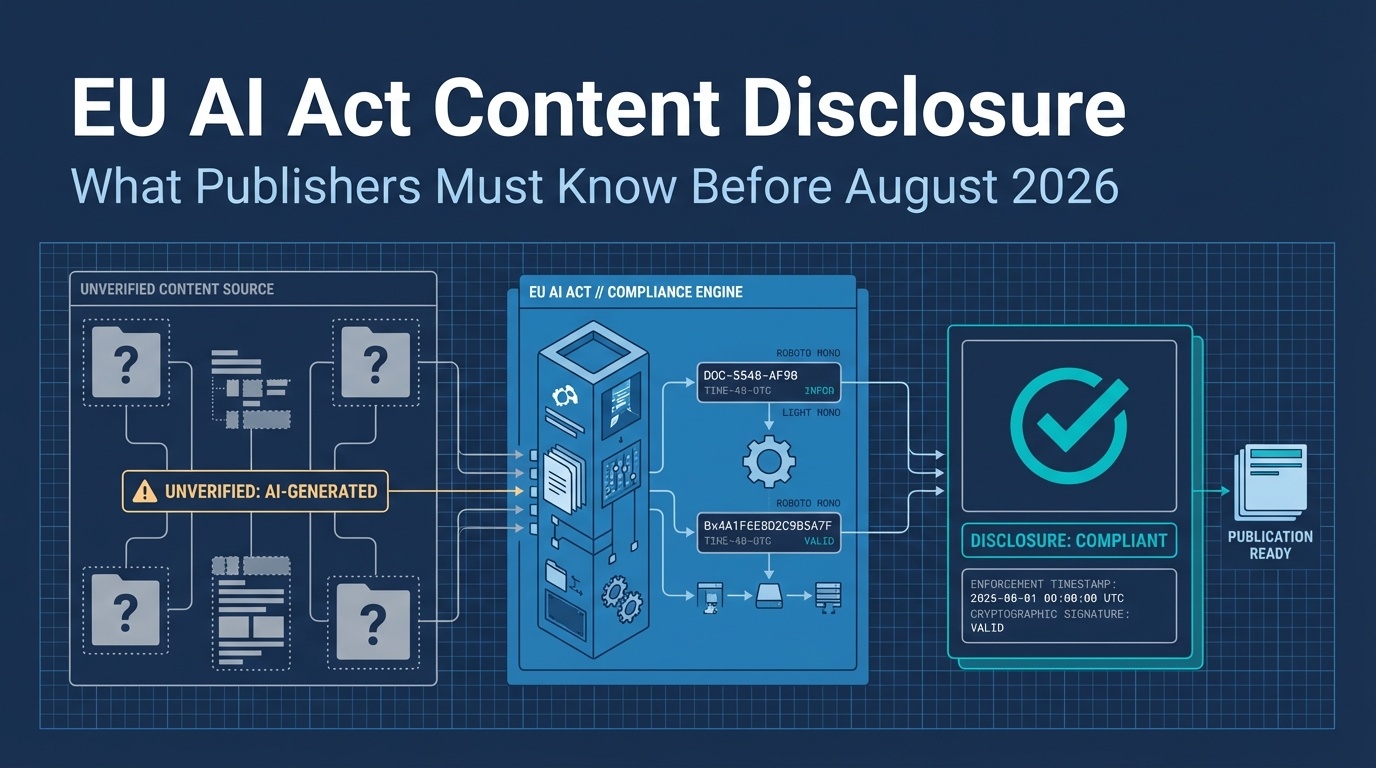
EU AI Act Content Disclosure: What Publishers Must Know
By: Erik Svilich, Founder & CEO󠇟󠇠󠇡󠇢󠇫󠆏󠄘󠅵󠇮󠇥󠆻󠆛󠆺󠄕︅󠅂󠆹󠆺󠇬󠅪󠄽󠅳󠆣󠆻󠄼︃󠅇󠆉󠆘󠆈︈󠄭󠄝󠅆󠇥󠆔󠄀󠆬󠄏󠄉󠄜󠇫󠇣︉ | Encypher | C2PA Text Co-Chair󠇟󠇠󠇡󠇢󠅺󠅣󠅠󠅕󠄌󠇗󠇆󠆴󠅦︇󠄋󠆏󠇋󠆎︁󠇓󠆠󠇙󠄡󠆜󠆛󠅵︋󠄘󠆾󠆘󠅨󠄔󠆂󠇬󠆁󠅒󠅦󠇅󠄙󠇇󠅰󠅦󠇃󠄱
The European Union's Artificial Intelligence Act represents the world's most comprehensive AI regulation, and it has significant implications for anyone creating, distributing, or using AI-generated content󠇟󠇠󠇡󠇢󠅓󠅕󠅨󠅬󠄺︀󠄿󠇏󠄛󠅝︂󠄓︇󠅟󠆳󠄸󠆵󠅁󠅈︈󠄼󠆏󠅼󠄒󠅯󠄴󠇋󠅄󠆋󠅺󠅮󠆆󠅤󠇛󠇖󠄪󠆝󠅥󠆴󠇧. With GPAI-model obligations in effect since August 2025 and content-transparency obligations applying from August 2, 2026, organizations need to understand their obligations now󠇟󠇠󠇡󠇢󠇐󠆮󠅔︎󠄀󠇎󠇪󠅕󠆎󠆙󠅒󠅱󠅛󠄖󠅜󠅩︊󠆚󠇁󠄘󠆖󠇌󠆐󠄵󠆱󠅔󠆱󠅗󠇇󠇎󠇤︌󠇒󠅫󠅻󠅃󠆩󠄸󠇋󠆦.
What Is the EU AI Act󠇟󠇠󠇡󠇢󠅀󠄃󠄅󠆽󠇭󠆧󠄝󠆃󠄛󠅺󠅷󠇮󠇟󠆫󠄮󠄺󠇏󠇛󠄁󠇈󠅳󠄈󠅯󠄡󠆤󠅑󠄚︈󠇜󠇁󠇝󠆿󠅕󠆪󠄺󠆇︊󠆺󠅧󠇒?
The EU AI Act is a landmark regulation that establishes a comprehensive legal framework for artificial intelligence across the European Union󠇟󠇠󠇡󠇢󠅅󠄠󠇆󠆠󠄼󠆖󠄷󠇥󠆫󠆅󠇜󠇙︂󠆼󠄓󠆑︊󠇑󠄘󠄿󠆅󠄤󠄖󠇋︉󠄗󠅅󠅪󠆤󠄤󠆵󠇦󠇠󠄇󠅁󠆯󠄀󠆬󠅀󠆛. Adopted in March 2024, it takes a risk-based approach to AI governance, with different requirements based on the potential harm AI systems can cause󠇟󠇠󠇡󠇢󠄹󠅺󠇮󠆞󠅍󠆯󠆟󠅟󠅫󠆙󠆜󠆹󠄳󠆳󠄌󠅛󠆝󠇑󠅭󠆸󠄉󠆕󠆬󠆱︉︋︁󠄏󠅶󠄛󠄱󠅳󠅤󠅫󠄇󠅰󠄫󠄁󠄂󠄊.
For content creators and publishers, the most relevant provisions concern transparency requirements for AI-generated content󠇟󠇠󠇡󠇢󠇥󠇬󠄢󠇩󠅩󠆴󠅢󠄮󠄮󠅽󠇕󠇏󠆿󠅏󠆤󠆩󠅱󠅹󠄝︆󠅘󠅮󠅕󠆊󠅟󠆅󠄬󠄣󠇚󠇡󠄀󠅔󠆑󠄾󠇟󠄁󠄥󠅕󠆼󠇪.
Key Dates and Timeline󠇟󠇠󠇡󠇢󠄄󠆳︀󠄢󠄘󠄝󠆵󠆂󠆃󠆷󠇑󠆨󠅵󠄞︀󠆬󠆲󠅇󠆗󠅵󠆏󠅻󠅤󠆙󠆁󠇧󠄎󠆣󠆖󠇭󠆴󠆵󠄨󠄦󠇑󠆱󠇀󠄀︃󠆟
| Date󠇟󠇠󠇡󠇢󠄯󠅣︁󠄲󠄺󠇥󠆺󠅐󠆸︋󠇚󠅗󠅅󠄚󠄼󠅍󠅠󠆸󠅖󠄕󠆿󠇑󠇦󠅨󠅽󠅯󠅥󠆳︂󠇗︍󠆕󠄪󠆆󠄎󠅦󠄌󠇔󠅽󠇉 | Milestone󠇟󠇠󠇡󠇢󠅗󠇣󠆩󠆗󠇀󠇘󠄮󠇡󠇠󠇑󠅻󠇇󠅳󠄺󠆇󠄢󠅹󠆳󠄀󠄏󠆠󠅊󠇨󠅼󠅵󠇦󠇃󠄟󠅙󠅝󠆢󠆹󠄄󠇟󠅒󠅳󠇂󠄸󠅴󠅣 |
|---|---|
| March 2024󠇟󠇠󠇡󠇢󠆚󠄃󠅙󠅠󠄍󠆚󠄭󠆻󠆯󠇟︎󠄳󠆧󠅀󠅅󠇛󠆬󠆼󠇐󠇋󠇖󠆸︉󠄩󠄁󠆬󠆠󠄶󠅄󠇀󠅵󠄬󠇆󠄤󠄮󠅦︄󠄰󠆥󠆽 | EU AI Act adopted󠇟󠇠󠇡󠇢󠄉󠇯󠇙󠆎󠄋󠅰󠆵󠅔︈󠄦󠇝󠅘︋󠇏︆󠅦󠅿󠆭󠄝󠅨󠄕󠆧󠆇󠆁󠄬󠇧󠆾󠄢󠆸󠅮󠅿󠄆󠇊󠄜️󠄯󠆴󠇯󠄚󠅸 |
| August 2024󠇟󠇠󠇡󠇢󠄒󠅂󠄺󠆭󠄛󠆶󠄴󠇅󠅗󠅌︂󠄦󠇞󠇟󠆇󠆁󠅑󠄴󠄚󠇣󠇄󠆉󠅾󠇍󠄢󠄮󠅩󠅖󠄝︅󠆯󠆀󠅪󠄻󠇪󠇔󠅯󠇊󠆊󠄅 | EU AI Act enters into force󠇟󠇠󠇡󠇢︅󠅼󠄑󠅔󠇖󠆗󠄦︄󠇄󠆊󠄟󠇠󠅨󠅿󠅜󠄣󠄑󠄨󠅕󠄈󠇚󠆵󠅣󠆕󠆮󠆜󠆌󠄾󠄊󠇍󠆦󠆧󠇍󠆃󠅔󠆥󠆒󠄀󠇎󠇞 |
| February 2025󠇟󠇠󠇡󠇢󠄕󠅚󠄚󠄿󠅹󠅌󠅫󠄰󠄽󠆒󠆡󠆥󠆻︄󠅓󠆞󠅄󠇀󠅰󠆐󠄿󠅗󠅩󠇝󠇠󠇉󠇅󠄶︌󠄞󠅇󠆢󠅃󠄥󠆨󠆟󠅲󠇝󠄍󠄻 | Prohibited AI practices take effect󠇟󠇠󠇡󠇢󠅎󠅆󠅙󠅫󠇝󠆥󠇅󠄴󠇫󠇖󠇤󠅽󠇕󠇋󠅢󠄤󠅮󠄖󠅱󠅊︇︎︍󠆝󠇢󠅽󠅰󠆹󠄮󠄇󠆎󠆝󠅈󠅸󠆵︄󠆯󠄥󠇥󠆗 |
| August 2025󠇟󠇠󠇡󠇢󠅾󠄍󠇫󠆰︃󠆛󠆲󠆍󠆔󠇉󠇭󠇝󠄜󠅚󠇇󠄜󠆢󠅨󠆉󠇕󠆖󠄃󠅮󠄌󠇔󠅶󠇝󠇦󠇞︉󠅮︃󠆻󠆷󠆙󠇑󠆙󠆎󠆤󠆺 | GPAI model obligations take effect󠇟󠇠󠇡󠇢󠆴󠅴󠆣󠆼󠅦󠇈︋󠄂󠄗󠆜󠅛󠆬󠇃󠆟󠄕󠆮󠄴︋󠇓󠇇󠅘󠄻󠄘︌󠇮󠆇󠆄󠄏󠆭󠅸󠅞󠆜󠄒󠆊󠆩󠇡󠅴󠅲󠆯󠄃 |
| August 2, 2026󠇟󠇠󠇡󠇢󠄝󠅩󠅹󠅌󠆵󠅅󠇋󠅛󠄓󠄳󠆍󠄫󠆓󠅜󠅯󠇞󠄬󠅻󠄐︍󠄘󠅉󠇒󠇙󠄀󠄦󠆨󠄒󠆢󠅊󠄮󠅉󠄍󠄂󠅼󠄾󠆨󠇇󠄩󠅡 | Content transparency obligations (Article 50) take effect󠇟󠇠󠇡󠇢󠄳󠄺󠅺️󠆥󠇖󠇤󠅡󠆸︍︈󠅯󠄛󠆫󠄣󠇭󠇔︅󠆪󠆃󠅑󠅄󠄘󠆳︁󠄿󠇉󠆐󠅍󠆳󠅰󠄴󠇖󠅙󠅻󠇄󠄃󠄵︀󠄻 |
| August 2026󠇟󠇠󠇡󠇢󠇍︍󠅛󠄠󠇬󠇈󠄅󠅈︂󠇯󠇧󠅶󠅅󠇪󠆇︍󠄖󠇓󠆫󠇓󠄀󠆱󠄨󠄊󠇙󠅺︂󠇬󠆭󠇓󠅀󠇦󠄉󠇁󠆃󠄑󠅏󠇭󠄍󠆅 | Full enforcement for high-risk AI systems󠇟󠇠󠇡󠇢󠇯󠇎󠄷󠅘︎󠇍󠄾󠆚󠅒󠆢󠇐󠅺󠅭󠆳󠅖󠅮󠆨󠆿󠅮󠄣󠇆󠆊󠅂󠇩︌󠅴󠄙󠄔󠇔󠅨󠅴󠆈󠆴󠅹󠅷︈󠆶󠆁󠇌󠆤 |
| August 2027󠇟󠇠󠇡󠇢󠅎󠅸󠇌󠇏󠇬󠅑󠆘󠆃󠄀󠅲󠄥󠄘󠅂󠄳󠄊󠅷󠄉󠅴󠄾󠅷󠅬󠆲󠆐󠅨󠆚󠆩󠇈󠆿󠆷󠅇︇󠆟󠄳󠇢︃󠅰󠇭󠄃󠇂󠅠 | Extended deadline for certain embedded AI systems󠇟󠇠󠇡󠇢󠆻󠅩︎󠅄󠆷󠇄󠅶󠄭󠆒󠇓󠇈󠄖󠆁󠆘󠆑󠆹󠇃󠆌󠆊󠇃󠅵󠄲󠇁󠅅󠄴󠆳󠄝󠅰󠆿󠆶󠄫󠆚󠆹󠆶󠄋󠅠󠅈󠇙󠇃󠅏 |
Article 50 content transparency has applied since August 2, 2026:󠇟󠇠󠇡󠇢󠄈󠇤󠇊󠆳󠅲󠄤󠅐󠄃󠄂󠅜󠆂󠇠󠇚󠆞󠄉󠅻󠄉󠆟󠄀󠄻󠅘󠄕󠄩󠇓󠅖󠄋󠅰󠅯󠆪󠄴󠆞󠅭︈󠄪󠅎︋︊󠄨󠆼󠆦 AI-generated content disclosure requirements are enforceable now󠇟󠇠󠇡󠇢󠆭󠅱󠇉󠅢󠄒󠆲󠅞󠆅󠅉󠆍󠇢󠆟󠇟󠆗󠄩󠅦󠄿󠅮󠄜󠅤󠆕󠄦󠅒󠄅󠆗󠄬󠅇󠄛︇󠄪󠄾󠇗󠄊󠅐󠅞󠄗󠅶󠆵󠅻󠄇.
Transparency Requirements for AI Content󠇟󠇠󠇡󠇢󠅎󠄮󠅏󠇮󠇖󠆲󠄝󠆊︆󠄈󠄟󠄖󠆸󠆎󠇪󠄅󠄪︅󠇊󠅧󠆳󠆽󠇛󠅈󠄒󠆗󠆦󠅂󠇌󠆂󠅙󠄸󠄂󠄹󠄎󠄠󠄌󠄶︌󠇮
Article 50: Transparency Obligations󠇟󠇠󠇡󠇢󠅻󠅻󠄙︇󠇤󠅌󠄏󠄝󠅅󠅲󠄦󠆨󠅘️󠇭󠄟󠆋󠄻󠅊󠄯󠇠󠅬󠇓󠄑󠇤󠆧󠆮󠆷󠅯󠄽󠄵󠄆󠇫︆󠇤󠆈󠇍󠅕󠇟󠄮
The EU AI Act's Article 50 establishes specific transparency requirements for AI systems that generate synthetic content:󠇟󠇠󠇡󠇢󠆠󠅏󠆍󠅍󠆹󠅠󠅝󠄠󠇠󠄠󠆺󠇘󠇑󠅙󠇗️󠆐󠆟󠇗︊󠅴󠇟󠇐󠄽󠄷󠄦︋󠇬󠆗󠄛󠅊󠄏󠅰󠆦󠇯󠆮󠄗󠄽󠅷󠆨
For AI System Providers:
- AI systems that generate synthetic audio, image, video, or text content must be designed to mark outputs in a machine-readable format
- The marking must indicate that content was artificially generated or manipulated
- Markings must be effective, interoperable, robust, and reliable󠇟󠇠󠇡󠇢󠆫󠄳󠇯󠆁󠆮󠅂󠄵󠄇󠄩󠇥󠄠󠆞󠆂󠄣󠇮󠆴️󠅝󠆲󠇕󠄨󠄞󠆼󠆒󠄙󠇆󠇭󠆉󠄝󠇐󠇋󠆡󠅣󠅤󠇗󠅫󠅮󠇕󠅱󠅑
For Deployers (Users of AI Systems):
- Must disclose when content has been artificially generated or manipulated
- Disclosure must be clear and distinguishable
- Must not mislead the public about the artificial nature of content󠇟󠇠󠇡󠇢󠇥︃󠅓󠅘󠆾󠄌󠅚󠄔󠄪󠆻󠄠󠅸󠅥󠆕󠆖󠇘󠄾󠆪󠇚󠇚󠅳󠇣󠄑󠇤󠅆󠇣︊󠆸︌󠅺󠅡󠅸󠇝󠇀󠄞󠆏󠅥󠆄󠄍󠅿
What "Machine-Readable" Means󠇟󠇠󠇡󠇢󠅈󠅌󠅡󠄨󠇥󠅂󠇝󠅟󠆅󠅳󠄷󠄑󠆐󠄳󠄨󠆕󠄌󠇄󠇧󠄠󠅄󠆈󠄲󠆣󠅩󠅽󠄟󠄛󠆩󠆍󠅏󠅺󠄤󠇞󠅲󠄕󠆺󠇡󠄮󠄝
The regulation specifically requires that AI-generated content be marked in a way that machines can detect, not just human-readable labels󠇟󠇠󠇡󠇢󠄤󠅆󠇍󠆪󠇋󠅊󠅫󠇁󠆊󠄎󠆘󠆘󠇝󠆳󠄼󠇂󠆡󠆜󠆦󠆦󠆊󠄹󠅬󠄑󠆇󠆖󠆯󠅍󠅭󠆤󠄽︉󠅌󠇂󠆺󠅒󠄾︉󠆇󠄑. This means:󠇟󠇠󠇡󠇢󠇗󠄘󠅻󠇬󠅗󠇈󠅋󠆻󠄅󠅶󠅟󠅗󠆗󠇛󠅸󠄭󠆪󠄟󠇜󠇇︈󠅪︁󠅲󠄅󠇮󠆖󠄞󠅶󠆮󠇥󠄍󠄅󠄱󠇑󠄸󠄛󠆷󠅫󠅣
- Visible watermarks alone are not sufficient󠇟󠇠󠇡󠇢󠆢󠇢︎󠇧󠄤󠇒󠆚󠇁󠇈󠄪󠇫︈󠅦︊󠆊󠅟󠅙󠆎󠅺󠄑󠅦󠆴󠆌󠅈󠅌󠆂󠅙󠅭󠆮󠅕󠆵󠄄󠄤󠅇︍󠅄󠅅󠅶󠇑󠅮
- Metadata that can be stripped is not sufficient󠇟󠇠󠇡󠇢󠆼󠄚󠄹󠆡󠄬󠄿󠇧󠆫󠇑󠇈󠆖󠆶󠄂︀󠅰󠆈︂󠅈󠅛󠆻󠆯󠄃󠅅󠇏󠆵󠇋󠄪︉󠇃︇󠇓󠆃󠄶󠅊󠇤󠅺󠇑󠇗︉󠄺
- The marking must be embedded in the content itself󠇟󠇠󠇡󠇢󠅏󠆑󠅠󠄤󠄼󠄿󠆢󠄊󠆋󠆟󠄺󠇪󠄱󠄐󠄻︍󠆭󠆶󠇕󠇩󠅕󠅩󠅥󠄺󠄘󠄿󠅓󠅏󠅲󠆩󠆔󠅘󠆘󠇑󠆄󠇇󠆟󠄅󠅅󠆯
- The marking must be interoperable across systems󠇟󠇠󠇡󠇢󠅲󠇡󠅞󠇯󠅆󠅆󠄜󠇤󠇇󠄴󠅀󠅍󠅀󠄂󠇭󠅮󠆚󠄫󠅝󠆛󠄢󠇙󠅷󠄴󠄽󠇠󠅐󠄆󠄼󠄮󠄑󠄤󠅡󠄵󠄹󠅩󠄈󠅴󠆰󠇎
This is where cryptographic content provenance becomes essential󠇟󠇠󠇡󠇢󠄂󠄅󠄬󠆌󠄖󠅼󠅠󠄜󠇕󠄿󠆎󠄺󠆎󠆑󠆶󠅉󠅌󠆂󠅲󠆬󠆉󠆻︊󠅢󠆤󠄧󠆡󠆾󠄉󠅳󠇪󠄳󠄵󠇟󠆞󠄺󠇟󠄍󠅒󠅄. Standards like C2PA provide exactly the kind of machine-readable, interoperable marking the regulation requires󠇟󠇠󠇡󠇢︋󠆁󠅹󠅔󠅭󠇫󠅔󠅺󠆪󠇨󠅹󠇫󠅊󠇪󠄶󠅑󠅊󠆄󠄺󠄸󠄘󠄕󠅀󠅇󠆻󠄝󠅳󠄷󠅳󠇨󠆋󠇂󠅢󠅂︊󠆀󠆋󠄿󠆡󠆑.
Penalties for Non-Compliance󠇟󠇠󠇡󠇢󠇅󠆩󠅐󠅋󠇗󠆑󠅾󠆹󠆒󠇢󠄯󠇫󠄬󠆦︃󠇇󠄜󠆻󠅭󠇥󠇫󠆦󠅩󠄡󠅄󠆻󠇍︋󠇗󠆚󠄌󠄦󠄋󠅒󠇋︈󠆽󠆄︎󠄕
The EU AI Act includes substantial penalties for violations:󠇟󠇠󠇡󠇢󠄚󠅾󠄒󠆅󠆫󠇀󠅏󠄷󠆭󠆥󠆺︄󠅹󠆮󠄅󠄣󠆐󠆺󠆤︆󠄄󠆢󠅳󠆟󠇎󠄳󠆄󠅔󠅋󠅤󠇦󠄉󠄊󠅶︌󠆗︉󠆽︆󠆭
| Violation Type󠇟󠇠󠇡󠇢󠄦󠅎󠅞󠆏󠅛️󠄗󠇔󠄷󠆶󠆮︊󠄣︂󠆗󠄊󠅘󠄛󠄅󠄋︄󠇇︃󠄞󠇃󠆫󠅖󠆫󠅡󠅣󠆚󠄞󠇯󠆧󠄵󠄂󠅿󠆤󠆂󠆡 | Maximum Fine󠇟󠇠󠇡󠇢󠅋󠆺󠄆󠄜󠇕󠅀󠄇󠆭󠅟︅󠄝󠄢󠆭󠇅󠆰󠇠󠅌󠄠󠆶󠄛󠆺󠇅󠆧󠆤󠄼󠅘󠅺󠅨󠅿󠆌󠇟󠆣󠄢󠄺󠆻︊󠆔󠄨︉󠆡 |
|---|---|
| Prohibited AI practices󠇟󠇠󠇡󠇢󠆱󠄩󠄘󠄩󠅝󠇊󠆓󠇊󠄐󠆫󠆾󠆢󠇏󠅥󠄵󠇙󠇍󠅦︉󠇥󠄔󠇛󠄚󠆎󠆜︍󠇩󠆝󠅝󠄢󠄟󠄄󠆄󠅆󠄴󠄦󠅎󠆝󠅜󠅄 | €35 million or 7% of global annual turnover󠇟󠇠󠇡󠇢󠇈󠆁󠅺󠇟󠅬󠆴󠄏󠅖󠄖󠇨󠆃󠆢󠇃󠅼︎󠇂󠄯󠅬󠄘󠇗󠇚󠆤󠄛󠅌󠇥󠆬󠅩󠄖󠄙󠄸󠅛󠄥󠇑󠅢󠅡󠇑󠅃󠅤󠆲󠇫 |
| High-risk AI system violations󠇟󠇠󠇡󠇢󠇀󠅼󠄳︉󠄂︃︀󠆦󠇋󠇧󠅏󠆒󠄝︂󠇢󠄌󠅉󠇑󠅐󠄋󠄚󠄏󠄏󠄝󠄧󠆗󠅾󠄋󠄩󠇌󠇤󠅅󠆌󠅇󠅹󠇓︌󠆦󠇂󠇝 | €15 million or 3% of global annual turnover󠇟󠇠󠇡󠇢󠅞󠅗󠇌󠅏󠇒󠅏󠅆󠅳󠇌󠇖󠅹󠅫󠆵󠄝󠆴󠅦️󠄳󠄫󠇝󠇔󠅍󠄣󠄶󠄹󠅩󠅖󠄂󠅙󠅒󠆿󠆷󠅬󠄲󠅚󠅡󠇝󠄢󠄮󠆕 |
| Transparency violations󠇟󠇠󠇡󠇢󠄵󠄱󠇂󠅴󠇇󠇣󠅋󠇡󠆄󠆯󠄉󠇪󠆟󠆙󠄛󠅄󠄈󠇠󠅲󠇟󠅋󠄇󠆻󠄈󠇬󠇘󠄛󠅶󠇄󠅫󠆼︆󠄺󠄽︃󠅑󠇤󠆮󠆂󠄆 | €7.5 million or 1.5% of global annual turnover󠇟󠇠󠇡󠇢󠆳󠇇󠅡󠅴󠆨󠅫󠇥󠇯󠅿󠄸󠅬󠆎󠆾󠄘󠄙󠆞󠇊󠅊󠄷󠆜󠄼󠄜󠅚󠆫󠆤󠅜󠇭󠇀󠄏󠆔󠄮󠄇󠇝󠆤󠅄󠇮󠇢󠅤󠆞︊ |
| Incorrect information to authorities󠇟󠇠󠇡󠇢󠇩󠆛󠇭󠄀󠄮󠄸󠆛󠆴󠅞󠆩󠇐󠆔󠆏󠄹󠇏󠄼󠄈︀󠄇󠄌󠄁󠄳󠅶󠇗󠄧󠅾󠅺󠇤󠆜󠆃󠄩󠇪󠆕󠅖󠅲󠆺󠆳󠅙󠄊󠅀 | €7.5 million or 1% of global annual turnover󠇟󠇠󠇡󠇢︌󠆘󠆖󠆫󠄠󠄵󠄅󠅐󠄮󠅬󠄹󠅨󠇜󠆔󠅽󠆪󠄁󠇄󠇆󠇗󠄜󠅝󠄿󠄄󠅳󠆑󠅎󠅞󠅒󠆐󠅕︉󠄳󠆠󠇖󠆿󠇪󠆓󠅁󠄥 |
For a company with €1 billion in annual revenue, transparency violations could result in fines up to €15 million󠇟󠇠󠇡󠇢󠅲󠅨󠅕󠇪󠅰︍󠆿󠆇︇󠆲︄󠄝󠆨󠇓󠅚󠇕󠆊󠆦󠄮󠆝󠆩︎󠆃󠆀󠅢︂󠅢󠆴󠄬󠅬󠅻󠄕󠄝󠅶󠄭︀󠆹󠄓󠆄󠄳. For global tech giants, the 1.5% of turnover calculation could mean penalties in the hundreds of millions󠇟󠇠󠇡󠇢︎󠇟󠅽󠄘󠄠󠅑󠆰󠄳󠆅󠄌󠅥󠆤󠄴󠄁󠇏󠄿󠅳󠅾󠄺󠆒󠅈󠆔󠅝󠆨󠇃︅󠆎󠆝︋󠆴󠄸󠄑󠇥󠇮󠇩󠆟󠄉󠅎󠇞󠅐.
Who Is Affected󠇟󠇠󠇡󠇢󠄄󠇏󠄢󠆉󠇌󠅾󠆇󠇠󠆝󠇜󠇕󠇠󠄍󠇢󠇉󠆈󠇮󠄝󠅽󠇜󠅣󠅠󠅓󠅏󠄘󠆖︎󠆋󠄭󠇞󠅅󠄓󠄆󠄯󠅅󠅰󠆩󠆒󠅙󠄂?
Direct Obligations󠇟󠇠󠇡󠇢︋󠇄󠅤󠇈󠅖󠅶︈󠅯󠅴󠄯󠆜󠄣󠆗󠅇󠄕󠄝󠄴󠅓󠆞󠄐󠄧󠄫󠄮󠆟󠇫󠅥󠆤󠅕󠄭󠄾︉󠄑󠅄󠅊󠆱󠇅󠇛󠆊󠄞󠄽
AI System Providers (companies that develop AI systems):
- Must ensure their systems mark AI-generated content appropriately
- Must provide documentation on how marking works
- Must ensure markings are robust against removal󠇟󠇠󠇡󠇢󠇢󠅚️󠆦󠆏󠆒󠄶󠆗󠆒󠆱󠅍󠇬󠇨󠄖︄󠇙󠇇󠅒󠄵󠄇󠅠󠆏󠇬󠆀󠆑󠅻󠆅󠆊󠅳︈󠇙󠅍󠄗󠅹󠅀󠅏󠅝󠆏󠆆󠆧
Deployers (companies that use AI systems):
- Must disclose AI-generated content to end users
- Must not remove or disable content markings
- Must maintain records of AI system usage󠇟󠇠󠇡󠇢󠇬󠄊󠄖󠆆󠇡󠄉󠅡󠆾󠅘󠆺󠆨󠅹󠄠󠆣󠆍󠆿󠇏󠅼󠄇󠅘󠆂󠇒󠆢󠄷󠇤󠄆󠄷󠄞󠆒󠄆󠅍󠄬󠄦󠆪︌󠅁󠆰󠄵󠆔󠄴
Indirect Implications󠇟󠇠󠇡󠇢󠄡󠅽󠅕󠅼󠆸󠆇󠅪󠄥󠇭󠄟󠆠󠄔󠄔󠄸󠇂󠄎󠄐󠄸󠄢󠆀󠄍󠇈󠆓󠆟󠄣󠄲︂󠆝󠅴󠄑󠇒󠄻󠇄󠆕󠄒󠇮󠆶󠇘󠄿󠆮
Publishers and Media Organizations:
- Must disclose when publishing AI-generated or AI-assisted content
- Should implement verification systems for content provenance
- May need to update editorial policies and workflows󠇟󠇠󠇡󠇢󠅖󠅈󠆂󠄮󠇩︄󠆡󠅠󠄽󠅹󠄩󠇑󠆾󠆫󠆑︂󠄝️󠄶󠅼󠇥󠄏󠅫󠅩󠅰󠄾󠆱󠅨󠆰󠄞󠇖󠅚󠅚󠄗󠄳︈󠅨󠇪󠆵󠄠
Content Platforms:
- Must consider how AI-generated content is labeled on their platforms
- May need to implement detection or verification systems
- Should prepare for increased transparency expectations󠇟󠇠󠇡󠇢󠄉󠆸󠄆󠄠󠅡︁󠄜󠄼︊󠇅󠇞󠇎󠆶󠆤󠄵󠇪󠄰󠇒󠅪󠅙󠄂︈󠅆󠄡󠄼󠆏󠇭󠅁󠆂󠄅󠄗︅󠅿󠇣󠄂󠆎󠆗󠇐︂󠅖
Enterprises Using AI for Content:
- Marketing teams using AI for copy
- Customer service using AI chatbots
- Internal communications using AI assistance󠇟󠇠󠇡󠇢󠆌󠆧󠄢󠇟󠄭󠅲󠇘󠅽️󠄖󠇄󠇟󠄩󠆠󠄟󠅮󠅅󠆦󠄳󠆒󠇌󠄌󠄃󠅳󠆢󠇞󠆒󠆒󠄱󠄕󠇩󠆯󠆝󠅭󠄣󠇄󠄜󠆌󠆶󠅻
Exemptions and Exceptions󠇟󠇠󠇡󠇢󠅇︋󠆈󠅫󠅚󠆍󠄧󠇐󠅋󠄜󠄗󠄳󠅠󠅖󠅷︋󠄐󠆶󠇃󠆔󠆝󠅈󠄠︉󠆖󠆴󠆖󠅇󠄅󠆂󠅧󠅮󠆝󠇮󠇯󠅸󠅻󠄶󠇡󠄾
The transparency requirements include some important exceptions:󠇟󠇠󠇡󠇢󠅻󠅱󠅖󠅈︂󠄭︊︅󠆆󠅏󠆠󠅩󠅱󠅫󠄲󠇨󠅿󠅒󠅤󠇁󠄺󠄎󠅤󠄹󠄡󠅝󠅉󠆃󠇮󠅁󠇖󠅅󠅯󠄧󠆤󠆂󠄅󠄇󠇬󠅯
Creative and Editorial Exception󠇟󠇠󠇡󠇢︇󠇟󠅽󠅈󠅤󠄚󠅎󠄺󠄦󠇠󠄋󠇀󠅅󠅹󠇮󠄞󠅑󠅐󠆿︄︋󠅗󠆀󠇂󠇩󠆖󠅎󠆄󠄜󠅢󠇊󠅈󠅳󠄺󠅦󠅓︋󠇍󠅳󠅂
AI-generated content used in "manifestly artistic, creative, satirical, fictional or analogous work" may have reduced disclosure requirements, but only if the disclosure would "seriously hamper the display or enjoyment of the work󠇟󠇠󠇡󠇢󠄂󠆯󠅒󠆲󠆌󠅾󠅓󠅌󠇐󠇫󠆠󠄚󠆅󠆂󠄚︎󠅳󠄎󠆍︁󠆎󠅻󠇩󠇓󠆨󠆋󠇣󠅢󠄼󠆹󠆡󠅯󠆌󠄩󠆇︎󠆜󠇫󠅤󠅪."
This exception is narrow and doesn't eliminate the machine-readable marking requirement󠇟󠇠󠇡󠇢󠆂󠅠󠄴󠆂︈󠄯󠄇️󠄟󠅄󠆃󠅔︀󠇣󠅮󠄓󠇬󠅙󠇝󠄥󠅍󠆕󠄈󠄝󠄝󠇔󠇕󠄰󠅥󠅸󠆃󠄳󠅷󠅞︂󠅒󠇘︆󠆝󠄢.
Human Editorial Control󠇟󠇠󠇡󠇢︃󠄾󠅭︃󠅹󠆿󠄆󠆏󠅻󠆓󠆒󠅗󠆆󠆥󠇕󠄤󠆔󠇃󠅾󠆫󠆓󠅟󠇮󠆀󠅰󠆠󠄃󠆶󠇬󠆏󠅡󠄖︂󠅲󠆡󠄳󠅕󠆫󠆻󠆥
Content that undergoes "substantial human editorial review" may have different disclosure requirements󠇟󠇠󠇡󠇢󠅤󠅚󠇁󠆷󠅖󠄻󠅨󠆎󠄊󠆜󠅩󠆵󠄓󠄪󠄧󠇗󠅭󠅇󠄅󠇭󠄏󠆁󠄨󠆖󠄒󠆠󠇮󠅡󠅥󠇤󠇙󠇠󠄱󠇅󠄎󠅎󠆹󠅦󠆉󠆕. However, the definition of "substantial" remains subject to interpretation and future guidance󠇟󠇠󠇡󠇢󠄑󠅒󠇠󠆻󠄗󠄺󠄭󠄦︅󠄟󠄣󠆱󠇧󠆤︆󠇆󠅸󠅆󠆐󠅠󠄛󠆱󠄏󠄩󠆤󠅕󠅠󠅯󠆬󠅕󠇝󠅀󠆷︋󠅒󠄖󠄣󠅜󠄲󠆨.
Research and Development󠇟󠇠󠇡󠇢󠆳󠆢󠄙󠆒︊󠄑󠆸󠆦󠅗󠄔󠅳󠄩󠆇󠅠󠅘󠅓󠇐󠄍󠇙󠅔󠄯󠆡󠄧󠅿︊󠅈󠄫󠅜󠆲󠇠󠆒󠅌󠄝󠇎󠅟󠅼󠇣󠇊️︃
AI systems used purely for research and development purposes before market placement may have reduced obligations󠇟󠇠󠇡󠇢󠅲󠆦󠅦󠆢󠄳󠄊󠆀󠆇󠇃󠅯󠄤󠄃󠆨󠆻󠇫󠄝󠆁󠆀󠄖󠆊󠅧󠆐󠇅󠄖󠆱󠇥󠅃󠅊󠇈󠅢󠇋󠇁󠄚󠅼󠅻󠄖󠅁︆󠆅󠄽.
How to Comply󠇟󠇠󠇡󠇢󠆪󠄁︎󠇙󠇂󠅜󠅷󠄘󠆵󠅲󠇑󠆬󠆊󠄌󠇤󠆩󠅵󠄌󠆋󠄬︀󠇑󠅦︎󠅯󠆿󠅟󠅒󠄴󠄉󠄞󠇐︆󠅚󠆢󠅨󠇨󠅃󠅩󠅡
Step 1: Audit Your AI Usage󠇟󠇠󠇡󠇢󠅺󠅈󠆔󠆧󠅻󠄓󠄸󠆮󠅹󠄠󠄙︈󠆝󠅰︎︉󠄇󠅗󠄐󠆉󠅧󠅻󠄱󠆨󠆼󠅤󠄴󠅎󠇍󠄍󠆩󠆾󠅷󠅣󠄈󠅍󠆒󠇑󠄭󠄫
Identify all AI systems in your organization that generate content:
- Text generation (ChatGPT, Claude, Gemini, etc.)
- Image generation (DALL-E, Midjourney, Stable Diffusion)
- Video generation or editing
- Audio synthesis or voice cloning
- Automated content summarization󠇟󠇠󠇡󠇢󠅇󠄷󠄶󠇬󠅧󠇣󠇑󠇑󠆭󠇀󠄞󠅖󠄂󠆩󠄽󠇚󠄶󠅑󠇖󠇎︅󠅊󠄽󠇜󠄧󠄥󠇎󠆠󠄂󠄮󠇘󠆜󠇦󠄰󠄔󠇥󠆼󠄮︄󠅣
Step 2: Implement Machine-Readable Marking󠇟󠇠󠇡󠇢󠆊︉󠄠󠄀󠇞󠄿󠇊󠅨󠅚︉󠄫󠅿󠇨󠆼󠇖󠅎󠅖󠇇󠆖󠄱󠇫󠅜󠄆󠆲󠆰󠇈󠅸󠇄󠆨️󠅛󠆆󠄘󠅆󠆚󠄧󠆲󠄙󠆮󠄶
For AI-generated content, implement marking that is:
- Machine-readable: Can be detected by automated systems
- Interoperable: Works across different platforms and tools
- Robust: Survives common transformations (compression, format conversion)
- Reliable: Consistently present and verifiable󠇟󠇠󠇡󠇢󠆌󠅑󠆿󠆌󠆓󠇂︄󠆈󠇮󠇗󠆄󠆒󠅢󠅎󠇌󠅠󠄤󠆛󠆠󠇅󠄊󠇆󠄬󠅒󠄪󠅽󠆱󠅞󠄳󠇜󠆆󠅥󠅠󠅁󠄪󠇡󠄇󠅗󠄙󠅓
C2PA-compliant provenance systems meet these requirements󠇟󠇠󠇡󠇢󠆖󠆺󠄣󠄽󠅐󠆆󠄑󠄹󠅺󠅔︄󠆸󠄮󠇄󠅕󠄧󠇯󠆉󠄈󠄭󠄐󠄚︁󠄘󠇉󠇩󠄏󠆅󠆂󠆯󠇙󠆌󠄸󠄳󠇠󠄦󠅨︊󠄉󠄒.
Step 3: Establish Disclosure Processes󠇟󠇠󠇡󠇢󠆘󠆕󠄕󠅏󠄒󠅅󠆕󠅏󠆆󠄲󠅵󠅏󠇛󠅻󠄒󠇪󠆽󠄊󠆽󠅕󠅊󠆸󠅎󠄬󠅂󠅃󠄶︂󠇣󠇨󠄜󠆭󠄮󠇑󠄮󠄎󠅨︍󠆚󠄬
Create clear processes for:
- Labeling AI-generated content for human readers
- Maintaining provenance records
- Responding to verification requests
- Training staff on disclosure requirements󠇟󠇠󠇡󠇢󠇧󠄊󠇃󠅚󠇄󠄇󠅪󠆄󠅺︅󠅺󠅙󠇝︀󠄻󠅥󠇌󠇇︆󠄈󠅣󠆕️󠅛󠇔󠆆󠄇󠄿󠆿󠇈︁󠄀󠇈󠆈󠆌󠆤󠅦󠆕󠅄󠆒
Step 4: Update Policies and Documentation󠇟󠇠󠇡󠇢󠄦󠄂󠆯󠆴󠄋󠅇󠄽󠅮󠄻󠄱󠅥󠇕󠄹󠄚󠄈︄󠇀󠆒󠆗󠄄󠅨󠇄󠄦󠄫󠅘󠆁󠆘󠅎󠇎󠄌󠅀󠄺󠅫󠇟󠄮󠅂󠇅󠅏󠇬󠇬
- Revise content policies to address AI-generated material󠇟󠇠󠇡󠇢󠆧︄︅󠆄󠇪󠄰󠄓︊󠆅︀󠆜󠄈󠆮󠆍󠅺󠄤󠆹󠄩󠄢󠇜󠆮󠇣︉󠆨󠆈󠅍󠆊󠇣󠇦󠇢󠄘󠅮󠄀󠆢󠆳󠄈󠇛󠇢󠇖󠆗
- Document AI system usage and marking procedures󠇟󠇠󠇡󠇢󠄯󠆤󠆎󠆝󠇀󠆛󠇮󠅿󠅕󠅳󠆈󠇦󠅵󠇆󠄐󠆴󠅫󠆼󠄣󠆉󠅭󠇊󠄊󠆭︃︈︎󠅪󠇪󠇍󠄓󠆅󠄈󠆚󠅧󠇏󠅓󠄽󠄳︉
- Prepare for potential audits or regulatory inquiries󠇟󠇠󠇡󠇢󠆀󠅜󠇄󠄣󠅼︍󠄖󠅺󠅮󠆉󠄤󠅤󠆅󠅬󠇧󠇅󠆦󠅁󠅪󠄪󠄆󠇈󠆱󠅃󠅏󠇕󠄋󠅵󠅀󠄰󠆚󠆧󠅟󠅐󠆙󠅈󠇒󠄥󠇟󠄾
The Role of Content Provenance Standards󠇟󠇠󠇡󠇢󠆰󠄝󠅏󠅖󠆪󠇒󠅻󠇦󠅟󠅈󠇚󠅟󠅤󠄆󠅽󠅘󠅹󠇣︎󠄘󠆀󠄄󠄿󠆷󠅂︀󠅂󠇆󠅰󠅶󠅦󠆥󠆥󠅻󠅂󠅎󠆲󠇛󠄡󠆝
The EU AI Act's requirements align closely with content provenance standards like C2PA:󠇟󠇠󠇡󠇢󠆴󠅭󠆬󠅲󠄾󠅜󠄉󠆚󠅲󠆌󠇕󠅯󠇗󠇚󠅔󠄱󠇅󠄢󠄡󠆸󠄀󠆫󠅣󠆜󠆾󠇧︄󠇩󠇞󠅐󠅻︃󠄞󠄏󠅋󠇮︉󠆘󠄍󠄪
| EU AI Act Requirement󠇟󠇠󠇡󠇢󠄺󠇗󠆎︉󠄇󠇢󠄮󠄾󠆜󠅦󠅹󠄈󠆻󠇔󠇚󠆸󠅱󠆪󠆭︂󠇞󠇇️󠅍󠅂󠅌󠅂󠄹󠆖󠇆︉󠇊󠇞󠆃󠇊︋󠄷󠅅󠆀󠆎 | C2PA Capability󠇟󠇠󠇡󠇢󠅚󠄏󠅄󠆖󠄢󠆞󠆰󠆤󠆠󠄻󠆺󠇅󠄱󠄝󠅉󠇥󠆰󠇯󠆪󠇅󠅎󠇒󠇢󠇋󠅳󠅮󠄷󠄬󠆺󠅧󠄌󠅯󠇊︃󠅽󠄼󠄚󠄇󠇇󠄔 |
|---|---|
| Machine-readable marking󠇟󠇠󠇡󠇢󠄓󠇍󠆕󠅹󠇡󠇯󠆞󠄩󠆠󠄟󠅉󠄒󠆤󠄎󠄲󠆆󠅃󠅂󠅋󠄤󠇎󠇩󠇏󠅟󠇑󠆍󠅋︊󠄨󠅑︆󠇖󠄦󠅌󠄻󠇉󠆉󠆲󠆬󠆓 | Cryptographic manifests󠇟󠇠󠇡󠇢󠅖󠆬󠆯󠄜󠅒󠅀󠄎󠇞󠄓󠇕󠅂󠄢󠅀󠅐󠆀󠄓󠆚󠄌󠄊󠄁󠄗󠄾󠇫󠇕󠅑󠆄󠅞󠄚󠅖︀󠅊󠄧󠅇󠄩󠅐󠆱󠆟󠇌󠅣󠄁 |
| Interoperability󠇟󠇠󠇡󠇢󠇇󠅕󠄗󠄒󠅶󠄇︈︊󠇗️󠅍󠇯󠆭󠄖󠇄󠅆󠅋󠆓󠇐󠄜󠆠󠄤󠅛󠄭󠅼󠇀󠇜󠆠󠅷󠅣󠇦︋󠅤󠄼󠅞󠆍󠄰󠄻󠆻󠆃 | Open standard, cross-platform󠇟󠇠󠇡󠇢󠇏󠇖󠇊󠅌󠆝󠇕󠆺󠄜󠇀󠄐󠇝󠆦󠆑󠅣󠅛󠆘󠇨󠆼󠅊󠅁󠅨󠄔󠅙󠆪󠆻󠅓󠄙󠅋󠆉󠄂󠇝󠅛󠆺󠄠󠅢󠇙󠅀︅󠇣︋ |
| Robustness󠇟󠇠󠇡󠇢󠄼󠆉󠇋󠇇󠅇󠄌󠇅󠄧󠆰󠇡󠆍󠅄󠄔󠆐󠅑󠇭󠇬󠇈󠅕󠅁󠄙󠆢󠄐󠇧󠆓󠆐󠄄󠅡󠄔󠄺󠄵󠅱󠅠󠆚󠅙󠇌󠇟󠅕󠆟󠄺 | Tamper-evident signatures󠇟󠇠󠇡󠇢󠅎󠄯󠇧󠄝󠅙︄󠅞󠇛󠆻󠄜󠅊󠅎󠆭󠅮󠄲󠅎󠆲󠄦󠅋󠇮󠄿󠄟󠅨󠆌󠄃󠅔󠇆󠆁󠅴󠇘󠆆󠇦󠆦󠆆󠄐󠆳󠄧󠅘󠅩󠅓 |
| Reliability󠇟󠇠󠇡󠇢󠇉󠆛󠆴󠇚󠅟󠆫󠅏︉󠆨󠅏󠄇󠄒󠅾󠄱󠆰󠆨󠇒󠆯󠆀󠇓󠆠󠇌󠇞󠆁󠇐󠅄󠆴󠄩󠅹󠄕󠅺󠄵󠄨󠆭󠄅󠄩󠆊󠄋︈󠅼 | Verifiable through public tools󠇟󠇠󠇡󠇢󠆄󠅴󠅋󠆉󠆀󠆆󠇇󠄕󠄄󠄞︌󠅇󠅪󠄅󠄻󠇥󠄅󠅆︍󠅀󠅉︉󠅬󠄝󠄑󠇕󠆭󠆸󠅓󠇄󠅯︆󠇨󠅖󠆼󠅦󠄭󠄎󠄩󠆸 |
Organizations implementing C2PA-compliant provenance are well-positioned for EU AI Act compliance󠇟󠇠󠇡󠇢󠆌󠆦󠄬󠆤󠆉󠄠󠆴󠄌󠄈󠇡︇󠆩󠇛󠄾󠅕󠇉󠄢󠆁󠅑󠆹󠇃󠅸󠆏󠇎󠆷󠇁󠅏󠄭󠇜󠆆󠆗󠇡󠇀󠅞󠄾󠅺󠅘󠄟󠆡󠅈. The standard provides:󠇟󠇠󠇡󠇢󠆮󠄲󠇥󠄤󠆺󠄴︍󠆀󠅕󠇈︍󠅶󠄚󠄰󠇍︆󠅣󠅆󠆀󠅶󠇍󠅗󠅉󠅇󠄑󠅥󠇉󠆍󠆽󠄧󠆣󠆤󠄙󠆱󠄤󠄓󠄅︇󠆳󠇝
- Technical compliance: Machine-readable, interoperable marking󠇟󠇠󠇡󠇢󠇢󠄞󠆴󠇋󠇞󠄤󠅼󠄎󠄋󠄯︌󠆒󠇢󠅀󠄷󠅾󠅻󠄕󠅺󠆅󠅸󠇅󠄷󠅾󠆱󠄃󠄔󠆑︂󠇮󠇋󠄥󠅉󠇪󠆳󠇟󠄷󠄐󠇛︉
- Verification infrastructure: Public tools for content validation󠇟󠇠󠇡󠇢󠇄󠇐󠄕󠄓󠆊󠅝󠅬󠇯󠇍󠆽󠅮︈󠅸︆󠅖󠅛󠄦󠇥󠇩󠅂󠆺󠅫󠇠󠄶󠅖󠆏󠆦󠆰󠇍󠅉󠅲󠆥︍󠇮󠆷󠄻󠄺󠆋󠅾󠇀
- Audit trail: Documented provenance chain󠇟󠇠󠇡󠇢︆︃󠅄󠆖︃󠅯󠄑󠆧󠄩󠄾󠄧󠇩󠅛󠇮󠇟󠇯󠅬󠅪󠄛󠇑󠇧󠇒󠇍󠇍󠇍󠇥󠆼󠄃󠄦󠄲󠅬󠆃󠄆󠄓󠆗󠄘︃󠆾󠆂󠅡
- Future-proofing: Alignment with emerging global standards󠇟󠇠󠇡󠇢󠄋󠄯󠄎󠄞󠇮󠅷󠅇󠇐󠅦󠅷󠄂󠄭󠅊󠇩󠄭󠅥󠄊󠆔󠇫󠅽󠆓󠇬󠅓󠆥󠇨󠆂󠇁󠇣󠄤󠄚󠄩︂󠄭󠇐󠅥󠄝󠄪󠅠󠅫󠅧
Beyond Compliance: Strategic Advantages󠇟󠇠󠇡󠇢󠆟󠆆󠆡󠇈󠇂󠅑︀󠄾󠆧󠄄󠄕󠆼󠅕󠄻󠅲󠄽󠄏󠄼󠆖󠆗󠄚󠆞󠅵󠄍󠇋󠅉󠄦󠆡︄󠆢󠆅󠆻󠄽󠆎󠆒󠆦󠇀󠅆󠅄󠆠
While compliance is mandatory, early adoption of content provenance offers strategic benefits:󠇟󠇠󠇡󠇢󠄴󠆮︉󠅆󠆚󠅂󠅅󠅀󠅲󠅍󠆉󠇡󠆖󠇛󠄎󠇘󠅙󠅫󠇘󠄧󠇈󠇕󠄳󠅝󠇤︁󠇤󠅝󠅻󠄒󠇀󠅄󠄸󠆃󠅍󠇙󠄀󠆉󠆳󠇞
Trust and Credibility󠇟󠇠󠇡󠇢󠄚󠆉󠆥󠄄󠇘󠄶󠅇︇󠄣󠆧󠄄󠅞󠇪󠄲󠄙󠄄󠆞󠆍󠆞󠆙󠆾󠅏󠆰󠆃󠄯︎󠆸󠄬󠆘︍󠇀︎︆󠄚󠅳󠄰󠇀󠆉󠄔󠅍
Organizations that transparently label AI content build trust with audiences increasingly concerned about synthetic media󠇟󠇠󠇡󠇢󠅋󠅚󠆩󠄬󠆘󠄿︀󠅀󠆻󠄂󠅥󠄠󠆞󠅘󠇚󠅀󠅽󠇯󠆆󠆛󠄻︊󠄿︌󠅌󠆧󠆣󠅸󠄏󠅟󠄮︈󠅳󠅘󠄥󠄚󠇖󠅣󠇒󠆫.
Competitive Differentiation󠇟󠇠󠇡󠇢󠆬󠄮󠆼󠄪︎󠇐󠅠󠆩󠄢󠄵󠄨󠆴󠅑󠇚󠇍󠅼󠆥󠄐󠆌󠄊󠄮󠄟󠆆󠄆󠇩󠅲󠇣󠇥󠆫󠆽󠇧󠅎󠅙󠅕󠆗󠅋󠄀󠅑󠅫󠇈
As AI-generated content proliferates, verifiable human-created content becomes more valuable󠇟󠇠󠇡󠇢󠄿󠆔󠄂󠅅󠄠󠇏󠅮󠅆󠇈󠇗󠄵󠅪󠅥󠆮󠄻󠅉󠅒󠆲󠇙󠇨︃󠅹󠆉󠆫󠅢󠄍︄󠅝󠆾󠄳󠄋󠄾󠇩󠅏󠆄󠅔󠅿󠅴󠄹󠅑. Provenance enables this differentiation󠇟󠇠󠇡󠇢󠄚󠆡󠆢󠇉󠄅󠇓󠅥󠄣󠆺︌󠄻󠇠󠅖󠇧󠆽󠆌󠅉󠅋󠅳󠇕󠆐󠆻󠇂󠅺󠇔󠄙󠆗󠅍󠇉󠇜󠆴︋󠅖󠇭󠆾󠄏󠇁󠄑󠆅󠄸.
Licensing Opportunities󠇟󠇠󠇡󠇢󠅐󠆵󠅥󠇨󠄛󠅳󠅡󠄛󠄴󠄣󠄈󠅈󠄙󠅙󠄑󠅮󠇠󠄏󠅞󠆚󠅐󠄡󠇠󠆈󠅳󠄹󠇜︋󠄈󠄍󠄈󠅥󠄏󠅝󠄚󠄺󠆑󠆙󠄗󠆈
Content with verified provenance is more valuable for AI training licensing󠇟󠇠󠇡󠇢︌󠆓󠇄󠅑󠅝󠆦󠅒󠅛󠇦󠄺󠇙󠅓󠅊󠄻󠅜󠇉󠅄󠇎󠇛󠅪󠆐󠇊󠆍󠅓󠇭︎︂︍󠅘󠆃󠇐󠇃󠄊󠄌󠄱󠅎󠄋󠆌󠄦󠅉. Publishers can monetize their content more effectively when ownership is cryptographically proven󠇟󠇠󠇡󠇢󠆗󠄻󠄜︄󠄓󠅖󠄓󠅒󠄜︀󠇥󠄨󠇒󠅣󠆌󠄕󠆶󠇈󠇕󠄱󠆛󠆉󠅉󠄱󠄖󠄤󠄿󠆑󠅾󠇚󠇁󠅖󠄑󠅘󠄯󠅞󠄽󠇆󠄭︈.
Risk Mitigation󠇟󠇠󠇡󠇢󠄉󠆸󠄫󠆝󠆱󠅿󠅠󠄰󠅁󠆱︈󠇍󠄬󠄤︈󠆊󠆶󠆚󠄄󠆝󠇠󠅮󠆋󠄤󠄀󠄭󠅵󠄼󠇍󠇊󠆅󠆚󠆯󠅎󠄧︁󠇤󠄲󠆤󠄋
Beyond regulatory fines, undisclosed AI content creates reputational risks󠇟󠇠󠇡󠇢󠅒󠆀󠅷󠅜󠇫󠄃󠇬󠆺︅󠆱󠆚󠆌󠄼󠇣󠅳󠆧︆󠇞󠆕󠄽󠅠︇󠆋󠅻󠇟󠇋󠆨︁󠄉󠇟󠄥󠄾󠆳󠄾󠅼󠅴󠄜󠇔󠆮󠄚. Proactive transparency reduces these risks󠇟󠇠󠇡󠇢󠆉󠄀󠄚󠅸︈︇󠅽︇󠄳󠇒󠅹󠅄󠅉󠄆󠆣󠅘󠆆󠅾󠄊󠇠󠅘󠅋󠄥󠆶󠄍󠅮󠄼󠅼󠄝󠇑󠅀󠄅󠄮󠄑󠄲󠄙󠅁󠆳󠅣󠆻.
Global Context󠇟󠇠󠇡󠇢󠅰󠄬󠆃󠅱󠇘󠄀󠇢󠇡󠅹󠇘󠇓󠄏󠅆󠇡󠄬󠆥󠄪󠇆︈󠄌󠄴󠅜󠄃󠄭󠄶󠆨󠇬︍󠆶󠅚󠆫󠇯󠅟󠇩󠆠󠆑󠅖󠇩󠅸󠅟
The EU AI Act is the first comprehensive AI regulation, but it won't be the last:󠇟󠇠󠇡󠇢󠇪󠅡󠆭󠇆󠇄󠆰󠅀󠄀󠄮󠆠󠇖󠆩󠅜󠄟󠅢󠄗󠄀󠆐󠆡󠆪󠅓󠅰︈󠆫󠇚󠄏󠆄󠅍󠅾󠆹󠅙󠅜󠅶󠅳︄󠅀󠄇󠅤󠇁︅
- United States: California's SB 942 requires AI content labeling starting January 2026󠇟󠇠󠇡󠇢󠆂󠄫󠄓󠆓󠅛󠄰󠅺󠅧󠇜󠆭󠄋󠅑󠇮󠄤󠆐󠆭︁󠇖󠆂󠅜󠅷󠇭󠅓󠅻󠆣󠆰󠄭󠆪󠄃󠅬󠅆󠇝︂󠆋󠅚󠇏󠄌󠆉󠆗󠆖
- China: Deep synthesis regulations already require watermarking󠇟󠇠󠇡󠇢󠅡󠆃󠆵󠇪󠆱󠆕︌󠅿󠇉󠆐󠇓󠅡󠇒󠆍󠄹󠄚󠆪󠅶󠇯󠇍󠆀󠇀󠅡󠆿󠄹󠅷󠇆󠅅󠅭󠇠󠄩󠄠󠅏︀󠅯󠄙󠆔󠅲󠄛󠇐
- United Kingdom: AI regulation framework under development󠇟󠇠󠇡󠇢󠅩󠇘󠆎󠇬󠆳󠅰󠅳󠇨󠅾󠇠󠇮󠇍󠇡󠄷󠄣󠆗󠇟󠇯︌︊󠄓󠅻󠄩󠆵󠅗󠅣󠄋󠆗󠄐󠆛󠅫󠆶󠄕󠅇󠄃󠄘󠄖︀󠅁󠅆
- Canada: AIDA (Artificial Intelligence and Data Act) in progress󠇟󠇠󠇡󠇢󠆩󠄨󠅗󠆫󠇪󠇯󠆱󠇎󠅩󠆳󠇩󠅂󠅣󠆱󠇓󠆋󠄕󠇪󠅔󠆞󠅡󠇬󠅘󠄌󠇙󠇤︁󠇖󠅠󠆬󠇫󠆥󠇩󠄐󠅡󠅜󠅹󠅢󠇘󠇏
Organizations operating globally should expect similar requirements to spread󠇟󠇠󠇡󠇢󠇑󠆤󠅎󠄱󠆳󠅝󠅙󠄳󠅽︋󠆰󠆟󠄨󠄜󠆆󠆉󠅤󠅉󠄉󠄣󠆗󠇧󠄸󠆐󠇍󠆄󠅎󠅁󠅥󠅩󠆽󠄤󠅵󠆜󠆨󠄟󠇉󠇣󠅨󠇌. Implementing robust content provenance now prepares for this regulatory convergence󠇟󠇠󠇡󠇢󠅸󠅄󠅅󠄧󠄩󠆴󠅂󠆕󠅢󠆑󠇛󠅛󠄿󠇔󠅏󠄢󠆡󠇏󠅠󠆚󠄇󠄬󠅜󠅯󠇚󠄗󠅳󠇚󠅄󠄃󠄘󠅃󠅇󠆰󠄯󠄸󠆕󠆸󠅓󠇋.
Timeline for Action󠇟󠇠󠇡󠇢󠆏󠅡󠆠󠄞󠆅︆󠄴󠅙󠇝󠅌️󠇘󠄬󠆞󠆒󠅙󠄗︀󠆟󠅻󠅳󠄓󠆤󠄼󠅥︃󠄀󠄥󠄾󠅮󠅱󠇠󠄘󠅏󠄻󠆺󠆏󠅰󠇠󠆁
Now (Q4 2025):
- Audit AI usage across organization
- Evaluate provenance solutions
- Begin pilot implementations󠇟󠇠󠇡󠇢󠄒󠆜󠆼󠅩󠆁󠄔󠅃󠆜󠆆󠅌󠅛󠇕󠇆󠇊󠅀󠇑󠄪󠇔󠅔󠄺󠄩󠇥󠅺󠄱󠇄󠅴󠆟󠅡󠄷󠄢󠄲󠄬󠆝󠄗󠅁󠅈󠅧︄󠆾󠆴
Q1 2026:
- Full implementation of marking systems
- Staff training on disclosure requirements
- Policy updates finalized󠇟󠇠󠇡󠇢󠇔󠅡󠄫󠄸󠇔󠇄󠇐󠆁󠄕󠇌󠆼󠅭󠅁󠇭︉󠄞󠆮󠆞󠄬󠆥󠄟󠅑󠇃󠄟󠆒󠅨󠇟󠅂󠄗󠆶󠄔󠆤󠄝󠇧󠄛󠄘󠇍󠅒󠅩󠄶
August 2, 2026 and Beyond:
- Ongoing compliance monitoring
- Adaptation to regulatory guidance
- Continuous improvement of processes󠇟󠇠󠇡󠇢󠅂󠆡󠇯󠆉󠄲󠅛󠇆󠆰︎󠆺󠆍󠄣︎󠇧󠇕󠄣󠆪󠆓󠆎󠄤󠇃︁󠅲󠅥󠅌︍󠄒󠄄󠆷󠄪󠇨󠇑󠇣󠆹󠄭󠅇󠄼󠄒󠆔󠅠
Conclusion󠇟󠇠󠇡󠇢󠆓󠅞󠆦︇󠇤󠅒󠇌󠄆󠆋󠇬󠄔︆󠄥󠆢󠄄󠄟󠄐󠄥󠄱󠅈󠇒󠇓󠇟󠄒︍󠅶󠇒󠅾󠇉󠆹󠇟󠇙󠇮󠆄󠄄󠄦󠄧󠅮󠅞󠅷
The EU AI Act's transparency requirements represent a fundamental shift in how AI-generated content must be handled󠇟󠇠󠇡󠇢󠆳󠆭󠇔︊󠅅󠄦󠆄󠄖󠇪󠄑󠆫󠇣󠄣󠆳󠆏󠆀󠅛󠇜󠇃󠄏󠅂󠅎󠅶󠅉󠄐󠆿󠆙︇󠆉󠄸󠅜󠆶󠄫󠄈󠅤󠅸󠄺󠅆󠅥󠄩. The transparency obligations have applied since August 2, 2026󠇟󠇠󠇡󠇢󠇁󠆞󠅓󠄗󠇏󠅜󠅥󠅟󠆽󠅈󠄿󠇬󠆽󠅐󠅶󠇚︌󠅻󠆱󠇆󠆍󠇪󠇨󠆣󠇡󠄪󠆟󠄈󠆯󠄇󠄶󠅃󠄶󠆘󠅕󠆠󠇤󠆒󠆙󠆼.
Organizations that implement robust content provenance systems now will be well-positioned for compliance, and will gain strategic advantages in trust, differentiation, and licensing opportunities󠇟󠇠󠇡󠇢󠄂󠆝󠄓󠆨󠇓󠅳󠇤󠆪󠆞󠅝󠅶󠆩︍󠇅󠄾󠅸󠇐󠄏󠆷󠆡󠆯󠆂󠄩󠅗󠆫󠆅󠆒󠅒󠆸󠅵󠇨󠆡󠆢󠆷󠆬󠅰󠄟󠅹󠄦󠄑.
The question isn't whether to implement AI content transparency󠇟󠇠󠇡󠇢󠇫󠇅󠄚󠅺󠄋󠅶󠅊󠆑󠆳󠅣󠆢󠇚󠄭󠇝󠄣󠆙󠅞󠄥︊󠄲󠇕︇󠇓󠅞󠄊󠄠󠇋󠆣󠆚󠅜󠆲󠆤󠅐󠆑󠇢󠆰󠆇󠇢󠄵󠄇. It's how quickly you can build the infrastructure to do it right󠇟󠇠󠇡󠇢︋󠆝︍︀󠅱󠇡󠄡󠄈󠅮󠅑󠆦󠇈󠇤󠅍󠅗󠄼󠄛󠇪󠇍󠇠󠅐󠄍󠇕󠇕󠅫󠄩󠅰󠇟󠄘󠄯󠅼󠅓󠆁󠄏󠆵󠄃󠆆󠆆󠆍󠆀.
Learn more about compliance-ready content provenance: encypher.com󠇟󠇠󠇡󠇢󠅦󠆥󠄠󠇨󠄨󠇖󠄉󠅜󠄼󠇖󠄷󠆑󠇕󠅏󠄀󠄟󠄈󠄏󠆛︇󠆦󠅱󠆽󠅹󠄳󠆭󠆚󠇎󠄒󠆌󠅧󠆻󠄒󠇧󠅘󠄖󠆙󠅓︈󠅐
This article is for informational purposes only and does not constitute legal advice󠇟󠇠󠇡󠇢󠅱󠄌󠇣󠇭󠄉󠅇󠇐󠄛󠆌󠆵󠆭󠅠󠆳󠆞󠅲󠄲󠄸󠄴󠇯󠆓󠆸󠅬󠅓󠅏󠄫󠆫󠅞󠄺󠇗󠆼󠆟󠅢󠄖󠇆󠆦󠄎󠅪󠆠󠇬󠆻. Organizations should consult with legal counsel regarding their specific compliance obligations under the EU AI Act󠇟󠇠󠇡󠇢󠆜󠇫󠇉󠅄󠆁󠅘󠅉󠅹󠄟󠆸󠅘󠄟󠆙󠄒󠆞󠆀󠄶󠇃󠆡󠄸︈󠄶󠄾󠄇󠇞󠄸󠆎︃︉󠇩󠅪󠅒󠆾︍󠇞󠆠󠄢󠅡󠆺󠅊.
#EUAIAct #Compliance #AITransparency #ContentDisclosure #Regulation󠇟󠇠󠇡󠇢󠄤󠇪󠆚󠄢󠆓󠄧︅󠅨󠆟󠅨󠄧󠄩󠅧󠅢󠄌󠆰󠆽󠄼󠄸󠅻󠆺󠅬󠅼󠆂󠇂󠅘󠆵󠅈󠅝󠆤󠆒󠆾󠆌︋︅󠆋󠇐󠄑️︀
Get the weekly Encypher briefing
Analysis of AI copyright, content provenance, and publisher rights - written from inside the C2PA standard-setting process. No filler.