

The short-text provenance gap
The EU rules for marking AI content admit that short text is very hard to mark, and they leave the shortest text out. Encypher marks short text, so anyone can check who published it and whether it changed.
- The rule
- A hidden watermark on AI text longer than 200 tokens, about 150 words.
- The final rulebook
- Published June 10, 2026. Very short text is left out.
- In force
- The EU marking rules apply from August 2, 2026.
- Our answer
- A signed mark that works on one short sentence. Patent pending.
The rules left a gap
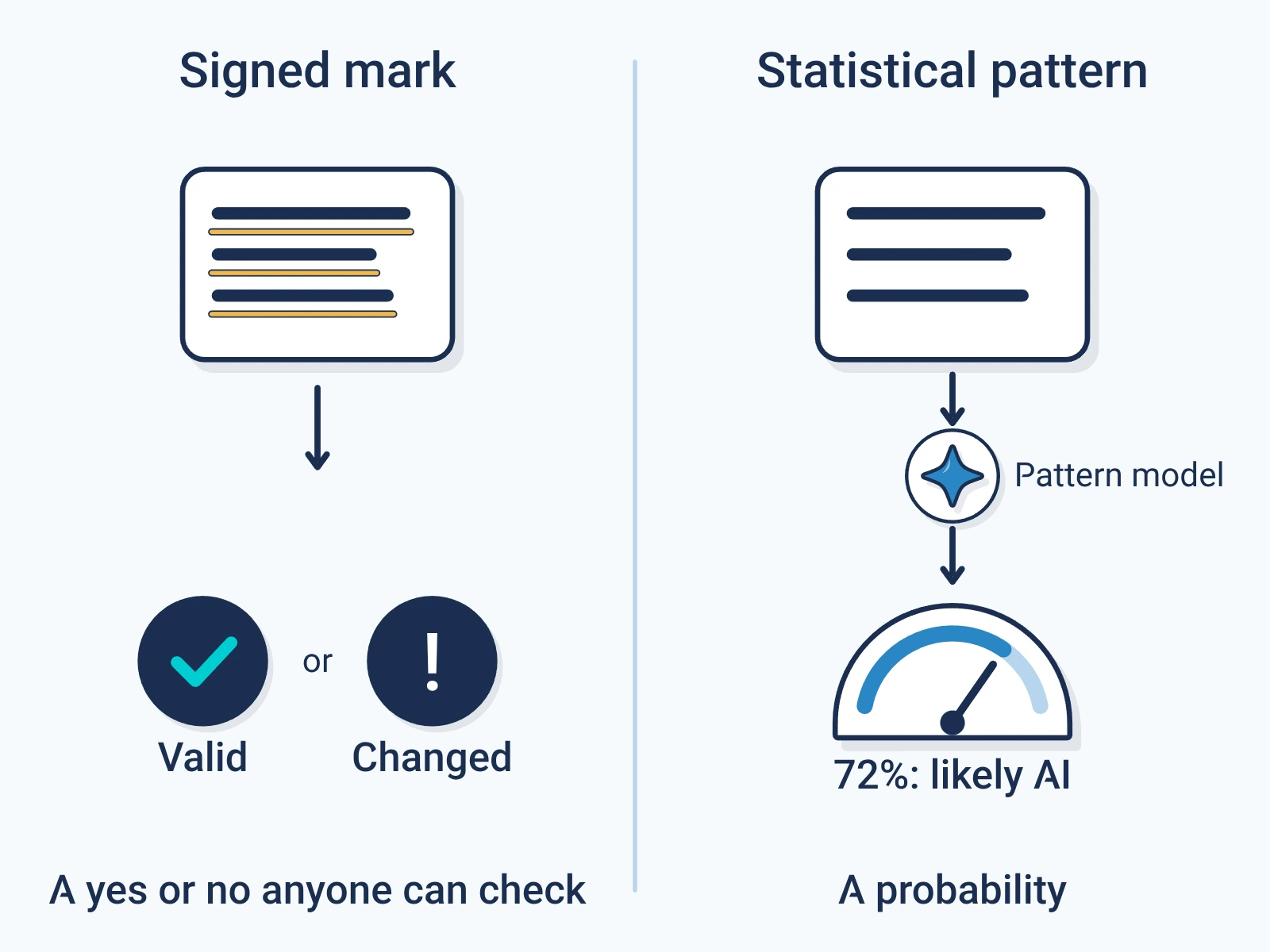
The EU wrote a Code of PracticeCode of Practice on AI-generated content: The EU's voluntary rulebook on marking and labeling AI content, published in final form on June 10, 2026. for marking AI content. It is honest about one thing: short text is hard to mark. The usual statistical watermarkStatistical watermarking: A hidden pattern a model adds while generating content, found later by a detector that returns a likelihood. hides a pattern in word choice, and it needs many words to show. So the rule starts at 200 tokens.
"Imperceptible watermarking now has to be applied to any free-form text longer than 200 tokens."
The final Code also asks for signed metadataMetadata: Data stored beside the content in a file, such as author, camera or date. Many tools strip it when they copy or upload a file. only where a file can hold it. For plain AI text, the watermarkWatermark: A mark placed in the content itself, visible or hidden, so it can be found again after the file is copied. is the only mark the Code requires.
Why short text matters
Short text is everywhere: headlines, quotes, captions, product copy and AI answers. If you cannot mark it, you cannot show it came from you. You cannot easily show what AI wrote. And the rules still expect you to try.
What Encypher does
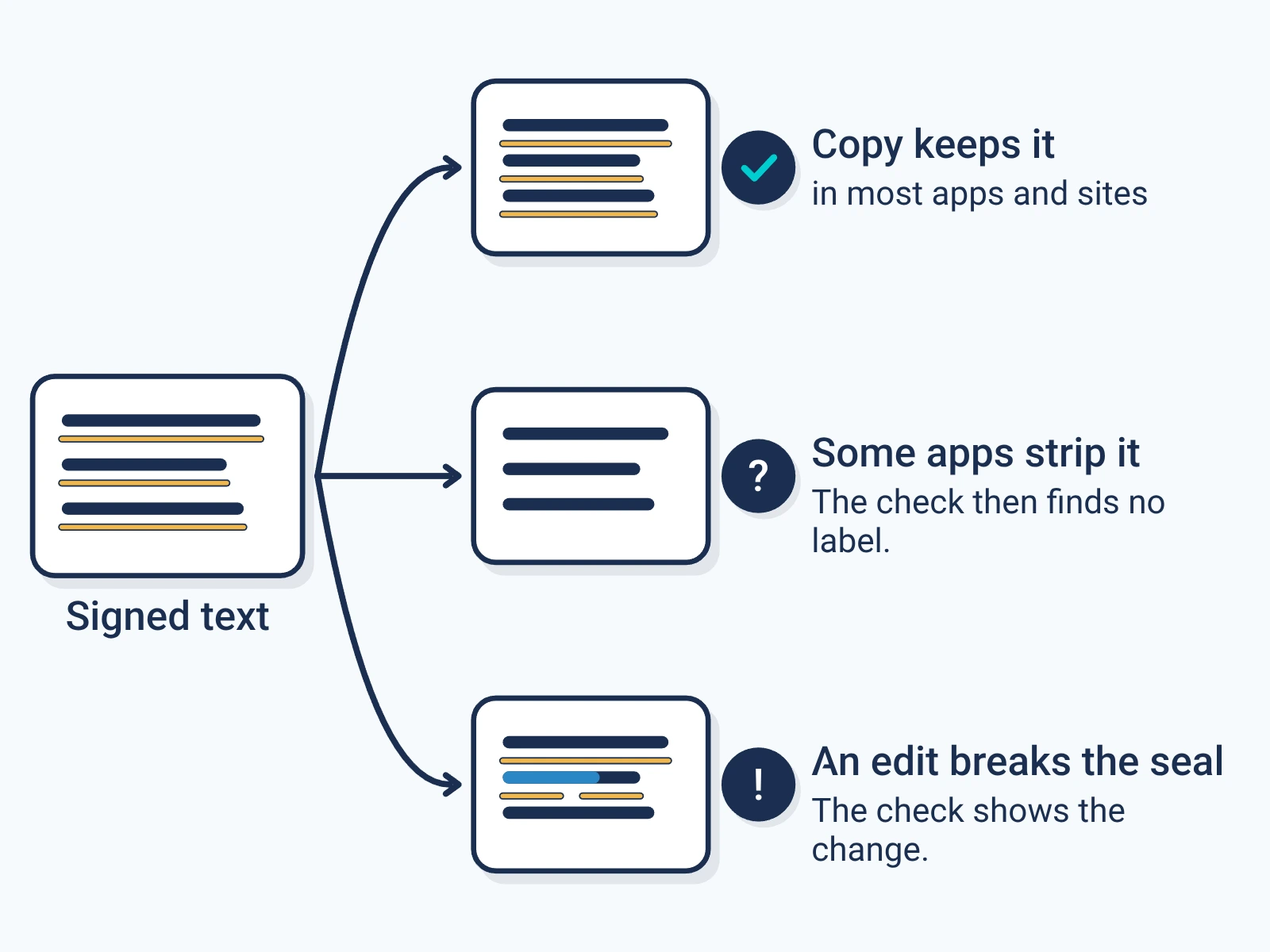
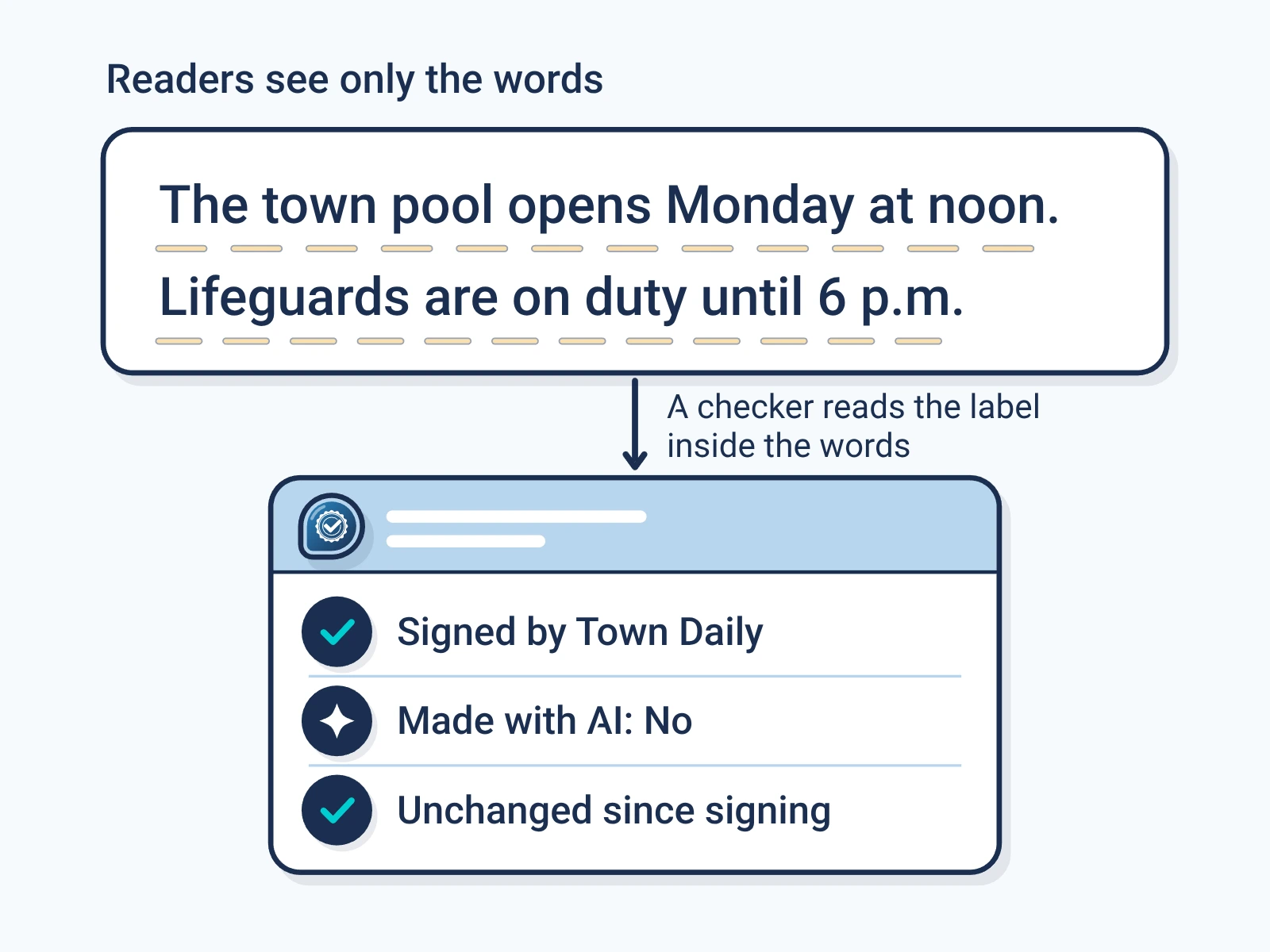
Encypher signs your words and hides the label in characters that draw nothing on screen. Your text looks and reads the same. The label stays with it when it is copied in most apps, and anyone can check it for free.
A check shows who signed the text and whether a word changed. It works on a single short sentence.
Where it stops
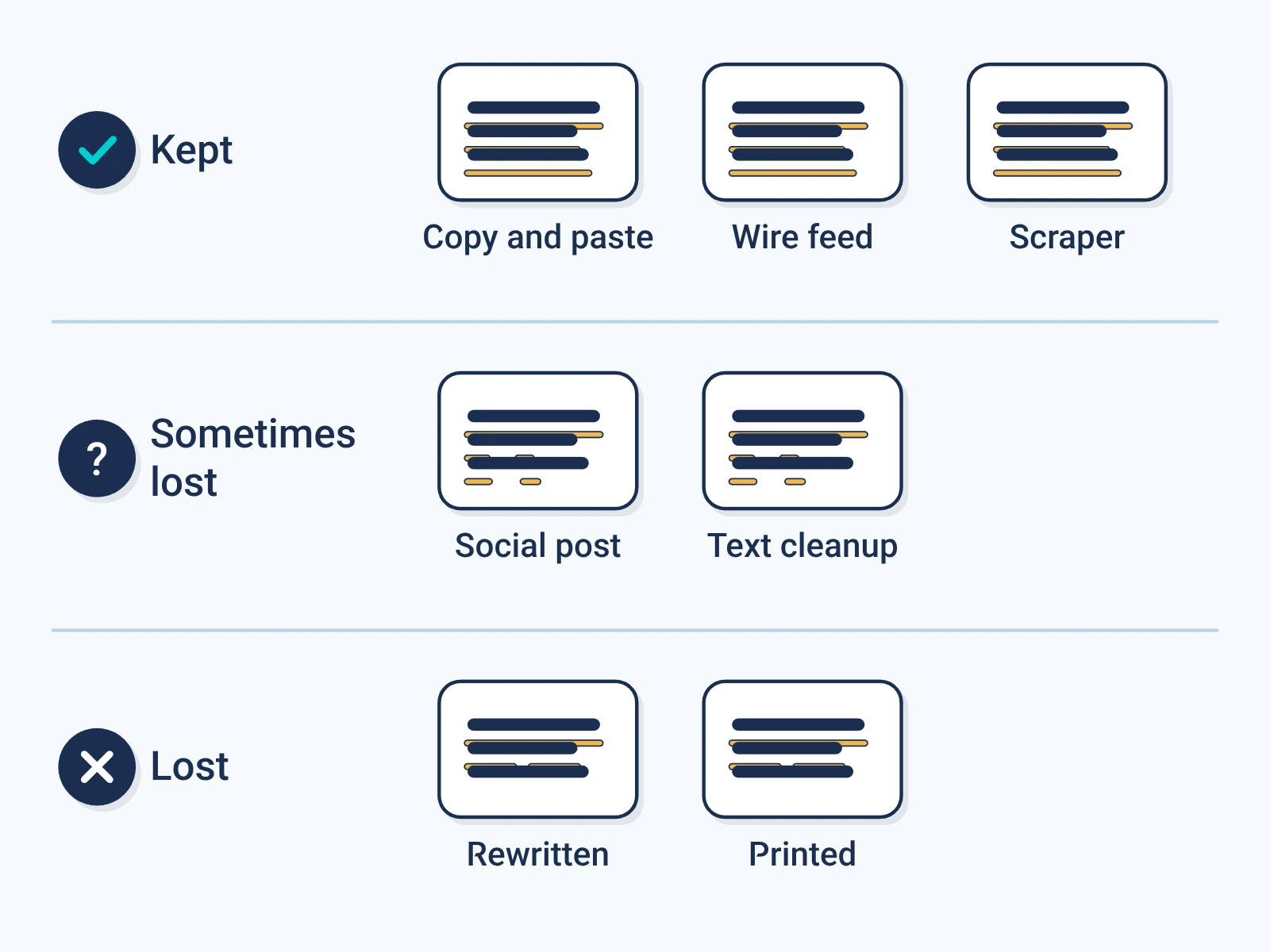
The mark rides the exact characters. Rewrite the text from scratch and it is gone. Some apps also strip invisible characters. So Encypher can add more than one kind of mark, and your words stay findable in more places.
What this means for the rules
The EU rules ask you to mark AI content. Encypher helps you do that, even for short text. It does not make you compliant on its own. That depends on your full setup. It closes the gap the rulebook calls hard.
Sources and citation
Show the technical detailWhere the rule comes from, and how to cite this note.
Sources
- European Commission, Code of Practice on Transparency of AI-Generated Content, final, published June 10, 2026.
- Bird & Bird, Taking the EU AI Act to practice: the final transparency Code of Practice, June 22, 2026.
Method
We read the final Code's marking measures for text and checked them against a law firm's summary. Our ISSMAD 2026 paper (Section II-C) gives the same reading: watermarking is required for free-form text longer than 200 tokens, very short text is excepted, and signed metadata depends on a format that can hold it. The token-to-word figure is a rule of thumb for English.
Citation
Encypher Research, "The Short-Text Provenance Gap," June 20, 2026, https://encypher.com/research/short-text-provenance-gap.
Create. Mark. Endure.
Watch an AI write an answer. Then watch us mark it and check it, live.