

AI copyright infringement Start with proof of what you published.
If AI tools use your work, the first problem is proof. Encypher signs each piece as you publish, with your terms inside it. Later, a copy that keeps the mark can be checked against that dated record.
A record for your counsel, not legal advice or a verdict.
- Dated
- Each piece is signed when you publish it.
- Terms inside
- Your terms travel in copies that keep the mark. Stripped or rewritten copies may carry none.
- Per sentence
- Copied sentences can be traced to the article they came from.
- Free for publishers
- Signing is free, and you keep all of your licensing revenue.
Why an AI detector does not help
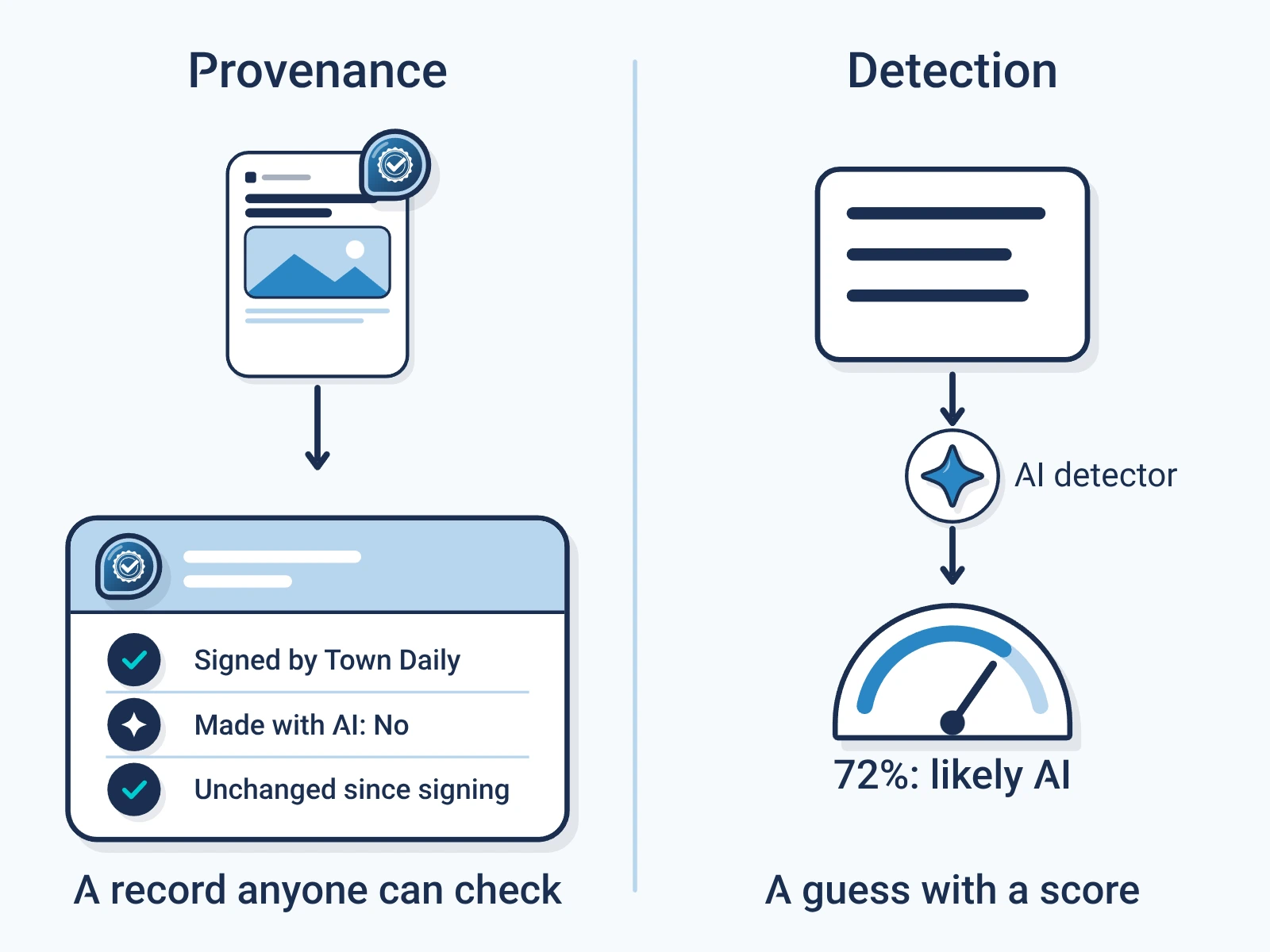
An AI detectorAI detector: A model that guesses whether content was made by AI and returns a probability, not proof. guesses whether text looks machine-made. Your question is different: is this your work? Only provenanceContent provenance: The record of where a piece of content came from and how it changed, carried with the content itself., a record made when you published, can answer that.
What the record lets you show
- What and when
- The exact text you published, and the date you signed it.
- Your terms
- The rights terms you signed with the work.
- A match
- Whether a copy matches your text word for word.
- Which sentences
- Which sentences were copied. This sentence-levelSentence-level attribution: Checking that one sentence came from a specific signed source unchanged, even when it is quoted on its own. layer is patent-pending.
Notice and willfulness
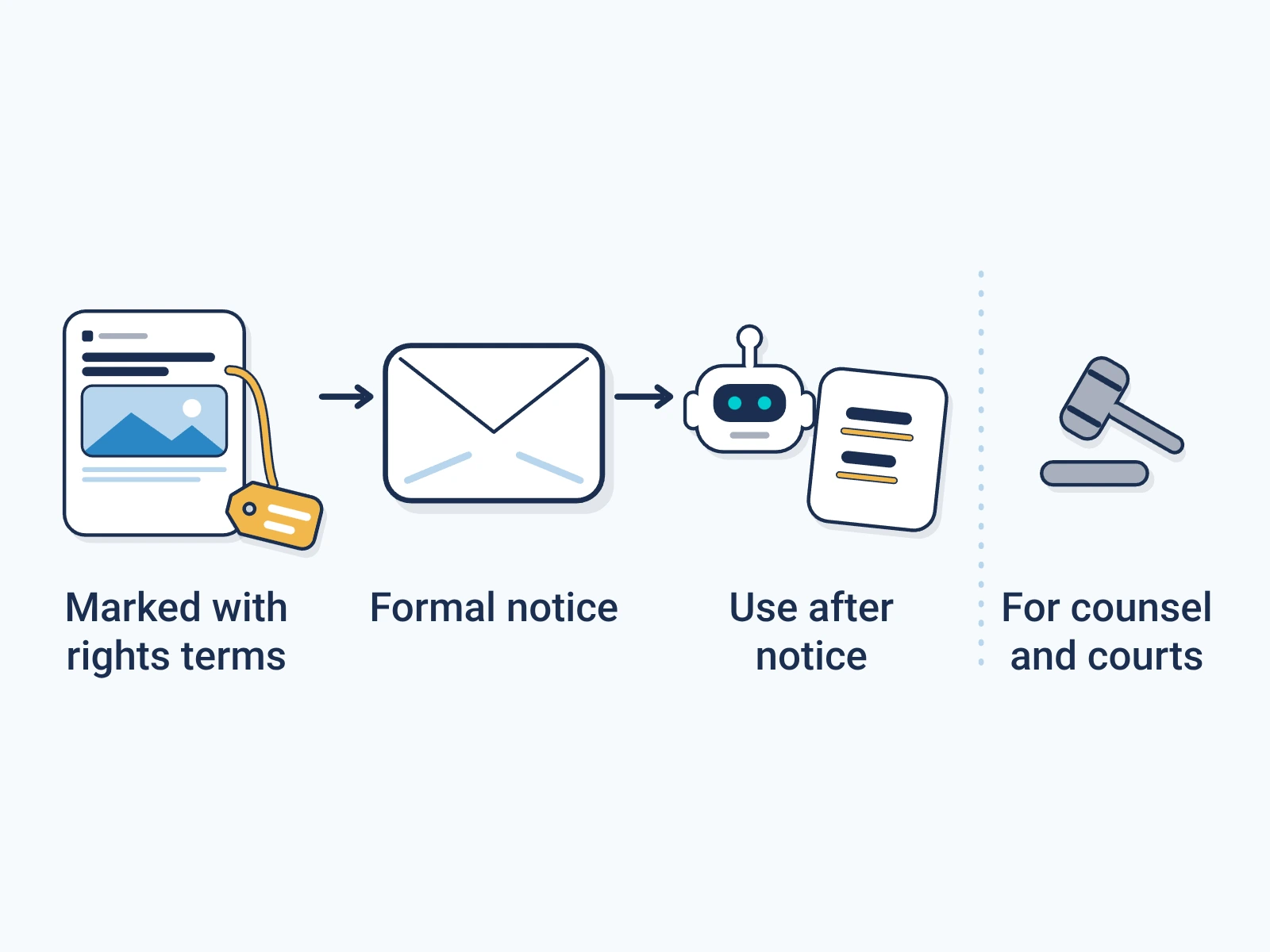
In the US, statutory damagesStatutory damages: Damages set by law per infringed work, under 17 U.S.C. 504(c), with no need to prove actual loss. for a work registered in time can rise if the use was willfulWillful infringement: Copyright infringement done knowingly. US law allows up to $150,000 in statutory damages per work.. Terms in copies that keep the mark, plus a formal noticeFormal notice: Documentation that tells a user a work is protected and which terms apply, which matters for willfulness. you send, make "we did not know it was yours" hard to claim. Your counsel decides what that supports.
What it costs
Publishers sign and check free, within fair use. You keep 100% of any licensing revenue. Encypher does not take a share of your deals.
Start in three steps
Connect
Add the WordPress or Ghost plugin, or call the APIAPI: Application programming interface: a way for one program to ask another to do a job, such as sign a file..
Publish
Each article is signed with your terms as it goes live.
Check copies
Paste any copy you find into the public checker.
Open the checker
For engineers
Show the technical detail
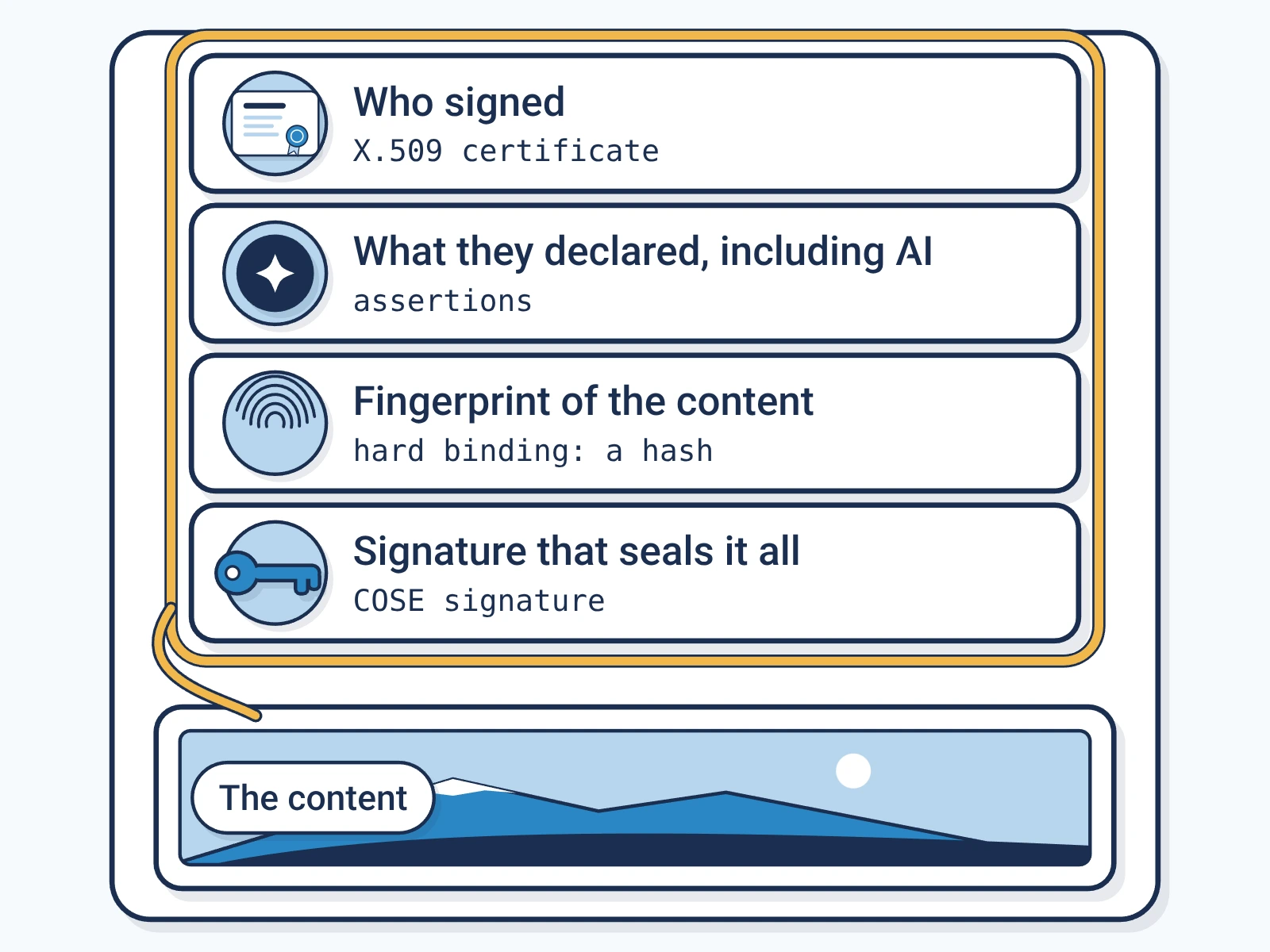
Each signed article carries a C2PA manifestC2PA manifest: The signed label itself: a small package inside a file that records who signed it, what they declared and how to check it. with your identity, a timestamp, a hash of the text and a link to your rights policy in W3C ODRL. Each sentence can also be signed, so a copied sentence verifies on its own.
Anyone can repeat a check through the public verify endpoint, with no account.